Too much milk

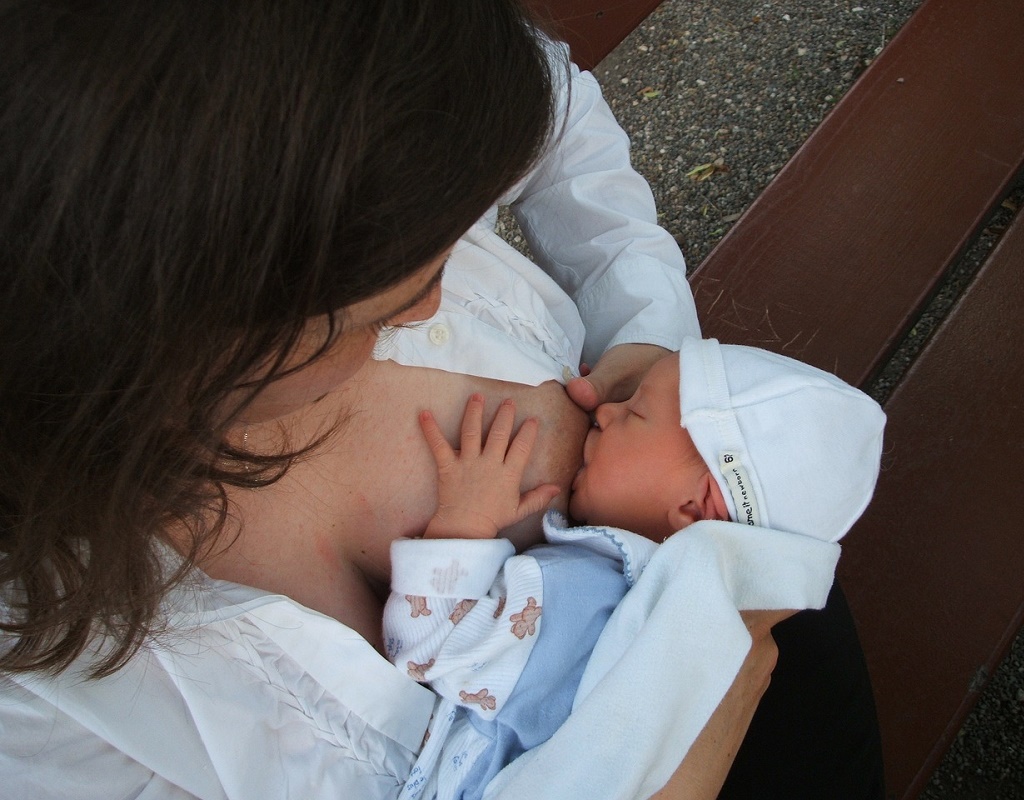
Most new mums worry they won’t produce enough breast milk for their baby. However, a less feared but still quite alarming problem is when you have an overabundance of milk, also known as hyperlactation. Yes, some people will give you the “Please, some of us have real problems!” reaction, but it’s unsettling to watch your baby choke, gasp and even spew milk from her nose.  Plus there’s the embarrassment of constant leaking and spraying, and the fact that your baby might refuse to feed.

Eventually (usually this month or next) your milk supply will start to stabilise and the gushing river of milk will trickle down to a more appropriate level.

To help control the flow:

Try feeding from only one breast per feeding, adequately draining one side of breast milk while making your body think it should slow milk production in the other. But be careful to switch to the other side at the next feeding. If one breast per feeding isn’t diminishing your supply, try feeding from only one breast in a two-hour period while slightly pumping the other to prevent engorgement. Then switch to the other breast for the next two hours.

Before a feeding, hand express or – for some women – just let the milk flow on its own before putting your baby to your breast. Often the let-down produces the most forceful flow, causing your baby to choke and sputter. But remember not to pump too much out, as the more breast milk you take out, the more you’ll produce to meet the demand.

Gently applying pressure to the areola while feeding can also help slow the flow.

Reposition your baby so he or she is sitting up more, or even try feeding on your back to let gravity slow things down. Be careful not to always feed this way though, as it could cause a clogged duct or breast infection.

If the problem persists call a lactation consultant for more tips.
Written by Linda Drummond for Kidspot, New Zealand’s leading pregnancy and parenting resource.

Supplementing with formula

Sometimes, due to complications or unforeseen circumstances, breastfeeding alone isn’t enough and you need to supplement with formula.  And sometimes mums just want a break from the around-the-clock feedings and are looking for a little relief.

First of all, don’t feel discouraged.  The less you feed, the less you’ll produce, but it’s still possible to maintain enough for a few daily feeds. It’s also possible that undue stress might be more damaging to your milk supply than taking breaks from feeding anyway. As with every aspect of motherhood, do what is right for you and your baby.

Your baby will receive some necessary nutrients through formula, and because you’re still feeding a few times a day, your baby will benefit from breast milk’s unique antibody properties.  A little breast milk is better than none.

How do you know if you need to supplement?

Look for signs that your baby isn’t eating enough  and talk to your doctor as soon as possible.

While it might be necessary to start supplementing, most lactation consultants recommend waiting until your baby is a month old to prevent any production disruptions. If your milk supply is compromised, know that your baby’s health is more important than where the nutrition is coming from. If supplementing is a choice, perhaps weigh your options on waiting it out, as it is best to stay on the breast as long as you can.

Moving onto a bottle

To make the transition smoother, have someone else give your baby bottles in the beginning. Babies are more likely to refuse bottles if they can smell breast milk. If your baby is frustrated or frantic, she is less likely to take the bottle.

There might be changes in your baby’s bowel movements and eating habits when you start supplementing, since the consistency of formula keeps babies fuller longer.

The World Health Organisation recommends exclusive breastfeeding for the first 6 months of your baby’s life, followed by the timely introduction of safe and adequate foods. WHO recommends continued breastfeeding for the first two years and beyond. Breastfeeding provides babies with the best nutrition and is preferred when possible. Always follow professional advice before using an infant formula. Introducing formula can have a negative effect on your milk supply and be very difficult to reverse. Proper use of an infant formula is important to the health of the infant, only use as directed.

Written by Linda Drummond for Kidspot, New Zealand’s leading pregnancy and parenting resource.

Newborn baby sleep

Right now, sleep is probably a luxury that was once taken for granted. Just to have five hours of uninterrupted rest probably sounds as close to bliss as you can imagine, yet it seems as though that will never happen – ever again.  One of the biggest and most stressed about developments throughout baby’s first year is how your baby is sleeping.  You’ll hear a parent brag that little Tommy was sleeping through the night at two weeks (cue the eye rolls) or scare you by exaggerating that they haven’t slept in three years.  Every baby is different, and will continue to be so, but there are some general newborn sleep habits you should know about your little one.

How much sleep is normal?

Most newborns still wake to feed every two to three hours (sometimes stretching it to four hours at night if you have an exceptionally considerate baby) for the first six to eight weeks – give or take.  And then it will most likely be another few months before your baby is sleeping through the night.  We know it sounds impossible to get through this when you’re in week one, but before you know it you’ll be looking back at this fuzzy, sleep deprived time and hardly remember it. (Probably because you’ve been half asleep this whole time.)

There’s not much parents have to do to encourage or schedule newborn sleep patterns during the first week. As you’ve probably noticed, they’ll sleep anywhere, anytime – whether it’s in the middle of a feeding or just as the family comes over to visit.

Your newborn will sleep a whopping 14 to 18 hours a day right now, which seems as though you’d have plenty of time to sleep yourself, right?  However, their irregular short naps (one or two hours at a time) doesn’t leave nearly enough time to feel rejuvenated.  It’s assumed that babies need these short naps in rapid eye movement (REM) sleep to aid in their development.

Baby’s sleep signals:

Pay close attention to your baby’s sleep signals. Some parents confuse a baby’s overtired behaviour as nighttime colic because they don’t realise that their baby has been giving them sleepy signals for hours. As they get older, the days of them passing out whenever and wherever they feel, may be behind you. Now it’s up to you to notice the cues (eye rubs, pulling at the ears, red eyes, etc.) and put your baby to bed. Most young babies aren’t able to be awake for more than two consecutive hours. Eventually you and your baby will get into a sleep schedule, but this is the trial-and-error period where you need to follow your baby’s lead. The more overtired a baby becomes, the less he or she will sleep.

A healthy room:

Your baby has tiny airways and nasal passages and allergens and pollutants in the air including dust, pollen, or pet dander can irritate their lungs. Use of an air purifier can help remove most of these, plus a range of other pollutants and gases. The air purifier may also be capable of moderating the heat in baby’s room to keep it at a regular and healthy temperature.

Healthy sleep habits:

Although your baby is starting to develop a schedule, starting a regimented sleep training routine isn’t necessary, just yet. However, if you’d like to start developing healthy sleep habits then you can try letting your baby self-soothe to sleep by putting him or her down while they’re still awake. Some experts believe that rocking or nursing babies to sleep, even at this young age, is fostering their dependency on sleep aids. Others believe that newborns should be nurtured and comforted no matter what, and if rocking them to sleep helps then so be it. Follow whichever philosophy instinctively feels right.

It’s never too late to start a bedtime routine, such as: shower, baby massage, story, feeding, bed. Dim the lights and play soothing music to further instil the concept of bedtime.

When baby falls asleep when feeding:

If your baby passes out as soon as the suckling starts, you might want to wake him – especially if you’re trying to boost your milk supply. First try simply unswaddling your baby. If that doesn’t work, strip your baby down to his nappy (if it’s not too cold), which should awaken baby from a light slumber.

If breastfeeding, you could try holding baby upright for a few seconds and then switch nursing positions. Try gently burping him.  Rub your nipple or the bottle’s nipple on baby’s lips, or gently stroke the outside corner of the mouth to stimulate sucking.

When you feed your baby make sure the lights aren’t too bright (where your baby would want to shield his eyes) or too dark. Don’t let your baby go three hours without breastfeeding or four hours without drinking formula at this stage.

Put your baby to sleep on his back to reduce the risk of SUID (Sudden Unexplained Infant Death).


This article was written by Linda Drummond for Kidspot, New Zealand’s leading pregnancy and parenting resource.


Find more:
Soothing a crying newborn

If you think your baby’s incessant crying is frustrating, imagine not being able to communicate to others what is wrong. Since babies usually won’t develop colic just yet (a dreaded condition where the baby cries inconsolably for no apparent reason), it’s just a matter of finding what’s wrong with your crying newborn:

Hunger

This is one of the most common and easiest cries to distinguish, especially considering babies usually give other signals as well, such as sucking on their hand, smacking their lips, and turning their mouth toward you as you stroke their cheek.  The sooner you recognise your baby’s particular signs, the less wailing you’ll have to endure.

Pain

This is usually a loud, panicked shriek or an uncomfortable whine, depending on what’s wrong.  First, search for something simple like a strand of your hair wrapped around her finger or toe, and then check to make sure baby isn’t too cold or sweating. If you don’t find anything, try to relieve any gas that might be upsetting your baby’s tummy.  If burping doesn’t work, lay baby flat on her back and move her legs in a bicycle motion.  You might also want to check with your doctor about anti-gas drops if the problem becomes consistent.

Dirty nappy

Some babies can be particular, so check that their nappy doesn’t need changing.

In need of some loving

If all else fails, a crying newborn might just be craving a little attention and comfort.  Here are some tried and true soothing methods:

  • Shushing and/or whispering
  • Singing
  • Swinging or bouncing
  • Sucking, such as with a dummy, or on your little finger
  • Patting their backs
  • Carrying them in a sling
  • Using white noise

Of course every baby is different, so this first week is largely a trial-and-error period to see what works and what doesn’t for your baby, and for you.

Leaving the house with a newborn

If you haven’t set foot outside since coming home with the baby (or even earlier if you had a home birth), you might be starting to feel a little stir crazy. The isolation and monotony can weigh heavily on your exhausted self and contribute to the Baby Blues. But when is it safe to expose your newborn to the big, scary world?

Some experts say it’s good to get some fresh air as soon as you can, while others (surprise, surprise!) advise you to stay indoors for the first month.

We think you should tune into your instincts and judgment on this one. If you’re feeling trapped, helpless and overwhelmed, it might be good to strap the little one in for a walk or drive. Or stop by a relative’s house for a visit (you know they’re dying for you to!) and perhaps even snag a nap in their guest room. Instead of burying your head in contradicting literature (which, trust us, will soon drive you batty), do what you feel is best for you and your newborn. If you don’t feel comfortable exposing your baby to the elements just yet, don’t.

Take it easy

Keep in mind that those with older children might not have any choice but to tote the newest addition out to school pick-up or errand runs. In this hectic time, do whatever is best for your family and easiest on you.

If your baby has an underlying health condition or was born premature, check with your doctor on when it’s safe to be out and about.

Choose your outing

Not all outings are created equal. Cruising around the shopping mall for a couple hours and letting just any old passer-by cuddle your newborn? Not such a great idea. It’s not so much the weather or temperature that poses a danger, but germs. Just as you do with visitors, make sure you have hand sanitiser on deck for any potential cuddlers to use and be discerning as to who can hold the baby.

The great thing about this stage (which you’ll soon look back on fondly) is that the baby will pretty much snooze wherever and whenever, so there aren’t any strict nap schedules to adhere to. However, if you feel like too much outside time is over-stimulating your baby or otherwise disrupting things, head back home.

Dressing your baby

Dress your baby appropriately for the weather with light layers the simplest way to adapt to any changes in temperature from the outdoors to the indoors. Pack a nappy bag with everything you think you could possibly need for the trip – then add a few more. You’ll need a change of clothes (or two) and a few nappies and all you’ll need to change your baby. The better prepared you are before leaving the less anxious you’ll be when you leave the house.

IFrame

This article was written by Linda Drummond for Kidspot, New Zealand’s leading pregnancy and parenting resource.

Training your baby to sleep

An important part of establishing healthy sleep habits is making sure your baby can fall asleep on his own after waking in the middle of the night. No parent wants to spend years tending to a crying child.  Some babies naturally learn to self-sooth, while others need some coaching.  There are a number of different teaching approaches – all of which will work if used consistently. It’s just a matter of finding a method that you’re comfortable with.  Only start sleep training when your baby is physically thriving, doesn’t have an illness and isn’t teething.  If you delivered prematurely, ask your pediatrician if your baby is nutritionally ready to skip nighttime feedings.

Just because your baby is four months old doesn’t mean you have to adhere to any sleep training techniques. If you’re happy with the way your baby is sleeping – even if that means getting up multiple times in the middle of the night – then that’s fantastic; keep doing what you’re doing. Co-sleeping won’t allow for any rigid sleep training, however, many families co-sleep well into the preschool years; They find it to be comforting, nurturing and natural. Every child eventually learns how to sleep, but some experts believe the longer your baby is soothed to sleep, the harder it will be to break the habit.

Before you start researching sleep-training methods, there are certain measures you should take regardless of your philosophy:

  • Make sure your baby is on some kind of a schedule throughout the day, with fairly predictable nap times.
  • Put your baby to sleep after two to three hours of wake time to prevent overtiredness. If a baby is too exhausted, he will become frantic and have a much harder time falling asleep.
  • Feed your baby more during the day to make sure that all of his kilojoule requirements are met. Not only will it fill up your baby’s tummy, but it will also teach that eating is for the day, not the night.
  • Stick to your consistent bedtime routine.
  • Learn to wait out the whimpers. Jumping up every time your baby makes a sound will cause him to always rely on you to fall back to sleep. Your baby might surprise you and fall asleep before the real crying starts, making sleep training unnecessary.

Explore different options, even outside of what your expert-of-choice preaches.  Some babies will scream their heads off as soon as mommy leaves the room, but will peacefully put themselves to sleep – without patting or rocking – as long as your presence is above them.  On the other hand, some babies subscribe to the ‘out of sight, out of mind’ philosophy, continuing to fight sleep as long as you’re in eyeshot.  No approach is one-size-fits-all; use the books and articles as general guides rather than law.

It’s nice to have guidance from sleep experts, but at the end of the day you should follow your own intuitions on what works best for your particular baby, and what he needs at the moment.  Most parents would agree that consistency and patience are instrumental in creating a healthy sleep environment, regardless of your approach.

There is probably an entire section in your bookstore dedicated to sleep training techniques, but there are two main approaches: “cry it out” and “no tears.” Crying it out is quicker, yet more emotionally trying for parents; while No Tears is a more gentle approach but can take a lot longer.

Related stories:

Best baby sleep advice
Co-sleeping

Linda Drummond wrote this article for Kidspot, New Zealand’s leading pregnancy and parenting resource.

Your pregnancy at week 9

Welcome to your week 9 pregnancy update where we outline the changes you and your baby are experiencing.

Your Baby

She is almost fully developed and measures approximately 2.3cm long (the size of a large olive) and weighs 2 grams. Baby’s developing limbs are taking shape, with fingers and toes nearing completion – there are even touch pads on the ends of her fingers. Eyelids have started to develop and a nose is starting to form, making a nice change from the nasal pits decorating the baby’s face of a few weeks ago.

Your baby’s neck is more developed, allowing them to slightly lift and turn their head! Your baby may now be able to touch their own face with their hand (the beginnings of thumb sucking!)

Baby’s intestines were part of the umbilical cord last week, but this week the intestines are likely to start to take form in the abdominal cavity. And hooray for that – baby’s stomach area is starting to grow and become more proportionate to her head. The diaphragm is also developing, which will be vital for when baby takes the first breath outside of your body.

Baby’s external ears are formed and her inner ears are now filled with fluid – which allows your little womb gymnast to begin developing a sense of balance. She has tiny earlobes, and her mouth, nose, and nostrils are more distinct. The placenta is developed enough now to take over most of the critical job of producing hormones. Your baby now has an anus and their ovaries or testes are well developed. However, both sexes look the same at this early stage because their external sex organs are just beginning to form.

Just like adults, all babies are different and develop at varying rates in the womb. This information gives a general idea of your baby’s development and progress.

The Mum Update

You may find yourself riding pregnancy’s emotional roller coaster, feeling moody one day and joyful the next. This, along with fatigue is normal and are caused by raging hormones and that fact that making a baby is hard work for your body.

Your skin needs a helping hand to survive pregnancy, too. It will become drier, and perhaps itchier, as your body loses much of its natural oils.  Conversely, some women find that acne becomes a problem for them during pregnancy, even if they haven’t been bothered by it in the past, while some women notice an improvement in their acne during pregnancy. but this doesn’t happen for everyone.

Many information sources and pregnancy books will try to provide guides about the ‘recommended weight gain’ during pregnancy. These are usually along the lines of ‘putting on 2- 3 kg in the first 20 weeks, then ½ a kilo per week until the baby is due, averaging 12-14 kg in total. While this may be true for some in women, in practice this is rarely the case.

A woman’s overall weight gain when carrying a single baby may be as little as 8 kg, or as much as 20 kg. Many women carrying multiples find that their weight gain is not that much different from women having a single baby. As a guide for twins you may put on up to 15 to 20 kgs (or more) and for triplets it may be up to 20 to 25 kgs (or more). Be aware that with triplets or quads, your babies will probably be born premature (less than 37 weeks) and therefore your weight gain will generally be put on early and more quickly.


Your pregnancy at week 6

Welcome to your weekly pregnancy update where we outline the changes you and your baby are experiencing.

Your Baby

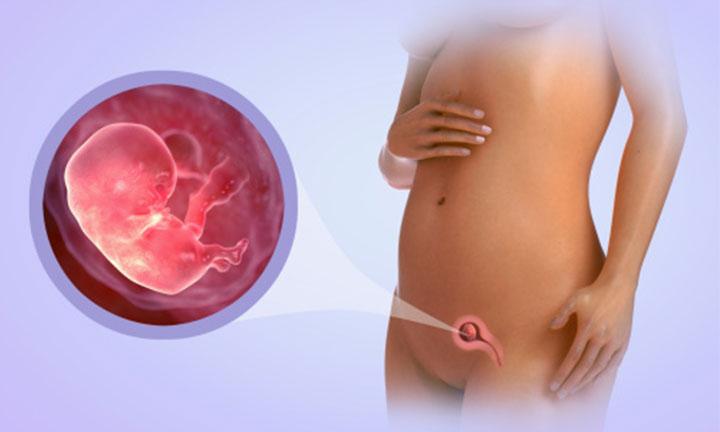
That little being growing inside you looks more like a fish or a tadpole than a human baby by week 6.  In the days following conception, that little tadpole has been tightly curled up but this week baby’s trunk and neck start to grow and straighten and the little fish-like tail recedes.

The lining of the placenta begins developing but the placenta will not take over production of the hormones until about week 12.

Baby’s head is oversized and there are dark spots where eyes and nostrils will form plus there are tiny depressions on the side of the head that will emerge as ears. Baby’s heart is starting to divide into the right and left chambers and is beating about 100 to 160 times a minute, almost twice as fast as yours! Baby’s heartbeat can now be seen in an ultrasound.

Your baby’s limbs start to lengthen this week to form arms and then legs, with their hands and feet resembling little paddles, which will eventually become fingers and toes. Their internal organs are also taking shape, with stomach, kidneys and bowel now defined, as well as 2 small buds which will form into lungs. Just like grown-ups, embryos grow and develop at varying rates, but you can assume baby is roughly half a centimetre long and may even start moving her tiny limbs during this week.

Just like adults, all babies are different and develop at varying rates in the womb. This information gives a general idea of your baby’s development and progress.

The Mum Update

Congratulations on your pregnancy!

Although you know you are pregnant it may be quite hard to actually believe, although for some women symptoms are already appearing such as tiredness, tender breasts, frequent peeing and nausea. Some even notice their clothes are starting to get a little tight.

It is important that you get started on choosing your Lead Maternity Caregiver (LMC) as in some areas of New Zealand they get booked up very quickly. Your LMC will look after you during your pregnancy and the first 6 weeks of baby’s life.

Additional week 6 reading

Your pregnancy at week 8

Welcome to your weekly pregnancy update where we outline the changes you and your baby are experiencing.

Your Baby

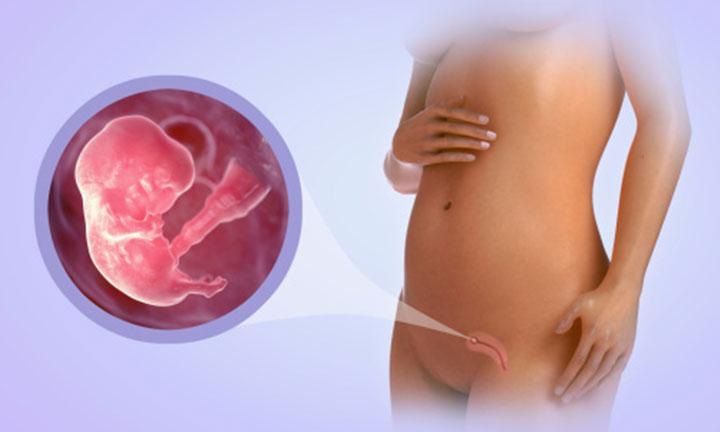
Your little embryo has grew to around 1.5cm to 2.5cm (roughly the size of a kidney bean) this week and his tail (which is really the spinal cord) is likely to have receded and the upper and lower limbs have joints like elbows and knees, giving baby a distinctly more human appearance.

Your baby’s hands and feet now have 5 ridges on each, separated by narrow grooves, making them appear webbed. Baby’s arms and hands are growing faster than its legs and feet – and that’s a trend that continues after they have been born.  Eyelids are forming on her face and nerve cells in the retina are beginning to develop, the tip of the nose is present and ears are forming, internally and externally.

In the heart, aortic and pulmonary valves are present and distinct. Tubes leading from the throat to the functioning part of the lungs are branched, like the branches of a tree. The body’s trunk area is getting longer and straightening out.

Right now, your tiny baby’s head makes up almost half his height and weight and there is a little tongue, nostrils and the tip of a developing nose.

Most of baby’s internal organs are present in their basic form, including the heart, brain, liver, lungs and kidneys. Your baby’s skeleton is starting to form and their arms and legs are now longer. Bones are also beginning to ossify, with baby previously made up of soft cartilage.

Just like adults, all babies are different and develop at varying rates in the womb. This information gives a general idea of your baby’s development and progress.

The Mum Update

This week you may have your first appointment with your Lead Maternity Caregiver.

The first appointment with your LMC is called the ‘Booking Visit’ and will likely include a comprehensive assessment of your wellbeing, identify if you may need additional care, discuss screening tests and blood tests. You will find out how your LMC operates and how s/he provides care and back up care and even where you would like to give birth. Your LMC will give you lifestyle and diet suggestions and information about available pregnancy services.

You likely have many questions, and your LMC will give you lots of information. You might like to print this list and take it with you to prompt you and to record the answers (baby brain may already be kicking in !).

Your uterus is getting bigger, but it probably still isn’t big enough for you to be showing, especially if this is your first pregnancy. You will notice a gradual change in your waistline and the fit of your clothes.

Your body is producing more estrogen and a side effect of this is an increase in a milky vaginal discharge. The purpose of this is to keep the birth canal free of infection so just leave it be (pop a panty liner on if its bothering you).

The increase in the production of the hormone preogesterone along with an increase in blood circulation can cause nose bleeds. Your nose may also produce more mucous.

If you thought you had escaped morning sickness, this week might be the week to prove you wrong! Morning sickness is a very normal sign and it will likely subside around week 12-14 along with the extreme fatigue you may be feeling.


All About Cloth Nappies

Back in the day, the safety-pin closure material of cloth nappies was messy and difficult. Later, the convenience of disposable nappies was a godsend to parents! But increasingly, modern parents are steering away from the harsh materials and landfill contribution that comes along with disposable nappies.

Thankfully, there are a slew of new, convenient options for those looking for an eco-friendly and safe alternative. It cant be a trial-and-error in finding the brand and style that best fits your baby and lifestyle though. Before you make such an investment, see if the brand offers smaller trial packs. Here are a few of the options available to you:

Fitted cloth nappies

Fitted cloth nappies are quite similar to disposables so may be the easiest option for parents new to cloth nappies.  A major advantage of one-size nappies is that they grow from infancy to toilet training, making them one of the most economical while still being easy to use. For those looking for the simplest option, try fitted cloth nappies, which don’t require any stuffing or lengthy assembly process. Use it as you would a disposable, except that you can throw it in the wash instead of the bin.

Traditional nappies or prefolds

Prefold nappies or the traditional flat square cloth nappies, are hands-down the most economical, but also the most time consuming. Prefolds are pieces of cloth that have been folded and sewn for extra absorbency, and require some type of closure or cover.  Folding your own nappies can seem tricky at first, but it can help if you have them folded stacked and ready to use at your nappy table.  For some ideas on folding, visit The Nappy Lady on YouTube. Prefolds and flat cloth nappies are an absorbent, affordable, multi-functioning option. Instead of spending upwards of $1,000 to get started on a cloth nappy system, most prefolds will cost no more than $200 from birth to potty training. And if you don’t like them? Use them as burp cloths, bibs or cleaning rags.

Hybrid nappies

More cloth nappy companies are coming out with hybrid systems, providing the convenience of a disposable but with the eco-friendly nature of cloth. Sometimes the piles of laundry or a bout of diarrhoea makes cloth nappies extremely unappealing, so some companies are now offering flushable, compostable and biodegradable inserts that are free of harsh chemicals or plastic. The inserts are made to fit into reusable nappy covers that also accommodate cloth inserts. Biodegradable inserts break down in 50 to 150 days, while disposable nappies sit in landfills for 500 years.

So here’s what you need to know:

  • there is a huge range of cloth nappy systems available in New Zealand; from the traditional cloth nappy through to quite sophisticated products that are easy to use. Some of the modern cloth nappies are just like their disposable counterparts, and some even outperform them!
  • many of the cloth nappy systems have a ‘starter pack’ which is useful for getting started
  • it is possible to hire newborn cloth nappy kits
  • cloth nappy systems are available to purchase online and the website will usually contain detailed information about the system , its benefits and how to use it
  • a good quality cloth nappy will be washed around 300 times or more
  • you can use a one-way liner to keep your baby’s bottom dry and protect the nappy from staining
  • be careful what detergent you use – remember these are going on your baby’s sensitive toosh
  • you can get cloth nappies in cotton, bamboo, hemp, micro fibre, or a combination. All fabrics have an impact on the environment during production, so do your research if you’re concerned

Your pregnancy at week 7

Welcome to your weekly pregnancy update where we outline the changes you and your baby are experiencing.

Your Baby

Just last week your baby looked like a tadpole but now it is turning into a proper critter as the small tail (an extension of the tailbone) becomes smaller. Your baby is growing at a rapid pace and has possibly doubled in size during the last week, to be around 1 cm in length. Each eye has developed in amazing detail and will have an optic cup, retina and lens – though there is little baby can see in the dark space inside your belly!

Your baby’s inner ears and tongue are starting to form and their upper jaw and palate come together this week, fusing as one. Your baby now has a pancreas and an appendix and the beginnings of their reproductive organs although you’ll have to wait until around week 16 to see with an ultrasound if your baby is a boy or a girl

Technically, your baby is still considered an embryo. The small tail, which is an extension of her tailbone, is starting to become even smaller. By the end of this week a fine, transparent layer of skin covers baby’s body and webbed fingers (which look more like paddles than proper limbs).

Fun fact – Your baby will develop 3 sets of kidneys during their gestation and at 7 weeks he is growing his second set.

Just like adults, all babies are different and develop at varying rates in the womb. This information gives a general idea of your baby’s development and progress.

The Mum Update

This week you may be having your ‘dating ultrasound’ to get a more accurate estimated due date (EDD), especially if your periods were not regular. While it sounds exciting be prepared that you might not see too much as your baby is still tiny. This scan is usually scheduled for the 7-11 week period.

While you may not be able to show off a big baby belly yet,  your breasts may feel tender and have grown as much as a cup size while the areola (the dark bit around the nipple) may have darkened.

You may notice you have excess saliva or ptyalism (pronounced tie-al-ism) along with the start of morning sickness. Some remedies for morning sickness also help with this drooling, like eating dry, plain cracker biscuits and having small regular meals.  Feelings of heartburn or indigestion can also be relieved by eating smaller meals more regularly, which sounds great unless you are suffering from food aversion. Extremely common, many women suddenly discover even the thought of their favourite food leaves them nauseous while previously unremarkable food becomes craved.


Skin Care For Newborns

Newborn skin is soft and sweet-smelling, but you might also be surprised by its appearance. Spots, dry areas, rashes, birthmarks and blotchy patches are all common.

Newborn acne

Newborn acne is very common and, just like their future bouts as teenagers, hormones are the culprit – your hormones, that is. Don’t worry; this is not an indication of future problems to come, and it should look better in the first few weeks. The best way to treat these clogged oil glands is to do nothing – don’t pick, scrub or treat them.

Dry and peeling skin

Peeling is simply the shedding of dead newborn skin, and using lotions won’t speed up this process. In week one, it’s mostly down to the transition from amniotic fluid to air. If it is still dry and peeling by week two, try using a specific baby lotion, which may prove pleasurable for both you and your baby.

Nappy rash

Nappy rash is common but is largely preventable. Change your baby’s nappy as soon as possible after it’s soiled. Then after wiping the area clean, use a warm wet washcloth to clean the area and apply nappy rash cream. If disposable nappies are causing very bad nappy rash, try switching to cloth and visa-versa.

Erythema toxicum

It’s a scary sounding name for a simple and short-lived skin condition that presents as blotchy red patches with pale centres. It occurs in around 50 per cent of newborns. The marks should start to clear up around week two and they should be gone by the four-month mark.

Birthmarks

Birthmarks are another common newborn skin issue that can come in all shapes and colours. Check out our extensive guide. Check with your doctor if you have any concerns.

Cradle cap

If your baby’s scalp is shedding what looks like dandruff or has yellow or brown crust patches, it could be cradle cap. There’s no reason to panic – not only is it fairly common in a baby’s early months, but it’s completely harmless. While no one knows what causes it, cradle cap (seborrheic dermatitis of the scalp) usually goes away in 6 to 12 months, isn’t contagious and doesn’t require any treatment. If it bothers you, try gently massaging the scalp with oil (olive or mineral) and using a soft toothbrush to scrub the scalp before gently combing the flakes out. Then make sure to shampoo so the excess oil doesn’t clog your baby’s pores, which could make the problem worse.

You could also try massaging sorbolene and glycerine cream into the affected area 2-3 times a day and then washing off in the bath, using a face-washer to stimulate the scalp. If your baby has a more serious case, your doctor might prescribe seborrhea shampoo or cortisone cream. If the seborrheic rash spreads onto the face or ears, it can be treated with a topical cream.

Hip dysplasia in babies

Hip dysplasia, also called developmental dysplasia of the hip (DDH) or clicky hips, is a congenital (present at birth) disorder in which one hip is dislocated or easily dislocated. Infant girls are about five times more likely than boys to get hip dysplasia. Hip dysplasia is also three times more likely to affect the left hip than the right hip. It can affect both hips in some instances.

What causes clicky hips?

Most cases of clicky hips are related to other congenital disorders such as cerebral palsy and spina bifida. Other cases may run in the family. Still others are the result of a breech delivery, multiple births, and first time delivery.

Signs and symptoms

Clicky hips are rather easy to recognize with a clunking sound when the hip is rotated being the most obvious sign. Other signs include:

  • Reduced joint mobility
  • Unusually wide perineum (the stretch of skin between the anus and the genitals)
  • The skin creases of the buttocks don’t match
  • One knee joint looks higher than the other

Newborn diagnosis

The doctor or nurse will check your newborn for clicky hips. They will place the baby on his back and rotates the hips to check for the disorder. In a baby with clicky hips, the socket that holds the ball of the hip (the joint) is too shallow, making it easy for the hip to slip out.

Testing

If the doctor believes that the mobility of your newborn’s hips is not quite right, your baby may be sent for an ultrasound to determine if your child has clicky hips or some other disorder.

Successful treatment

A pavlik harness can successfully treat clicky hips by holding the hip(s) in place as the child’s hips mature and grow. Most babies wear the harness for only three months. An x-ray may be taken at 6 months to confirm your baby’s hips are developing normally, as the baby’s bones are not developed enough to be x-rayed until after 4 months.

Older children are a bit more difficult to treat and may require surgery to correct the condition. After surgery, a hip cast may be necessary to keep the hip(s) in place.

Although most kids who have had treatment for clicky hips recover fully, some will develop arthritis in their hips later in life.

Written by Rebecca Stigall for Kidspot, New Zealand’s parenting resource for family health. Sources include Better Health Channel, NSW Health, and Health Insite.

Baby colds and coughs

On average, children can catch a cold three to eight times a year* so while your baby’s immune system is still developing they are likely to contract several colds.

How can my baby catch a cold?

  • Babies can come into contact with viruses by putting contaminated toys into their mouths, which is something we know all babies love to do!
  • Your baby can easily come into contact with other people who are carrying a cold virus and not have the mature immune system to fight it off.

The signs of a cold include:

  • A runny or congested nose
  • A clear nasal discharge that may become thicker and even turn green over the coming days
  • After being thick, the discharge becomes runny and clear again
  • When your baby develops a low grade temperature during the first 48 hours
  • Sneezing, coughing, red and watery eyes
  • A hoarse voice

Treating my baby’s cold

  • keep him well hydrated with plenty of fluids
  • keep her room at a regular temperature
  • consider using an air purifier to remove pollutants and allergens that might be irritating your baby’s respiratory system
  • keep your baby’s room at an even temperature (20-22 degrees)
  • if your baby has a fever, you can treat with age appropriate anagesics to keep them comfortable
  • heat a flannel with warm water and place over baby’s nose and cheeks (ensure airways are clear). This may help loosen some of the nasal congestion and soothe headaches
  • Use a humidifier to moisten the air or sit in a steamy bathroom with your baby
  • give lots of cuddles

When should I see a doctor?

  • When your baby has temperature above 37.5ºC and is less than 3 months old
  • If the symptoms of a cold persist for over a week
  • Baby begins to wheeze or gasp for air
  • If your baby begins to pull on his ears
  • If you are at all concerned with the health of your baby, then check with your doctor

* Source: Colds in children – https://www.healthinfo.org.nz/patientinfo/150982.pdf

Mixing baby formula

Breastfeeding provides babies with the best nutrition and is preferred whenever possible. However, if you are unable to breastfeed, or are using formula for any other reasons, it is vital that you have all the information you need to keep your baby safe and healthy.

The water:

  • Boil water and allow to cool. Boil town water for formula until your baby is at least three months old. If you are using bore or tank water, boil it until your baby is 18 months old
  • You should always boil water regardless of the age of your baby, if you are pre-preparing formula.
  • As filtered water doesn’t remove bacteria from the water, you should follow the rules above depending on the source of the filtered water.

The formula:

  • First up – wash your hands
  • Before you begin to make up formula, ensure that you have everything you need – sterilised bottles, clean equipment, and somewhere safe to store the bottle if you’re not going to be using it straight away. Wash and sterilise all equipment until your baby is at least three months old.
  • Always be careful to follow the manufacturer’s instructions.
  • Make sure that you level off each scoop so that you use the correct amount of powder.
  • Measure the correct amount of water before you add it to the bottle. Always add the powder to the water, rather than the water to the powder.
  • Don’t pack the powder into the measuring scoop.
  • Thoroughly mix the water and powder by shaking the bottle.
  • Test the temperature of the of the milk with a few drops on the inside of your wrist – it should be nicely warm (cooler is better than too hot though). Run the bottle under cold water if necessary.
  • If storing bottles in the fridge, make sure you put them at the back, where the temperature is the most consistently cool.
  • Discard any formula left in the bottle at the end of the feed.
  • Throw out any premixed formula that hasn’t been used within 24 hours. Reheat bottles by putting the bottle in a bowl or jug of hot water. Shake. Microwave reheating is not recommended.

Travelling with formula:

It is best to pack cool boiled water and powder separately and then mix them just as you need – this negates the need to carry an insulated bag of pre-prepared formula.


The World Health Organisation recommends exclusive breastfeeding for the first 6 months of your baby’s life, followed by the timely introduction of safe and adequate foods. WHO recommends continued breastfeeding for the first two years and beyond. Breastfeeding provides babies with the best nutrition and is preferred when possible. Always follow professional advice before using an infant formula. Proper use of an infant formula is important to the health of the infant, only use as directed.

Feeding your baby with reflux

What is reflux?

Reflux describes a medical condition where the muscle at the top of the stomach doesn’t work well enough to stop the contents of the stomach rising up the oesophagus resulting in vomiting. This is a common condition in babies and for most of them, won’t cause any concern. An estimated 8% of newborns experience either excessive or ‘silent’ reflux which can result in a very unhappy baby.

Excessive reflux

When reflux is excessive, the frequency and severity can affect your baby’s general health and wellbeing. Symptoms can include:

  • Behavioural changes – as a result of associating pain with sustenance, some babies will try to resist feeding.
  • Failure to thrive – not enough calories are being absorbed to allow growth.
  • Lung complications – aspirating even small amounts of the stomach contents can lead to lung problems such as bronchitis and even pneumonia.
  • Oesophagitis – bleeding and/or inflammation of the oesophagus due to stomach acid burning the oesophagus.

Silent reflux

With silent reflux, painful ‘heartburn’ symptoms are experienced instead of vomiting. Because there is no vomiting, this can be confused with wind or colic.

Babies suffering silent reflux typically experience discomfort 60-90 minutes after feeding at which time the stomach’s contents usually move into the intestines for absorption. With silent reflux,  the weak muscle at the top of the stomach means some food is squeezed upwards into the oesophagus.

How to feed your baby

While breastfed and bottle fed babies suffer from reflux equally, studies have shown that reflux in breastfed babies tends to be shorter and less frequent than those who are bottle fed. Breast milk is generally digested faster than formula, so it has less time to hang around and cause trouble. Regardless of how you are feeding your baby, you should:

  • Feed your baby in an upright position.

    If you are breastfeeding you may need to experiment with positions to find the best one that will allow your baby to remain fairly upright during feeding. Some mothers report success by having their baby face their breast while straddling their leg. Others prefer to stand up while feeding their baby in a modified twin-style hold.

  • Keep feeds small and frequent.

    Your baby may prefer to feed often and this is actually good for them as this causes less pressure on the stomach muscle than a large sudden intake of food.

  • Keep baby upright.

    For at least half an hour after feeding, keep your baby upright. You may want to hold him on your shoulder or perhaps use a front pack or baby seat.

  • Introduce a reflux-friendly routine.

    Try to keep to a routine where your baby feeds when he wakes up so that he’ll have plenty of play time to allow the milk to digest before lying down to sleep.

  • Don’t let your baby fall asleep while feeding.

    Catnapping on the breast or bottle always leads to pain once the feed has finished so try to avoid feeding when your baby is tired.

  • Try feeding solid food first.

    Once your baby is old enough to be eating solid food, try offering this to him before his milk feed as this seems to keep the milk down. For younger babies, try a small amount of thickened milk at the beginning of a feed. Many bottle fed babies find relief from reflux when thickened formula is used.

Helping your baby with reflux

You can help your baby with reflux be more comfortable by:

  • Burping regularly through each feed. By frequently burping your baby, you will keep the air that is gulped into the stomach during a feed to minimum, thereby reducing the volume of milk that may be vomited.
  • Changing nappies before feeding. This will avoid the necessity of lying your baby down when he has a tummy full of milk.
  • Avoiding reflux-y foods. If you’re breastfeeding, it’s best to avoid eating foods that may pass through your breast milk and upset your baby. These can include: spicy foods, caffeince, fatty foods, dairy products.

Choking hazards for your baby

Understand the difference between choking and gagging

Many babies gag as they learn to regulate the amount of milk or solid food they are swallowing – but there is a big difference between gagging and choking. Learning to recognise the difference will make mealtimes more relaxed.

The gag reflex automatically closes off the throat and pushed the tongue to the front of the mouth. It’s a reflex we have for our whole lives and is similar to the swallow, sneeze and cough reflexes. Your baby may gag a lot when you first introduce solid food – and later finger food – to her diet as she learns to regulate the amount of food she can manage to chew and swallow at one time. And much like adults, she is also likely to gag when she tastes food she doesn’t like.

If your baby gags, it will be a temporary situation and will resolve itself naturally and quickly. Some very young babies seem to gag a lot on their own spit – this is because babies tend to have excess mucous in their throat and the gagging reflex removes it so that their airway remains clear.

Choking occurs when the airway becomes blocked and prevents breathing. Generally, if your baby chokes, she will start to cough in an effort to dislodge the blockage. Soft foods are usually easily brought back up to the mouth with coughing but hard foods or other objects like small toys may require some additional help to dislodge.

IMPORTANT!

The key to effectively dealing with a choking incident is to stay calm. It is likely that your child will be able to dislodge the obstruction herself but this will be an upsetting incident for her – and you – and if you panic, you will only upset her further.

Choking first-aid

  • Check to see if your baby coughing, crying or breathing.
  • Monitor your baby if she is coughing as she may dislodge the obstruction on her own this way
  • DO NOT hit your baby on her back in an effort to dislodge the obstruction
  • DO NOT try to dislodge the obstruction by putting your fingers down her throat – this may just push the object further down the throat
  • If breathing becomes laboured at any stage, seek medical assistance immediately.

Babies under 12 months:

  • To assist a choking baby less than 12 months old, lie her face down over your lap, ensuring her head is lower than her chest, and then give her five firm blows between the shoulder blades using the heel of your hand. Check her mouth after each blow for the dislodged object.
  • If she is still choking, lie her on her back on a firm surface and, using two fingers, give her five chest thrusts in the centre of her chest, checking after each for the dislodged object.
  • If the object is still lodged, alternate between back blows and chest thrusts until emergency help arrives.

Children older than 12 months:

  • Bending your child over so that her head drops towards her chest, give a sharp back blow between the shoulder blades using the heel of your hand. Repeat up to five times, checking between back blows for the dislodged object.
  • If after five back blows, the object is still obstructing the airway put one hand on your child’s back and the other in the centre of her chest. Using the heel of your hand, give her five chest thrusts, checking each time for the dislodged object. Chest thrusts are similar to CPR compressions but are sharper and slower.
  • If she is still choking, alternative back blows and chest compressions until emergency help arrives.

IMPORTANT!

If your baby or child becomes unconscious, start CPR immediately.

Avoiding choking hazards

  • Never leave your baby unsupervised when she is eating or drinking from a bottle.
  • Never let your baby or child eat while lying down
  • Keep small toys and other objects out of reach of your crawling baby – babies can choke on anything that’s smaller than a D-size battery.
  • Always cut food up into small pieces.
  • The most common foods children under five years choke on are round-shaped and are sweets, grapes and nuts.
  • Avoid sticky foods such as peanut butter while your child is small and learning to regulate the swallowing of solid food.
  • Ensure that your child eats slowly, takes small mouthfuls of food and that she chews it thoroughly before swallowing.
  • Never force your child to eat.

TIP!

Consider introducing finger foods such as fruit via a feeding mesh bag. These mesh bags hold the food safely inside while allowing your baby to access the food by chewing on the mesh which keeps pieces very small and manageable.

This article was written by Ella Walsh for Kidspot. Sources include St John Ambulance Australia and Vic Governement’s Better Health Channel.

Join the Catch Up

Join our community of parents and let the Kidspot Catchup be your guide to creating unforgetable family moments.