DIY: Create A Kids’ Animal Face Stool

Sponsored content provided by Resene

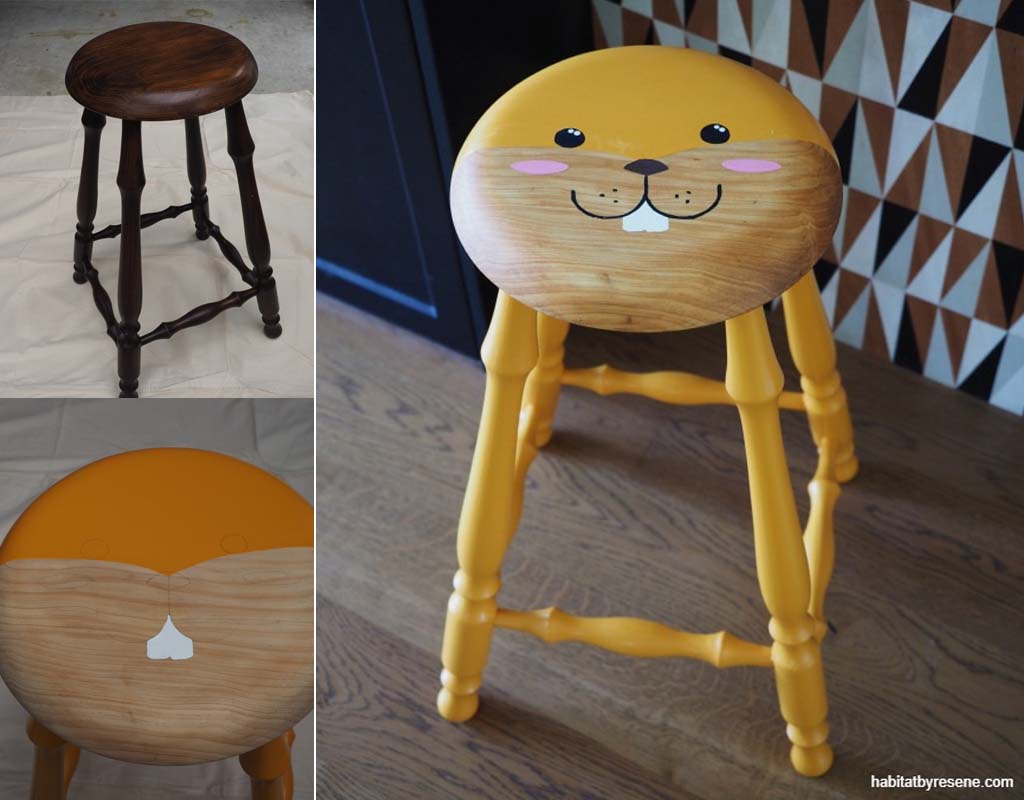
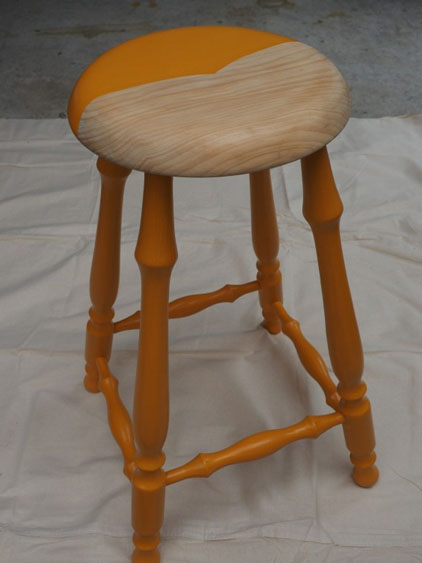
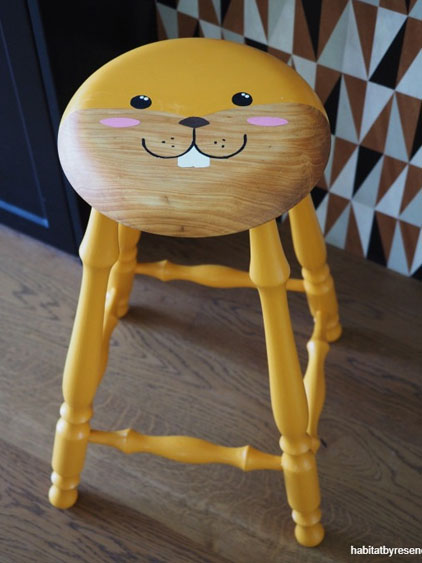
Upcycle an old stool with a cute-as-a-button animal face design that the kids will love. This bright and friendly face will encourage kids to sit down at mealtimes!

This project was completed by Fleur Thorpe for Resene.

You will need:

Upcycle a kids stool

Step 1

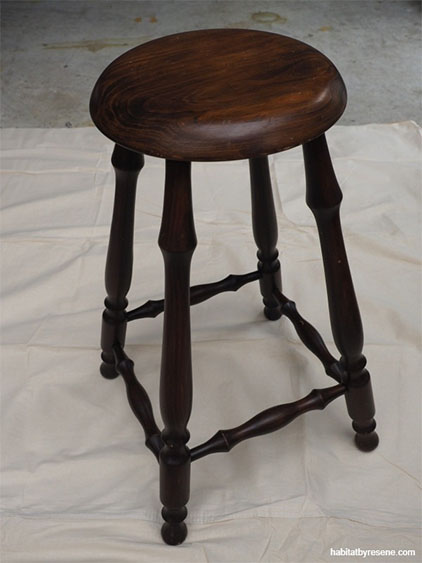
If you are using a second-hand stool for this project, prepare the chair for painting by washing down the chair with warm soapy water and a soft cloth to remove any dirt. Once dry, sand the legs with a medium grit sandpaper, this will help the primer adhere to the wood.  Use an electric sander to sand off the stain on the seat completely to expose the raw wood underneath.  Wipe the dust away with a soft dry cloth.

Upcycle a kids stool

Step 2

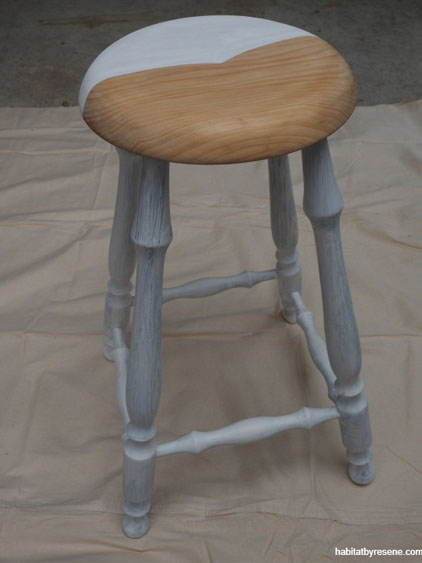
Prime the legs of the stool with Resene Quick Dry waterborne primer undercoat.  Prime  the top part of the chair which makes up the top of the face as well. Leave the muzzle of the face as raw wood. When the primer is dry, sand it lightly with a smooth finishing sandpaper.  Wipe the dust away with a soft cloth.

Upcycle a kids stool

Step 3

Paint over the Resene Quick Dry with Resene Lustacryl tinted to Resene Pirate Gold.  Resene Lustacryl is a hard-wearing semi-gloss enamel that is good for painting on furniture.  Once the first coat is dry, repeat with a second coat.

Upcycle a kids stool

Step 4

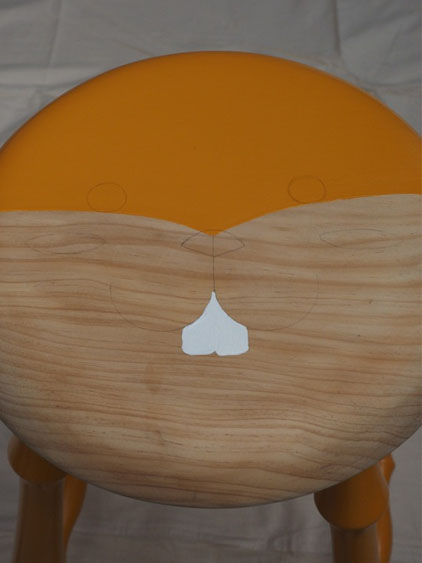
Use a pencil to sketch out the face.  Start with using Resene Quarter Dutch White to paint in the teeth.

Upcycle a kids stool

Step 5

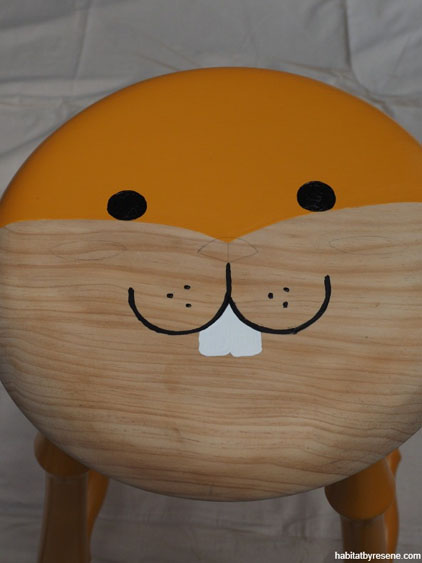
Next, use Resene Black to paint the eyes and mouth.

Upcycle a kids stool

Step 6

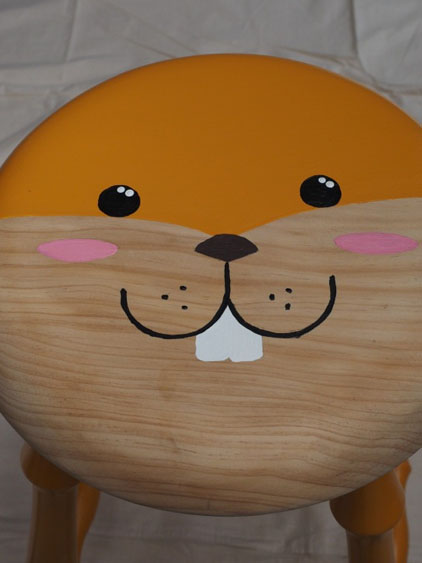
Use Resene Rebel to paint the nose, and Resene Glamour Puss for the cheeks.  Add a  couple of shine marks in the eyes with Resene Quarter Dutch White. Once the face is dry, use Resene Danska Teak Oil and a soft cotton cloth to oil the raw wood and the chair is complete.

Upcycle a kids stool

The finished chair painted with Resene Pirate Gold on the legs and the top half of the face with Resene BlackResene Quarter Dutch WhiteResene Rebel and Resene Glamour Puss for the eyes, mouth and nose details. The geometric background is painted in Resene BlackResene Half Rice Cake and Resene Truffle.

For more projects and colour inspiration visit Resene.co.nz

Article provided by Resene. Project and images by Fleur Thorpe

Read more on Kidspot:

Things To Consider when Choosing a Cot

Choosing somewhere for your baby to sleep is exciting and given that they are (hopefully) going to be spending a lot of time there in their first few years, it’s important that it’s safe, functional, and comfortable.

We take a look at the key things you should consider when choosing the perfect sleep spot for you baby.

Safety

In New Zealand, all cots sold must comply with the safety requirements of the National Standard AS/NZS 2172:2003 (with amendments).

There are a number of safety requirements that apply to all cots sold, be they new or second-hand. The safety requirements help to reduce the risk of injury to babies and young children. Household cots must meet certain design and construction requirements, and pass impact, strength and durability tests.

  • The cot must be more than 600mm deep
  • The mattress must fit the cot firmly
  • Spaces between the bars of the cot must be between 50mm and 95mm
  • The four corner posts must not stick up more than 5mm
  • The drop-side catches must lock securely
  • Screws and nails must not stick out
  • Cot ends must not have fancy cut-outs
  • There must not be any bars, ledges or other footholds that an infant can use to climb out of the cot
  • The base of the cot must be firm, with no parts to collapse or bend when pushed down

If you are purchasing a second-hand cot you need to check that all of the above apply, taking extra care to ensure the corner posts protrude no more than 5mm. You can cut off the posts but make sure the cut piece is left smooth. In addition you need to ensure that the paint used on the cot is not lead-based.

Sides that drop or not?

Drop-side cots or cribs feature one side that slides down. These cots have been banned in the USA and Canada after defects were found, In Europe, safety standards require the drop-side to lock in the lower position. Drop-side cots are used in New Zealand but must comply with product safety requirements.

Advantages to having a drop-side cot include making it easier to pick up your baby or place them in their cot, especially if you are not tall or have back issues. It’s also easier to change the bed linen.

However, it’s worth noting that the moving parts can become worn or loose over time, which is a safety concern. Drop-side cots are often more expensive and can be less sturdy than fixed-side cots and are becoming less popular so often there is a limited choice. Finally, dropping the side with just one hand can be more tricky on some models.

Teething rail

A teething rail is a protective plastic coating around the top edge/s of the cot. It prevents your baby chewing on the wooden slats of the cot and damaging them.

Convertible

Some cots have the ability to be changed up as your child grows to give you options to use it as a cot, day bed or toddler bed. These options come in handy as your child grows and be useful as you transition your child to a big bed.

Adjustable base

An adjustable bases means you can start with the base quite high for a newborn or baby, and then as they start to become mobile and pull themself up, you can lower the base. This alleviates the need for a drop-side.

Cot or bassinet / wahakura?

While cots can be used from birth, some parents choose to purchase a bassinet or wahakura (woven bassinet) for their babies.

Bassinets are ideal for newborns to around six months old as they’re smaller and can be easily moved or carried around the house. As with your cot, ensure that there are no gaps between the mattress and the wall of the bassinet or wahakura.

This article was written for Kidspot New Zealand with information supplied by Farmers.

Setting Up A Nursery

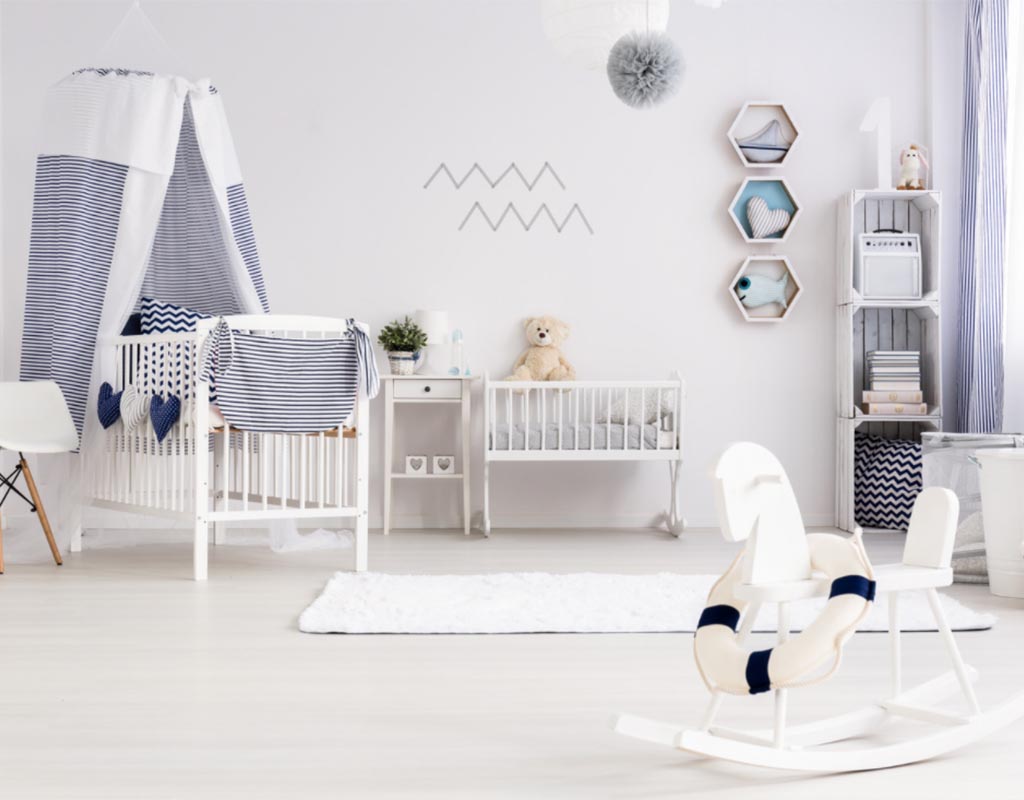
Setting up the nursery for your impending arrival is an exciting time. While you want it to look great, you also want it to be a calm and functional space that works for both you and your baby.

There are so many baby products available that it can be a bit of a headache deciding what is a necessity and what is a nice to have – so we have done the thinking for you!

Sweet sleep spot

The most important thing in the nursery is the cot or bassinet! After all, that’s where you hope your baby will be spending a lot of happy sleep time.

A bassinet is smaller than a cot and generally only fits babies up to around six months old. The benefit of a bassinet is that it’s easy to move from room to room if necessary. You can start with a bassinet or just go straight to a cot.

Depending on size, your baby will be able to stay in their cot until around 2-3 years old. Some cots are able to be converted into a toddler bed which extends their life even further.

In New Zealand, all cots sold must comply with the safety requirements of the National Standard AS/NZS 2172:2003 (with amendments).

Farmers Roomie

Change it up

A change table is not theoretically an essential although many parents will argue that it is. A change table means that the regular nappy changes you will be doing are done at a comfortable height and everything you need (including a change of clothes for the inevitable poonami!) can be stored underneath within easy reach. If the change table is on wheels, you can move it to where the action is – for example, the bathroom at bath time.

If a change table is not in your plans, a padded, wipeable change mat is an ideal alternative.

Sitting down

A comfy chair in your nursery can be a real life saver. Perfect for feeding and soothing especially during night feeds or when your baby is unsettled. Ensure the chair is wide enough to give your arms room to cradle your baby, especially useful if you are breastfeeding.

The chair will become the perfect spot for a bedtime story as your child grows.

Side table and lamp

Complement your chair with a side table that can hold your bits and bobs such as your phone and a water bottle, plus a lamp for some gentle lighting.

Storage

The saying ‘you can never have too much storage’ holds true in a nursery. Even though you start with a few tiny items, your baby will no doubt quickly accumulate all sorts of extra bedding, clothes, books, toys and equipment.

A solid chest of drawers is a great place to start as you can store clothes and bedding in there easily while cute knick-knacks can go on the top.

At first you can pop books in between bookends on top of the drawers too but soon enough you will likely need a bookcase.

Finally, add some shelves up nice and high away from enquiring fingers to hold precious gifts and keepsakes.

This article was written for Kidspot New Zealand with information supplied by Farmers.

DIY: Paint On A Crate

Sponsored content provided by Resene

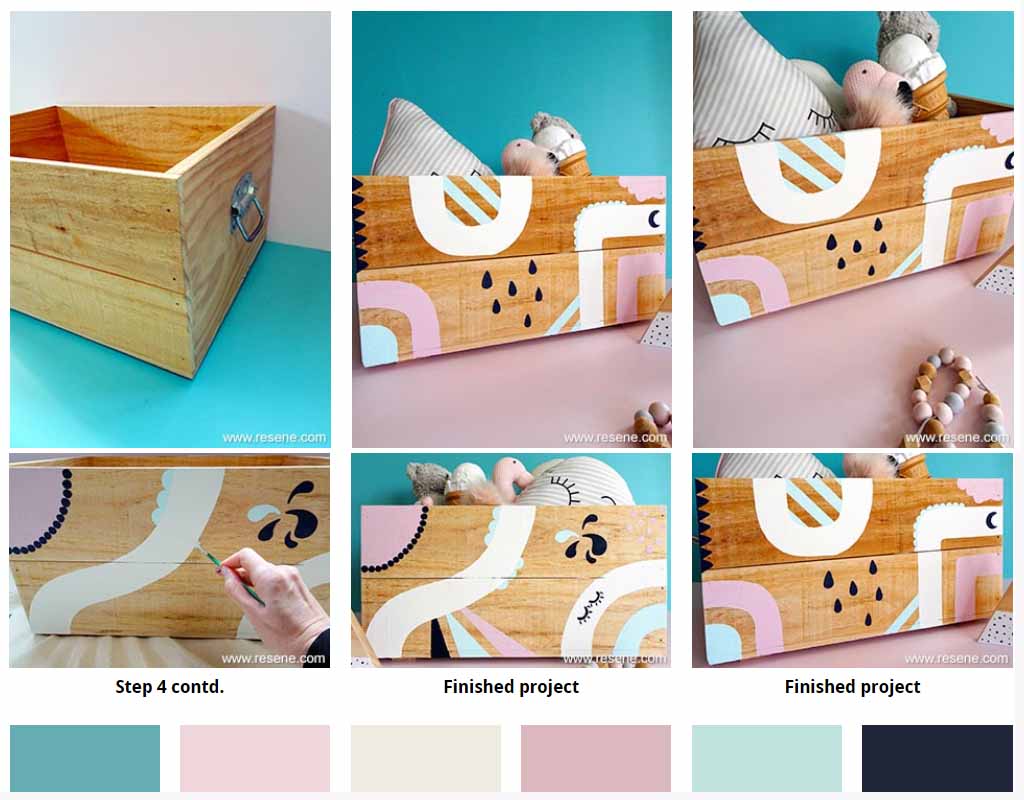
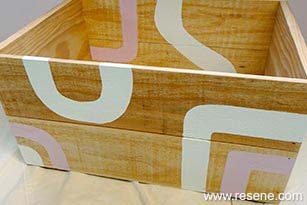
Paint a wooden crate and match it to your decor or get the kids to help with their favourite colours and designs.

Painting can be relaxing, and calming, a bit like an adult colouring book. Use your imagination and try a similar doodle-type of artwork on canvas, or paper.

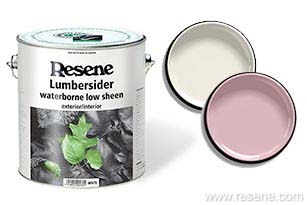
Background colours for this project are Resene Fountain Blue and Resene Pale Rose.

You will need:

Painted crate

Step 1

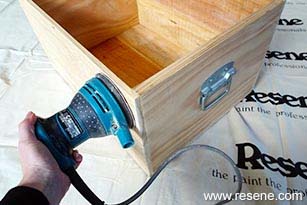
Plain wooden crates are fairly easy to come by. You can purchase simple storage ones from places like Kmart, or you might have a rustic old drinks crate in the garage. Lightly sand the crate first and wipe clean. Remove splinters if you are bringing an old one inside.

Painted crate

Step 2

Choose four colours for your colour scheme. Sarah used Resene Rice Cake, Resene Gelato, Resene Reservoir and Resene Midnight Express.

Painted crate

Step 3

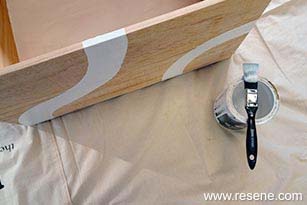
Paint bendy stripes all over the outside of the crate, and some on the inside too. I used Resene Rice Cake and Resene Gelato, using a testpot brush.

Painted crate

Step 4

Using all four colours apply lots of little doodles all over the crate. Think of it as much the same as scribbling on a piece of paper while you chat on the phone. Try polka dots, raindrops, zigzags and flowers. If you aren’t confident painting freehand, try stencils or use masking tape to help guide you. Use small detail brushes for this.

For more projects and colour inspiration visit Resene.co.nz.

Article provided by Resene. Project and photography by Sarah Herring. 2019

Read more on Kidspot:

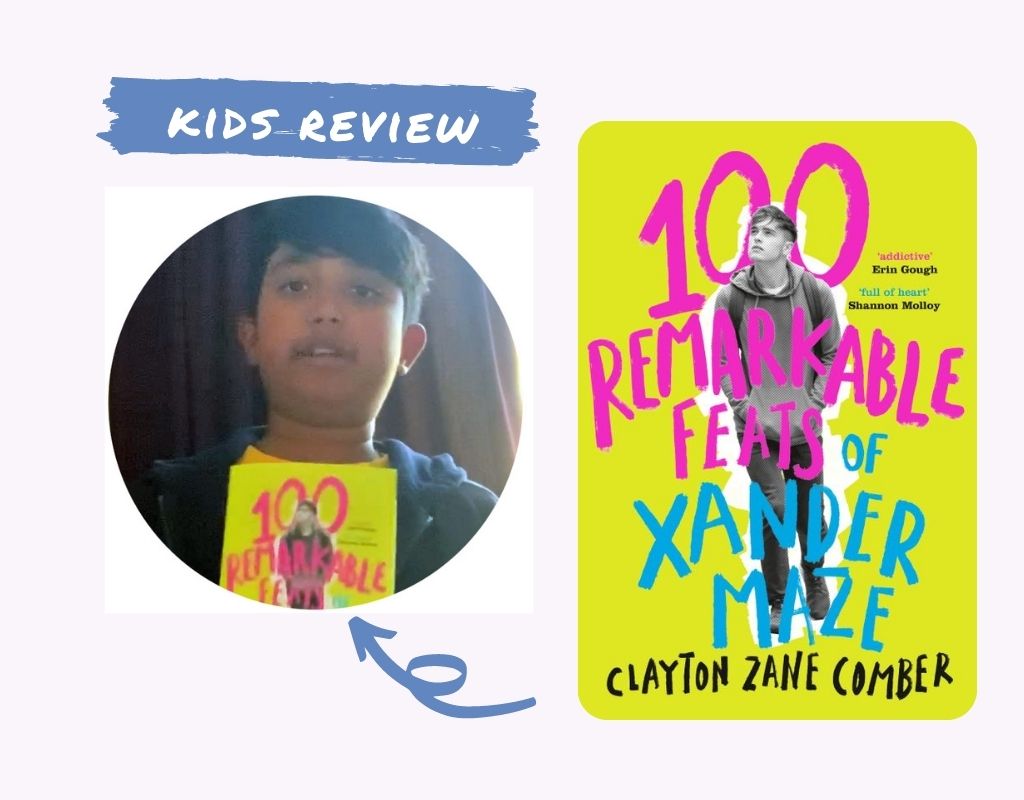
100 Remarkable Feats of Xander Maze by Clayton Zane Comber | Kids Book Review

Sponsored content

Can a list save a life?

Xander Maze loves lists, and his grandmother is #1 on his list of People I Love Most in the World. But now that Nanna has stage 4 cancer, can a new list of 100 Remarkable Feats really save her?

Particularly when his list contains difficult things like #2 Make a Friend and #3 Make a Best Friend – plus #10 Kiss a Girl (preferably Ally Collins, the girl of Xander’s dreams).

Funny, moving and with a protagonist you can’t help but fall in love with, 100 Remarkable Feats of Xander Maze is a book about:

  1. Never accepting the unacceptable
  2. The power of lists
  3. One boy’s unconditional love for his nanna

See what our Kid Reviewer Talia thought about 100 Remarkable Feats of Xander Maze below ⬇️

Read what our Kid Reviewer Nikita has to say about 100 Remarkable Feats of Xander Maze

“This story is about a teenage boy trying to save his nana. To save her, he has to create a list of 100 remarkable feats and complete them. I liked how it showed the inside life of a struggling teenager.  I would recommend this book to 11 to 13-year-olds because it can be quite emotional.”

Nikita

Grab your copy of 100 Remarkable Feats of Xander Maze now!

Funny Kid: Prank Aliens by Matt Stanton | Kids Book Review

Sponsored content

Ready to see a real-life alien? Laugh your head off with the super-popular Funny Kid series!

Every kid wants to laugh, but Max is the boy who can make it happen.

He’s also the kid who’s keen to spend the most boring school holidays ever coming up with the greatest prank of all time. Max is the funny kid and he’s going to prank the world!

Conspiracy theories, crop circles, alien invasions, a mayor who has lost his marbles and the most Un-fun Fair in the universe are just some of the things in store for Max and his friends in this brand-new Funny Kid adventure.

Another great kids’ read from Matt Stanton, a bestselling children’s author and illustrator who has sold more than one million books worldwide.

See what our Kid Reviewer Selena thought about Funny Kid: Prank Aliens below ⬇️

“This book is a novel and has aliens in it. This is a story about a 11-year-old boy named Max Walburt. He is a pranker and he plans to prank the world.

It was the school holidays and Max was very bored. He was in the Red-Hill Fun Fair which is for him the unfun – fair. He was with his four friends called Hugo, Pip , Abby and Tyson. They were talking about aliens while Hugo was really into his book. Max didn’t believe in aliens, so he continued to prank until one night an REAL alien appeared before him. How he described it was; green, slimy, octopus shaped, wobbles like jelly and rubbery. What he didn’t know was that this was a prank on him.

What I liked about this book was that it tells people that they need to stop pranking (unless it is April Fool’s Day) otherwise the people that you have pranked will get their revenge back and you won’t like it.

I give this book 10 stars because this book tells you what to do is right and which is not. It is amazing! I recommend this book to Year 5 and up because it is a pretty thick book.”

Selena

Grab your copy of Funny Kid: Prank Aliens  now!

Real Pigeons: Flexed Feathers By Andrew MacDonald | Kids Book Review

Sponsored content

Ever wonder why pigeons always act so weird? It’s because they’re out there chasing the bad guys and saving your butts!

The REAL PIGEONS use PIGEON POWERS to fight crime, solve mysteries and help creatures in the city.

But when CONCRETE starts mysteriously MELTING in the city, a FEATHER-SNATCHER goes on a plucking-spree and an EVIL HAT has a plan to CLONE the Real Pigeons, our feathered heroes are going to need more than just PIGEON POWERS to save the day!

No-one can protect a city like Rock, Frillback, Tumbler, Homey and Grandpouter. Crime-fighting has never been so COO!

This is the seventh book in the Real Pigeons series from author Andrew McDonald. Each book contains three hilarious, silly and and engrossing mysteries that readers in the 6 to 9 year age group will love.

See what our Kid Reviewer Payton thought about Real Pigeons Flex Feathers below ⬇️

“The book is about concern melting all over the city. A pigeon named Rock and his friends go to investigate.

My favourite part is when they go to a dog show and find there’s a magic hat that is stealing feathers and planning to clone the rock and his friends, and this might have some to do with making the concrete melt.

Recommended for kids who like reading funny stories, birds and going on adventures.

I rate it 8 out of 10.”

Payton

Grab your copy of Real Pigeons Flex Feathers  now!

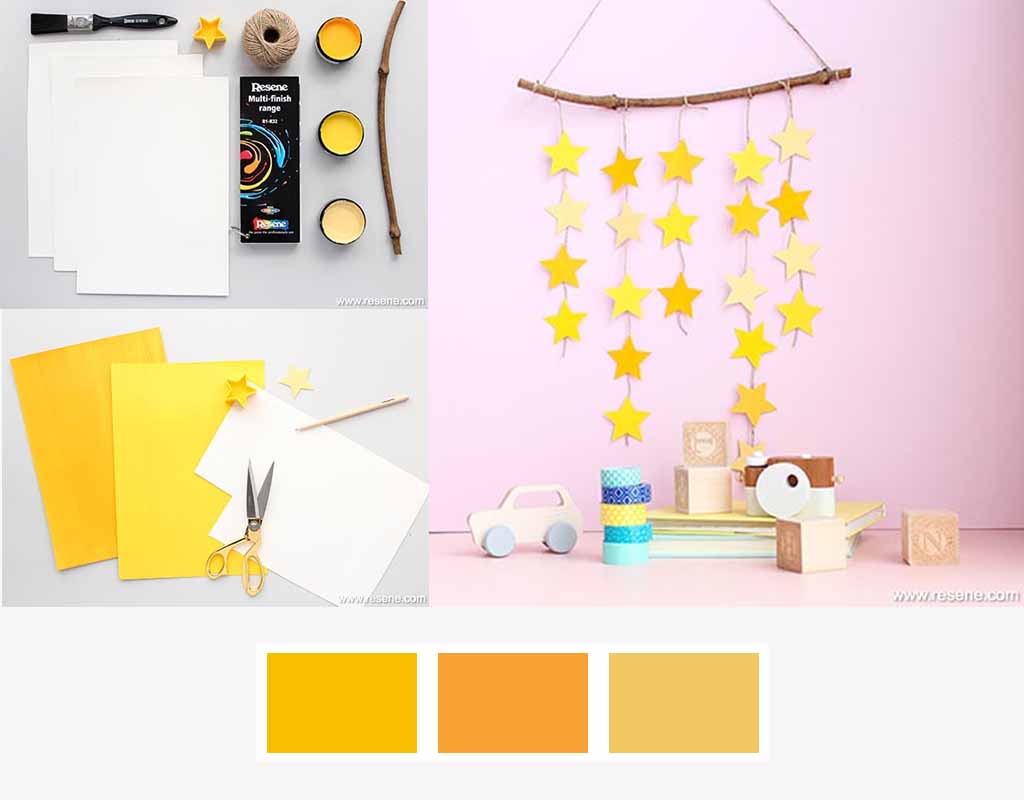
How To Make Your Own Star Bright Wall Hanging

Sponsored content provided by Resene

Encourage your kids to get creative with this easy star wall hanging idea, ideal to brighten up any bedroom or kid’s living space.

Or you could enjoy some creative time out and make it yourself.

Use different shapes to suit your room theme – think flowers, rocket ships, animal paw prints and more. Choose colours that fit with your room colour palette. Add an extra effect with Resene FX Metallic for extra shimmer or Resene FX Nightlight for a glow-in-the-dark effect.

Star Bright Wall Hanging

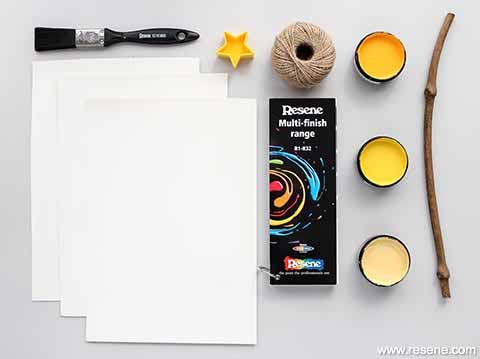
You will need:

Star Bright Wall Hanging

Step 1

Using the testpots, paint the cardboard and leave to dry.

Take the stencil/cookie cutter and trace the stars onto the cardboard. Cut out the stars (we used seven of each colour).

Star Bright Wall Hanging

Step 2

Tie five pieces of string, hanging at random lengths, along the branch/dowel. Also, tie one on each end, and hang onto the wall.

Use the glue to place the stars along the pieces of string, mixing up the different yellows.

For more projects and colour inspiration visit Resene.co.nz.

Article provided by Resene. Project by Nikki Astwood, 2020.

Read more on Kidspot:

Add Flair To The Walls In Your Child’s Room With Bold Geometric Shapes

Sponsored content provided by Resene

Bold geometric shapes are a popular way to add colour without going overboard and can add real flair to a child’s room with little effort.

Bold stripes, triangles, chevrons and squares are all easy to create with just a bit of masking tape. It’s a look that’s simple enough that older children may even want to try creating themselves.

Bold shapes lend themselves to bold colours and unexpected matching. Double down on a daring palette and try mixing deep blue like Resene Surfs Up with a bright green, such as Resene Neva or Resene Tutti Frutti, or burnt orange like Resene Smoke Tree with vibrant turquoise, such as Resene Seeker or Resene Sea Green. Another great option is graduated stripes in different saturations of one colour, starting with the deepest version at the bottom of the wall and working up to the palest where it meets the ceiling

If stripes aren’t your thing, try blocking out shapes in different areas of the room to delineate spaces within it, such as a study zone, vanity or sleeping area.

You could also try an asymmetrical design where shapes overlap one another to add visual interest.

Geometric shapes for kids rooms

All the right angles

This playful room started with a neutral base palette of Resene Double Cod Grey (for a current alternative try Resene Element)Resene Black White and Resene Surrender with dramatic pops of Resene Fountain Blue and Resene Fizz layered on top. The unexpected angles of the shapes on the walls and the continuation of Resene Surrender onto the floor make the room feel larger while the dark contrast of the Resene Double Cod Grey details and simple shapes keeps things from feeling too busy.

Painted wall hooks are not only an easy way to tie your colour scheme together but are a handy way to keep things tidy and get belongings up off the floor. We’ve painted our hooks in Resene Fizz, Resene Fountain Blue and Resene Double Cod Grey (for a current alternative try Resene Element). The wall is painted Resene Black White and Resene Surrender, with Resene Surrender also continued onto the floor.

Top tip: Take your time to plan your design on paper first, then measure and mask it out.

Learn more about this look

Jungle theme bedroom

Monkey Around 

Kids will love this modern take on a jungle-themed bedroom with its vibrant stripes and splashy palette. The walls are in deep Resene Bunting with Resene Hi Jinx and Resene Keppel stripes and accents. Hints of stained wood, natural textures and plants keep bold palettes fresh and prevent them becoming overwhelming.

Note: Rejuvenate timber flooring with Resene Colorwood wood stain and finish with Resene Qristal ClearFloor to enhance the colour while still allowing the grain to show through.

Carrying the same colours onto the corkboard at playful angles creates a nice visual counterpoint to the orderly stripes on the wall.

Learn more about this look

Colour block

Block out

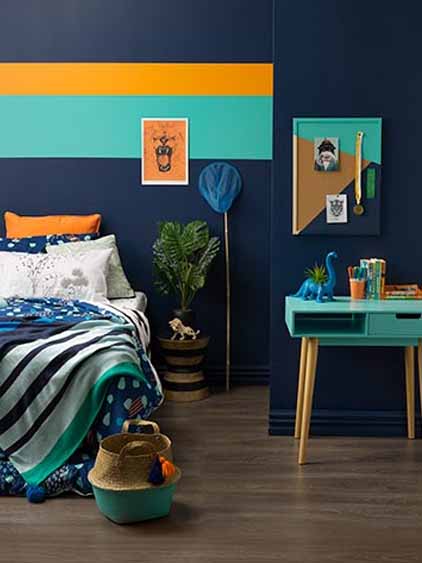
Try unique combinations like this colour-blocked feature wall to break up a big space and keep things grounded. This room is finished in navy Resene Blue NightResene Big Bang and Resene Flower Power against a backdrop of Resene Half White Pointer on the walls and floor. The same colour scheme can be used for fun and easy DIY art projects to decorate the space.

Top tip: Start with a duvet or cushion your child already loves and let them pick out two or three other colours to complement it.

Learn more about this look

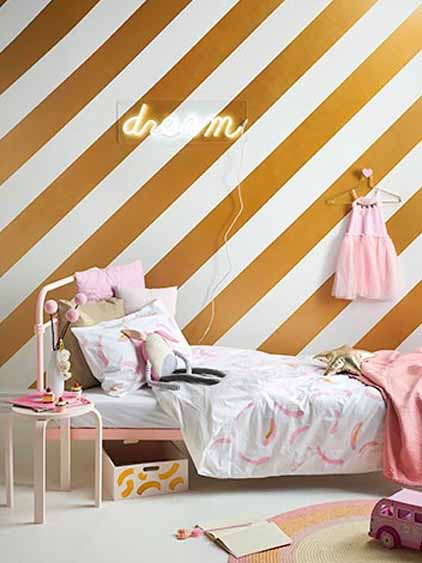
gold and white stripes

All that glitters

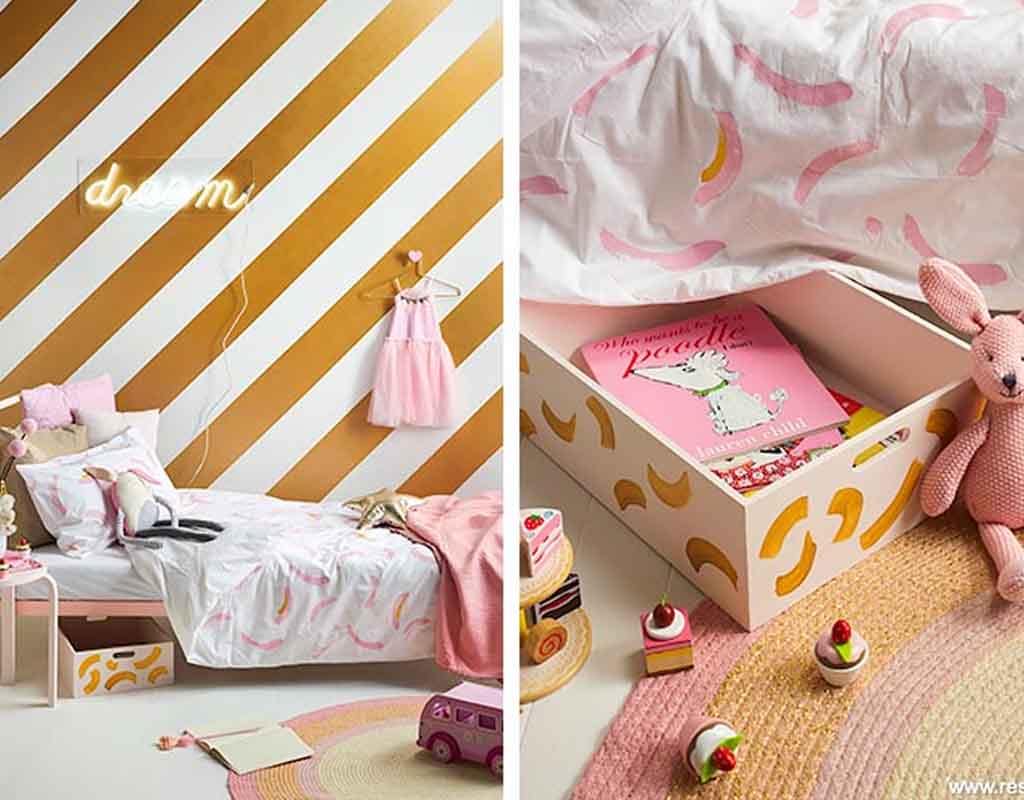
Go full glam with these bold gold and white stripes in Resene FX Metallic Gold Dust and Resene Black White, which was also used on the floor. Subtle pink accessories such as the bedside stool in Resene Pot Pourri and the wooden heart wall hook in Resene Pink Terrace (for a current alternative try Resene Cosmos) add softness to balance out the crisp stripes. As a unique detail, the underbed storage box has been painted Resene Pot Pourri and repeats the pattern of the bedding in Resene FX Metallic Gold Dust.

Other colours to consider that can really make gold sparkle are navy blue or bright magenta, such as Resene Surfs Up and Resene Colour Me Pink.

Paint low profile boxes to match your design and keep them under the bed for storing extra toys, books and blankets.

Learn more about this look

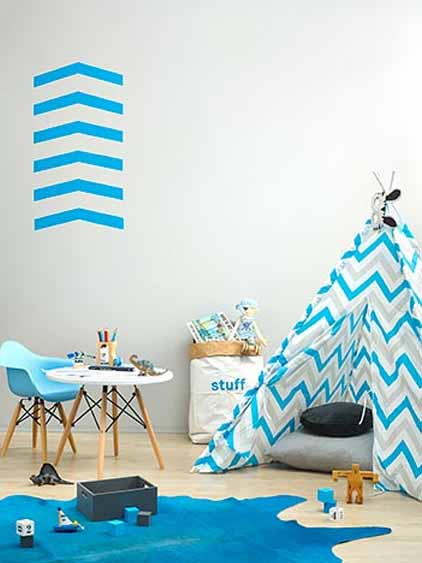
Chevrons

Point the way

A patch of bright chevrons pops in Resene Curious Blue and sends the message that this space is a fun place to be. While blue is a popular choice, whatever colour your child loves best would look just as good over the top of clean and contemporary Resene Triple Concrete walls. Monochromatic accents, such as the wooden box in Resene Half Tuna and the wooden blocks in Resene Picton Blue, in an otherwise neutral room create continuity while keeping things fresh and interesting.

Learn more about this look

Blurring

Born free form

Blurring is a creative alternative to conventional linear shapes. Bleeding colours into each other can really change the perspective of a room and keep it from becoming too boxy. Resene Ruby Tuesday bleeds into Resene Point Break on the wall of this vibrant, surprising nursery to spark a lifetime of imagination. For current alternatives of these colours, try Resene Japonica and Resene Mariner.

For more projects and colour inspiration visit Resene.co.nz.

Article provided by Resene.

Read more on Kidspot:

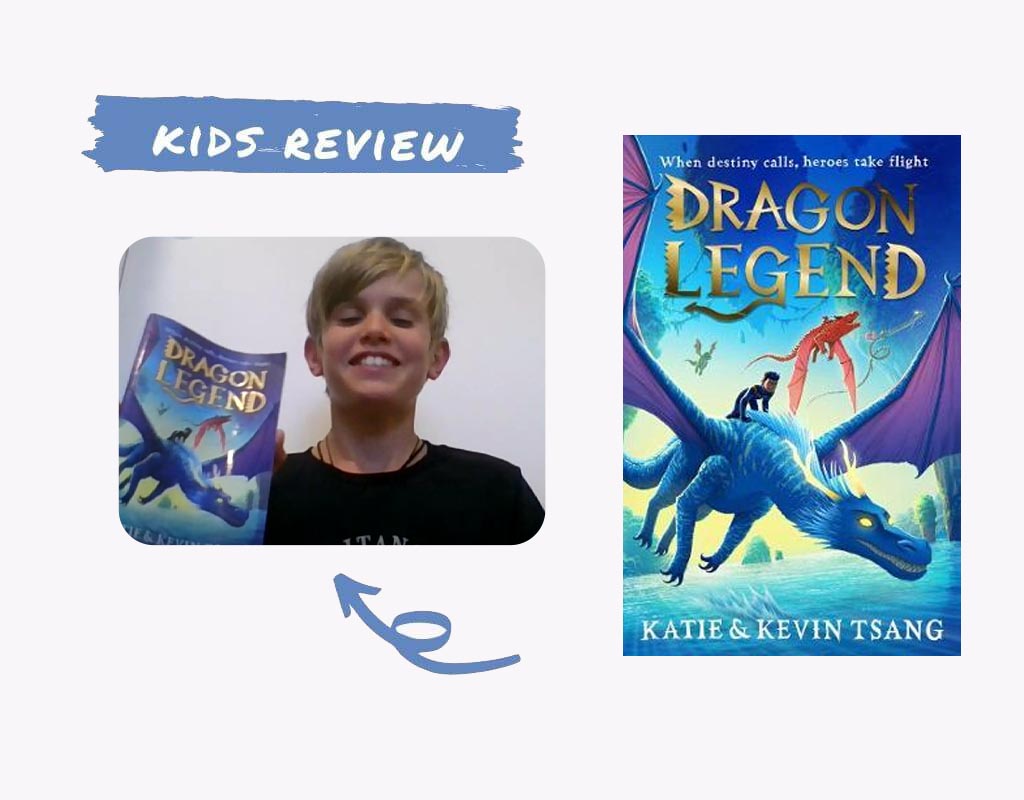
Dragon Legend by Katie Tsang & Kevin Tsang | Kids Book Review

Sponsored content

Dragon Legend, the second instalment from authors Katie and Kevin Tsang, combines adventure, humour and dragons to create a fantasy that will captivate young readers.

Billy Chan and his friends are not having a very relaxing summer. Their friend, Dylan, has been kidnapped by the evil Dragon of Death and it’s up to them to travel through time, back to the dangerous Dragon Realm, in order to save him. Luckily they have their own dragons on side, but they’ll need to collect eight magical pearls if they’re to amass enough power to destroy the Dragon of Death and her followers for good.

So begins an epic quest that will take them to the depths of the Frozen Wasteland and the imperial palaces of Ancient China. But can good triumph evil?

See what our Kid Reviewer Lachlan thought about Dragon Legend below ⬇️

And here’s what Kid Reviewer Nikita has to say about Dragon Legend

This book is about trusting, finding a friend and creating new friends. It also shows how people create new friendships and learn to trust each other. I liked the way they explained everything (the scene, the way the characters look).

Review by Nikita N

Grab your copy of Dragon Legend now!

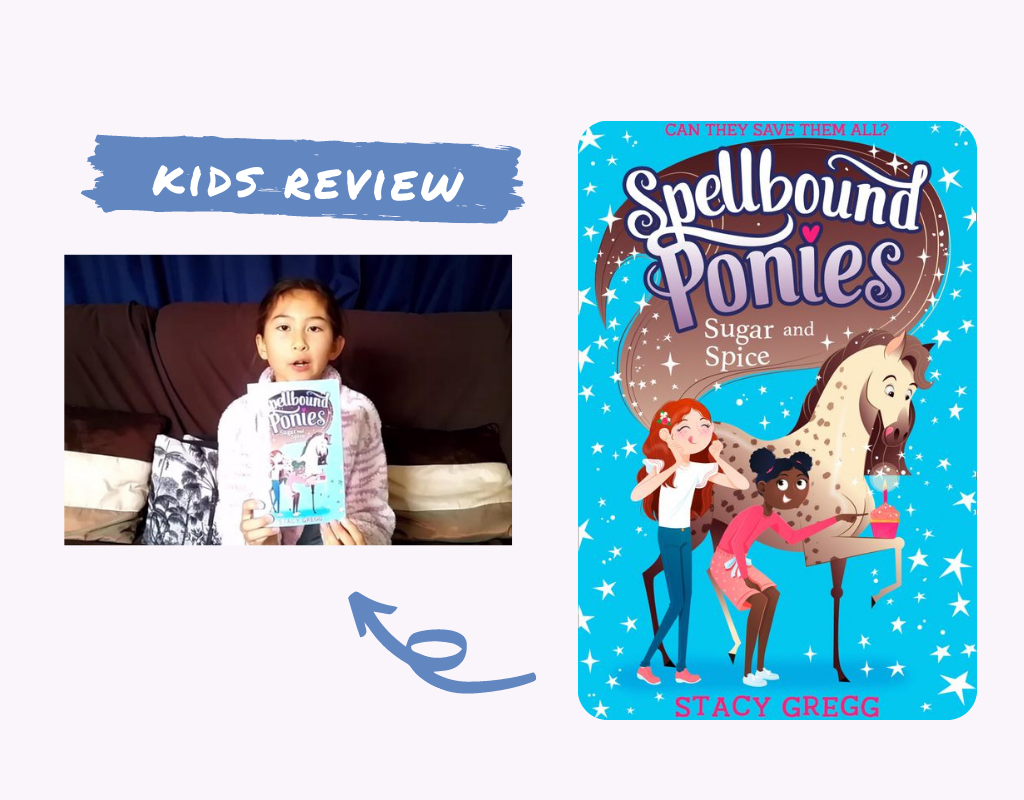
Spellbound Ponies Sugar and Spice by Stacy Gregg | Kids Book Review

Sponsored content

Sugar and Spice is the second instalment in the new pony series by Stacy Gregg, author of successful pony adventure series Pony Club Secrets and Pony Club Rivals.

Perfect for young readers who are ready for their first chapter books this enchanting story takes your young reader on a magical pony adventure.

Can they rescue ALL the ponies …

The ponies of Pemberley Stables have been bound by magic and each of them are trapped in time. Can two brave girls help get them back?

Prince the racehorse isn’t as speedy as he used to be and his love of fine dining isn’t helping matters. Can Olivia and Eliza help break the spell and get Prince working out again in time for the big race?

See what our Kid Reviewer Shannon has to say about Spellbound Ponies Sugar and Spice

Grab your copy of Spellbound Ponies Sugar and Spice now!

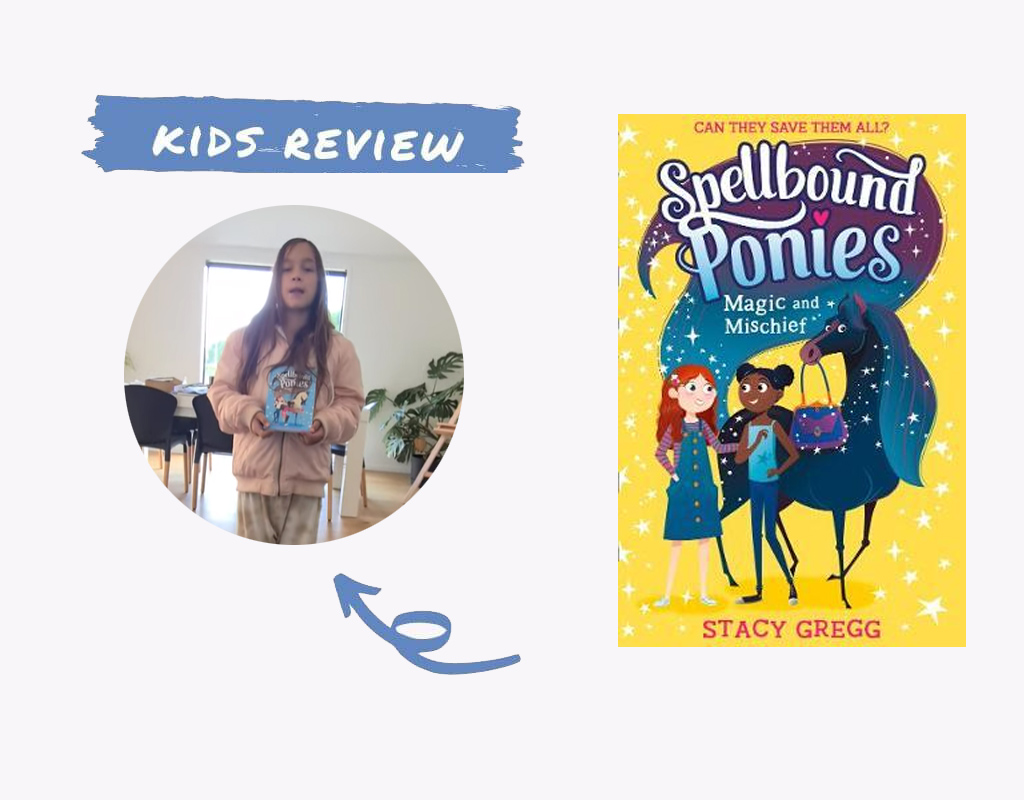
Spellbound Ponies Magic and Mischief by Stacy Gregg | Kids Book Review

Sponsored content

Stacy Gregg, author of successful pony adventure series Pony Club Secrets and Pony Club Rivals, is back with a new series of magical pony adventure books.

Perfect for young readers who are ready for their first chapter books, these are enchanting stories taking the reader on magical pony adventures.

The ponies of Pemberley Stables have been bound by magic and each of them are trapped in time. Can two brave girls help get them back? Bess the highway pony is very good at robbing the carriages and loves life just the way it is.

Can Olivia and Eliza help break the spell that is making Bess so naughty, and prove that crime really doesn’t pay?

See what our Kid Reviewer Kaylan thought about Spellbound Ponies: Magic and Mischief below ⬇️

And here’s what Kid Reviewer Selena has to say about Spellbound Ponies: Magic and Mischief

This book is a work of fiction, ghost stuff, and magic. It is about a little girl named Olivia who loved ponies and was excited when she got to go on her first riding lesson. But then she found out that the place was haunted and was curious so she pushed open the doors and made friends with a ghost girl named Eliza.

They helped one pony to go back to itself from a curse that was impossible to break. Eliza’s mother paid a witch six gold coins to cast the curse which has a very good reason behind it. Six gold coins were very expensive back in the olden days.

What I liked about it was how Stacy had used her imagination of the ghostly stuff and the ponies and everything!

I give this book 10 stars out of 10. It was amazing. I would recommend this book to be read all over the world but only to ages like us because it is amazing, it is fabulous and it is the best fairy tale I have ever read.

Review by Selena H

Grab your copy of Spellbound Ponies: Magic & Mischief now!

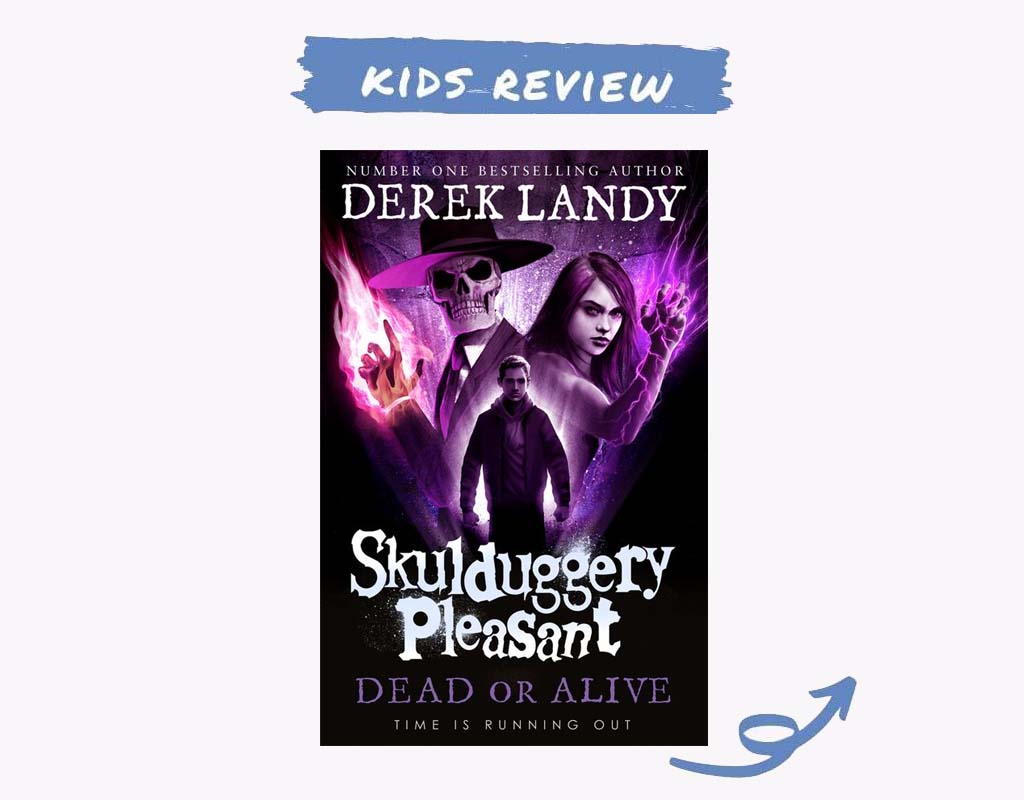
Skulduggery Pleasant (14) – Dead or Alive by Derek Landy | Kids Book Review

Sponsored content

Author Derek Landy is back with the 14th instalment and penultimate novel in the internationally bestselling Skulduggery Pleasant series.

Skulduggery, Valkyrie and Omen face their most epic test yet … in a matter of days, the world will change.

Billions of lives will be wiped away in a final, desperate search for the Child of the Faceless Ones — she who is destined to bring about the return of humankind’s ancient overlords.

To prevent this, Skulduggery Pleasant and Valkyrie Cain have one last – terrible – option: the assassination of Damocles Creed. With protests stirring in the magical city of Roarhaven and with riots and revolutions on the horizon, Valkyrie must decide who she wants to be: the hero who risks everything for a noble ideal, or the killer who sacrifices her own soul for the fate of humanity.

The decision must be made, and time is running out.

Here’s what Kid Reviewer Taya has to say about Dead or Alive

Valkyrie Cain and Skulduggery Pleasant must try to stop the world from being taken over. They have 21 days to save the world and they are always in danger.

The story is a mystery and adventure book all in one. I love the way it was written. If you love magic mystery and adventure, enjoy dragons and a story of people creating friendships then you would really enjoy this book.

I would recommend the book to someone that has a creative imagination. It has a few twists and turns which make it interesting to read.

by Taya N

Grab your copy of Skulduggery Pleasant (14) – Dead or Alive now!

How To Save For Your First Home In A Changing Economy

Buying your first home takes careful research, planning and budgeting and, in the current environment, nerves of steel! For most people the biggest hurdle is saving for the deposit.

We take a look at what the experts say and also tips from our Kidspot whānau on what has worked for them.

Get your house in order

First up, the experts agree, it’s important to get your current finances into tip-top shape.

If you have any debt, and this includes credit card debt that you are not fully servicing each month, store cards, pay day loans, car or furniture payments, family debts, or pay-later options, clear that first. Pay off the highest interest items first, and consider a debt consolidation loan where you bundle all your debts into one and where the overall interest and penalties are lower overall.

Consider getting some free advice from a financial mentor to help you navigate this process and also ensure you are making the most of local networks and support. You can find a free, local financial mentor at Money Talks.

Set up a budget and allocate money towards paying off your debt.

Keep in mind that your financial health and history is going to be an important input into your home loan approval process.

Goal setting

Once you are ready to start saving, setting a savings target is the next step. In the current environment of rapidly increasing house prices this can be a bit of a moveable feast but do some research on what the house prices are like in the area you want to buy in, and what percentage deposit you will need to pay. Keep in mind that the higher percentage deposit you make, the less interest you will likely pay over the long term.

Put together a realistic budget and stick to it! There are lots of budgeting tools available online. Your bank might have tools that help you track your spending and make a budget, or you could use the easy to navigate budgeting tool at Sorted.org.

Work the system

If you are in KiwiSaver already you may be eligible for a KiwiSaver First Home Grant which is up to $5,000 towards an existing home or up to $10,000 towards a new home or land to build on per person. Check how much your employer contributes and consider increasing your contribution to ensure you get the maximum from them.

If you are not already with KiwiSaver, and you think saving your deposit will take more than three years, consider joining in order to get the benefit of the employer contribution as well as the annual $521 government payment.

If this will be your first home, check out the possibility of a First Home Loan underwritten by Kāinga Ora.

Save, save, save

We asked Kidspot users for their top tips on how they saved for their first home and here’s what they told us:

  • We cut all non-essential spending (Netflix etc).
  • Replaced takeaways with easy meals like tomato on toast or soup, and took a packed lunch to work.
  • I stopped having a takeaway coffee every day and instead chose to treat myself to one takeaway coffee each week.
  • Got out cash each week to cover non-essentials and only spent that. It meant I could see what I was spending and how much I had left, and stopped me using my EFTPOS card willy nilly.
  • I set up an excel sheet to keep track of my essentials (rent, petrol etc.) and set up a savings projection graph so I could visualise my goal.
  • I save a set percentage of my pay each fortnight and top that up with anything I don’t spend.
  • I increased my Kiwisaver contribution.
  • We would budget for bills and food and any money each week or month which was less then what we had budgeted went straight into the savings account.
  • Our bank offers a system where they round your EFTPOS transactions up to the nearest $10 and that difference goes straight into a savings account.
  • I make sure I don’t waste money on cheap stuff that I won’t eat or use eg, I eat a few cheaper meals (that I still like) and so I can occasionally have a great piece of steak.
  • Buy homebrand grocery items but double check the bulk bin pricing as often it’s more expensive! I also make the effort to shop at my local fruit and vege shop as the prices there are great.
  • I put all our bills on automatic payment so we never incurred penalties and we also only paid at the very last minute.
  • We gave our deposit a real boost by selling one of our cars! We decided to make do with one and it wasn’t as difficult as we thought it would be.
  • I babysat and put everything I earnt directly into my savings – it was amazing how much it added up to.
  • We downgraded our rental property and saved $100 per week.

Changing goal posts

For many, the seemingly unrelenting increase in house prices makes the prospect of ever being able to own a home feel impossible. The good news is that interest rates fluctuate over time and the Reserve Bank and Government often put in place changes with the goal of slowing down the market when needed. So keep saving hard for your deposit!

Good Debt, Bad Debt And How To Manage It

The concept of ‘good’ versus ‘bad’ debt is a useful way to help make financial decisions  – although the line between these can become blurred depending on different financial situations.

We take a look at different types of debt, their pros and cons and how this can be used to manage your own personal circumstances.

Good v bad

You may have heard the phrase ‘debt is your friend’ being thrown about. This is referring to ‘good’ debt or debt that you take on with the potential for you to increase your personal wealth or income over time. ‘Good’ debt generally refers to things like student loans, property mortgages, or a business loan.

The term ‘bad’ debt generally applies to money that you borrow to buy something that will reduce in value after purchase such as clothes, furniture and other household goods, cars and boats. People borrow money for these through credit cards, personal loans, pay-later options, revolving credit, loan shops, pay day loans, and using your property as security.

So this all seems pretty straight forward, until we start taking a look at how individual circumstances might change things.

The grey area

For many New Zealanders having a car or vehicle of some description is essential yet most cars except for a few classics, undeniably lose value. House prices are at an all time high so it’s possible that in the short to medium term houses purchased now might devalue. Your student loan might never result in you gaining a higher paid job, and financial circumstances might mean that from time to time you need to spread the cost of something over time.

Further, while some people have the luxury of never having to go into debt to buy even a modest car or pay for an unexpected cost, that is not the reality for all.

Getting real

When taking out debt, be confident that you are able to service that debt, and that is a debt that will give you more back than what you put in. Or, if you can’t get that confidence because of circumstances, do your research and ensure you are getting the best option for your needs,

While your car will undoubtedly reduce in value and incur running and maintenance costs, it might be an essential for work. Buy one that meets your needs whilst also being low maintenance and within your budget.

There are clever ways to balance your debt to save money on day to day living. Revolving credit and pay-later options used correctly can be used to pay off debt faster, especially if used in conjunction with a credit card that is paid off fully each month. Just make sure you understand the terms of use and can make the payments required.

If you don’t have many savings for emergencies, such as if your fridge or hot water cylinder dies or you need urgent repairs on your car, do some research to make sure you can access the cheapest money possible. Explore options such as personal loans, overdraft arrangements with your bank, or pay later options so that you can avoid pay day loans as they are one of the most expensive way to borrow money.

Getting sorted

If you find yourself with a range of debts that you consider ‘bad’, you could consider debt consolidation. This is where you pay off all your debts with one loan that has a lower interest rate. Talk with your bank, other reputable lending institution, financial adviser or mentor for advice.

Always consider all of the financial implications including fees, interest, security, and repayments of any new arrangements. We highly recommend seeking financial advice before taking on or changing your debt arrangements.

The Value Of Financial Advice

While managing your finances both for the short and long term can be challenging, it is important to get it right. Having an expert’s guidance with your day to day budgeting, as well as setting and meeting medium and long term goals, can be hugely helpful.

We take a look at the different types of advice available, how to access them, and what to look for when choosing someone to help you out.

The value of good advice

Changing from two incomes to one, budgeting, paying off debt, saving for a house deposit, choosing insurance, inheriting money, selling an asset, a new job, tax calculations, and making investments are all situations that you might need to deal with at various times in your life.

These are all quite varied situations and conducting your own research and building your knowledge across all these areas can be time consuming (and confusing!). While it’s important to do some of your own research, tapping into someone’s specialist knowledge can often help you achieve a better financial outcome.

You can also use different providers for different things – a specialist insurance adviser might be able to get you better insurance coverage for less than you are currently paying while a mortgage adviser can easily give you advice about all the banks’ offerings and options.

Another benefit of using specialist advice is that it can help remove the emotion from decision making and reduce tension between you and your partner as you make difficult decisions. You can also ensure that your finances are structured in a way that protects both parties in the event of a relationship breakup or bankruptcy.

Types of advice

There are different types of financial advice available for different things – so choosing what advice and who will give it can be tricky.

A financial mentor is someone who can get alongside you and your family and help get control of your money while taking into account your family’s unique situation. They will know how to access local support services and organisations and operate independently, ie they are not ‘selling’ a product. They can help with budgeting and debt management. The great news is that you can access a financial mentor’s advice free – check out www.moneytalks.co.nz for more information.

Financial advisers are generally used for longer term financial advice such as saving for a house deposit, mortgages, insurance, and investments. If your budget is working well for you and now you are looking to plan for the future, a financial adviser is ideal. There are many different types of financial adviser but they all need to be licenced by the Financial Markets Authority, and hold a licence or work for someone who does. You can check the register here. They need to disclose this information to you and also how they are paid, ie if they are paid by a company to sell a certain product. They are however obliged to put your interests first.

Finding the right advice

They key to finding the right advice is to be clear what advice you are looking for and then to do some research about the right person for that goal. Ask around and feel free to question advisers before you commit to them.

Again, it’s worth checking that the adviser is licenced, and finding out how the adviser expects to be paid by you or is on some sort of commision or bonus structure from a company. They are however going to be a member of your team and therefore need to put your interests first.

You can find out more about how to choose an adviser here.

Your Child’s First Part-time Job

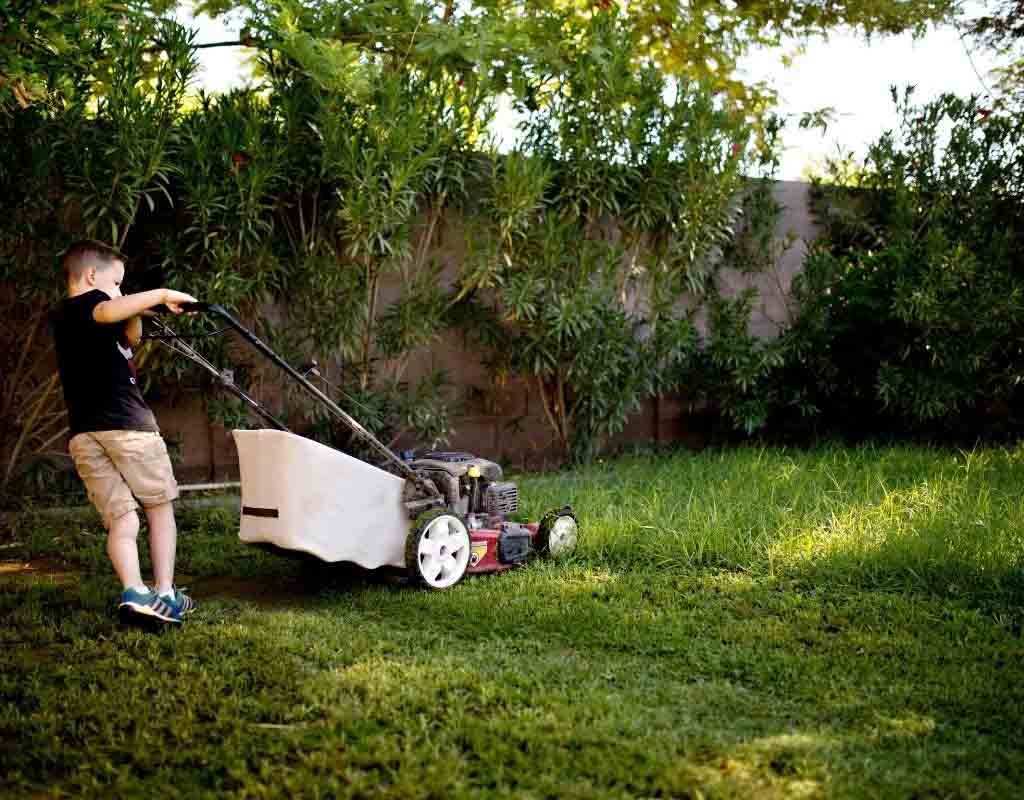
Doing a leaflet round with the old family stroller piled high, mowing neighbours lawns, or babysitting are a rite of passage for many and is a great way to earn a bit of money as well as learn about how to be a good worker.

So what do you and your child need to know about getting their first part-time job?

Benefits of part-time jobs

There are many benefits to your child taking on a part-time job. Earning your own money is a great source of pride and builds confidence while learning about how to manage money – and hopefully save. Being able to pay for some of their clothes and entertainment can help you manage the household budget and they also learn a whole range of other skills including timekeeping and the importance of reliability.

Depending on the job they might learn how to be part of a team, the unwritten rules of working with others, and develop their communication and customer service skills. They might also learn that they don’t want to do that sort of work full-time and help give them focus for their studies – or conversely they might be taking the first step of a rewarding career.

Finally, having a part-time job is something to put on their CV and can be helpful when applying for other jobs, to get in to halls of residence at tertiary institutions, and some training courses.

Types of jobs

Where you live will in many instances will dictate the types of jobs available. If you have neighbours, lawn mowing, taking out and bringing in the bins, housework, cleaning, dog walking, and babysitting could be options. In urban areas local paper and pamphlet delivery jobs are often available, some pharmacies may have prescription delivery jobs or your local shops and businesses might need part-time workers. Some areas have seasonal work such as fruit picking, thinning, or pruning.

Finding a job

Firstly, identify when they are available to work. If, for example, they are at school plus play sport and have music lessons you might find that they don’t actually have a lot of spare time during the term so you are better to focus on school holiday jobs. Your child who attends school but has evenings and weekends free might be able to do one or two regular shifts somewhere each week.

Encourage your child to put together a ‘CV’ type document with their contact details, some information about themselves and explaining what sort of work they are looking for – this can be used as a form of business card while also serving to clarify their goals.

There are many routes you can help your child explore when looking for a job. Networking is often the most successful way to find a job. Encourage your child to contact friends and family who might have jobs available or who might be able to point them in the right direction. They should email, text, or drop a note in the letterbox explaining what they are seeking and include a timeframe in which they will follow up with a phone call. Because the favoured communication for kids is definitely not by phone call you might like to practice what they will say first!

Other sources of part-time work they can check are Facebook Marketplace, the community notice board at your local supermarket, TradeMe Jobs, and your local newspaper. You could also tap into the power of your social media presence on their behalf and do a post on their behalf including their ‘CV’.

Paying tax

The type and amount of work your child is doing will dictate if they are going to pay tax on their earnings. While technically when you earn money you have to pay tax, if your child is under 14, or aged 15-17 and still at school then they don’t have to pay tax on income less than $2,340 per year. You can find out more about this here.
If your child is working in a business and is paid via a payroll they are best to get an IRD number as this will mean they pay the correct tax and then can claim any overpayment back at the end of the financial year. They can apply for an IRD number here.

If your child is under 18 years old and wants to join Kiwisaver, you (their legal guardian) will need to give consent for them to join.

Contracts and rules

There are many different ‘types’ of job status in New Zealand including part-time and full-time, permanent and fixed term, and with these come responsibilities for both the employee and employer. If your child is enterting into a formal employment relationship, check carefully that their contract is correct and that things like holiday pay are factored in.

You can find out more about employment types here

There is no minimum wage for employees under the age of 16 years and between 16 and 19 years they can be paid a different rate than adults. Under the age of 16 your child should not be employed in school hours or between the hours of 10pm and 6am.

You can find out more about your child’s employment rights and restrictions here.

What was your first part-time job and how much were you paid?

See more:

author robynWritten by Robyn
Robyn creates content on Kidspot NZ. Her hobbies include buying cleaning products and wondering why things don’t then clean themselves, eating cheese scones with her friends, and taking her kids to appointments. 

Favourite motto to live by: “This too will pass”

Kidspot Chats With Megan & Andrew Papas About Being First Time Parents

Promotion for AMI

Kidspot talked with Megan and Andrew Papas about the joys and challenges of becoming first time parents to Baby Bastian who arrived in February 2021.

Both Megan and Andrew are no strangers to busy lives. Megan, a popular ZM Host and Andrew, singer, actor, TV presenter, radio host, content creator, and even a professional chef, are used to planning and prioritising their time. We discuss their pregnancy journey as well as how having Bastian in their lives has changed things up.

Kidspot: You became pregnant whilst awaiting IVF treatment. How did you react to the news?

Megan & Andrew: I found out while I was at home by myself. There had been so many disappointments I took the test and unlike every other time I was really blasé about it. When I saw the two little lines, I checked the instructions several times to make sure I was reading it right, then I paced around the house in disbelief. I quickly went out and bought this cute pair of socks that had ‘Dad’s my hero’ written on them, put them in a box with the pregnancy test and gave it to Andrew when he got home. We honestly were both just so shocked the tears took a while to come.

Kidspot: Who were the first people you shared the news with when you found out that you were going to become parents?

Megan & Andrew: We shared the news with our family first. We waited till the 12-week mark, and then when everyone was gathered for my birthday, I opened a ‘present’ from Andrew that was a little baby onesie. We didn’t say anything, and once everyone clicked there was screaming and my sister in law literally jumped on top of me!

Kidspot: Beautiful baby Bastian is just over a month old. Since his birth, what is the most surprising thing that you’ve learnt about him and about yourselves?

Megan & Andrew: Andrew believes he has learnt to be more calm and less scheduled. We have learnt there is another type of love out there. It’s true when people talk about this, how you never knew you could love something so much that you have had no time to get to know. Straight off the bat, you’ll do anything for this little human.

It’s amazing how a baby can have their own little personality, and how everyday it develops a little bit more. His favourite song is Twinkle Twinkle Little Star, and it’s no exaggeration. If he’s having a moment, it’s the only song that stops him crying! I got my producer to make a half hour loop of it, I hear that song in my sleep!

Kidspot: Becoming parents is a life changing event. What are some of the things you’ve had to consider that had never crossed your mind before Bastian’s arrival?

Megan & Andrew: We’ve always been pretty selfish, in the way that we always prioritised ourselves, but now we have another little human that takes priority over everything, us included!

We knew we would become homebodies, but we didn’t realise how happy we would be just staying home all the time and playing with him. We’ve wasted hours just looking at him!

Kidspot:  Protecting family is of the utmost importance to parents. How has AMI Car Insurance given you peace of mind for your family?

Megan & Andrew: It’s nice to know that AMI is thinking of families, and that if we were in an accident and AMI deemed the child car seat was unsafe, we would be able to get a replacement car seat or capsule. The expense and hassle is sorted, because you don’t want to take chances with your child’s safety even if it looks as though the car seat or capsule is fine.

AMI child car seat cover

AMI is providing greater protection to customers whose vehicles are stolen or involved in accidents and have partnered with child car seat specialists, Baby On The Move, to replace customers’ stolen or damaged car seats. If during the claims process, any car seats are deemed unsafe, AMI will ensure they are safely disposed of sustainably through its partnership with national car seat recycling programme, SeatSmart.

Find out more about AMI at www.ami.co.nz or call 0800 100 200.

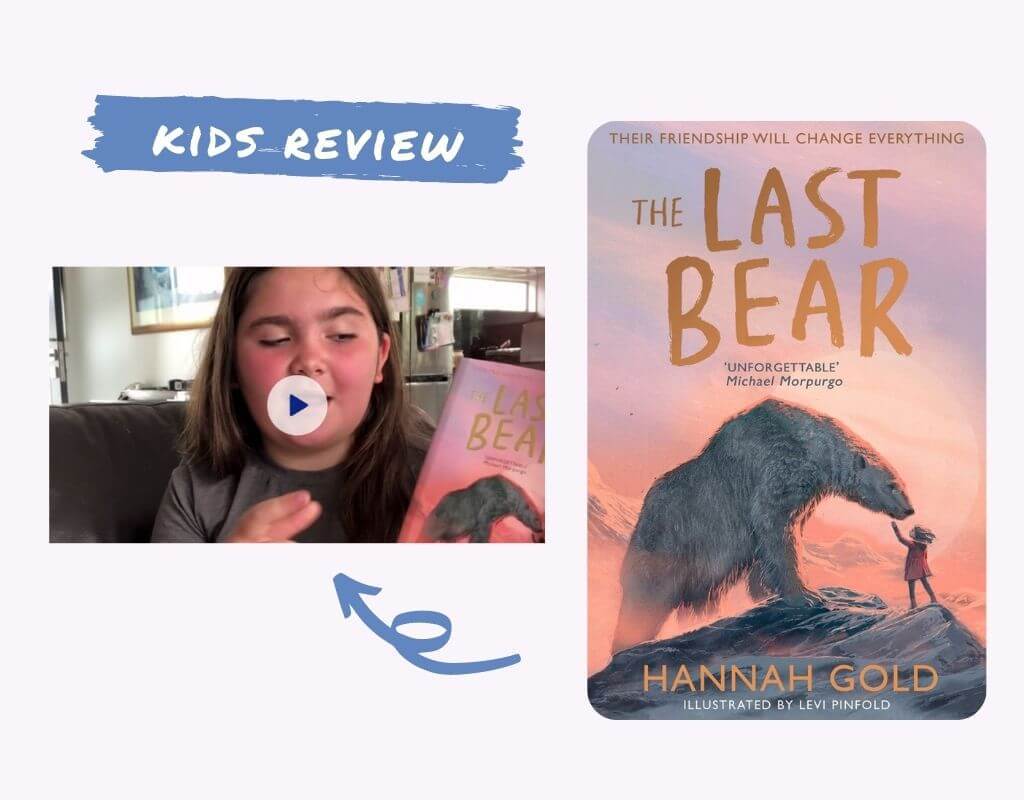
The Last Bear by Hannah Gold | Kids Book Review

Sponsored content

Imagine making friends with a polar bear …

Author Hannah Gold and illustrator Levi Pinfold (who illustrated the Harry Potter 20th anniversary edition covers) have created a beautiful book for readers 8 years plus.

The Last Bear is a celebration of the love between a child and an animal, a battle cry for our world, and an irresistible adventure with a heart as big as a bear’s.

See what our Kid Reviewer Abby thought about The Last Bear below ⬇️

The last polar bear

There are no polar bears left on Bear Island. At least, that’s what April’s father tells her when his scientific research takes them to this remote Arctic outpost for six months. But one endless summer night, April meets one. He is starving, lonely and a long way from home. Determined to save him, April begins the most important journey of her life …

This moving story will win the hearts of children the world over and show them that no one is too young or insignificant to make a difference.

“This is an important first novel, important for us, for polar bears, for the planet. It is deeply moving, beautifully told, quite unforgettable.”
Michael Morpurgo.

Grab your copy of The Last Bear now!

The Outlaws Scarlett and Browne by Jonathan Stroud | Kids Book Review

Sponsored content

Jonathan Stroud brings young readers an exciting adventure packed with mystery, humour and action. Jonathan’s previous young adult novels, the Lockwood & Co. series and the bestselling Bartimaeus trilogy, are gaining huge popularity around the world.

Set in a broken, future England, where gunfights and monsters collide, this is the exciting first title in a phenomenal fantasy teen series by the bestselling children’s novelist.

See what our Kid Reviewer Connor thought about The Outlaws Scarlett and Browne below ⬇️

London’s outlaws

England has been radically changed by a series of catastrophes – large cities have disappeared and London has been replaced by a lagoon. The surviving population exists in fortified towns where they cling to traditional ways, while strangely evolved beasts prowl the wilderness beyond. Conformity is rigidly enforced and those who fall foul of the rules are persecuted: some are killed, others are driven out into the wilds.

Only a few fight back – and two of these outlaws, Scarlett McCain and Albert Browne, display an audacity and talent that makes them legends.

Grab your copy of The Outlaws Scarlett and Browne now!

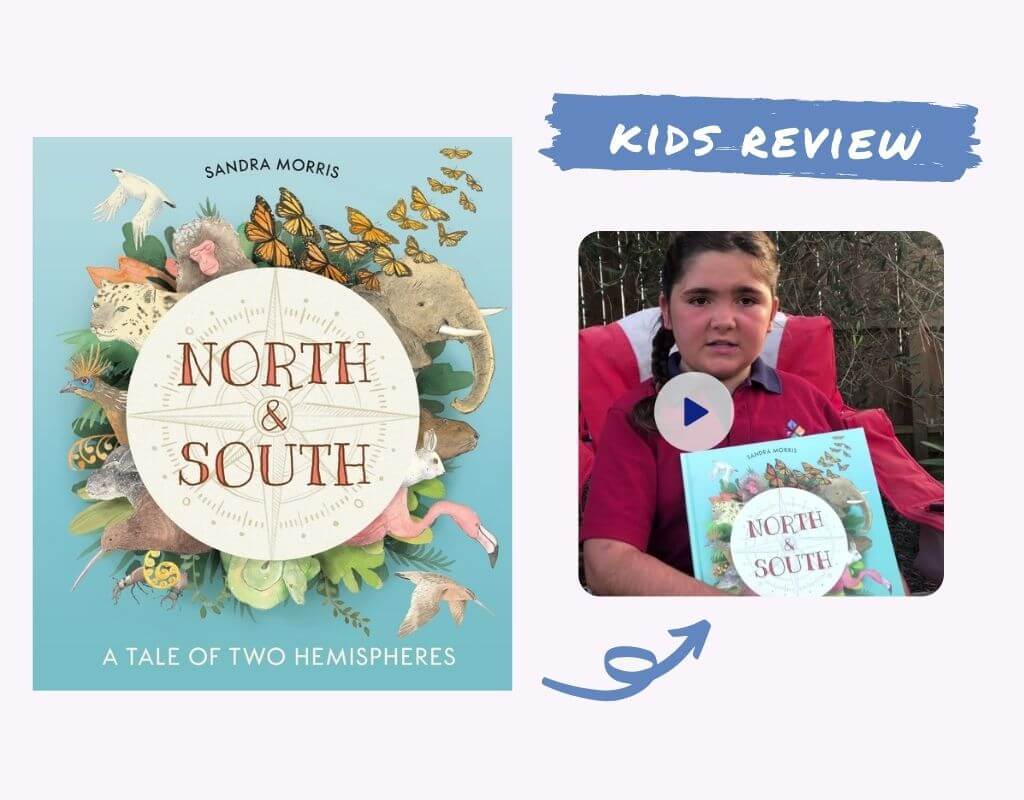
North & South: A Tale of Two Hemispheres by Sandra Collins | Kids Book Review

Sponsored content

Author and illustrator Sandra Morris’ first book, One Lonely Kakapo, won the 1992 Russell Clark award for illustration and she has since gone on to win numerous awards.

Morris has again combined her creative skills to produce a beautiful non-fiction picture book about animals around the world.

See what our Kid Reviewer Abby thought about North & South: A Tale of Two Hemispheres below ⬇️

Changing seasons

North & South:  A Tale Of Two Hemispheres is a beautiful non-fiction picture book that contrasts, month-by-month, some of the world’s most-loved Northern and Southern Hemisphere animals and the ways the climates in those regions affect the way they breed, feed, adapt, hide and survive.

In the Northern and Southern Hemispheres, animals deal with changing seasons in various ways. Whichever hemisphere they live in, they need to be able to read the signs of the changing seasons to survive.

North & South: A Tale of Two Hemispheres marks a beautiful and engaging introduction to the natural world and conservation for young readers, with in-depth facts throughout and a full index and glossary adding interest for older readers.

Grab your copy of North & South: A Tale of two Hemishpheres now!

5 Reasons Why Rainbow’s End Is A Must Visit!

Promotion for Rainbow’s End

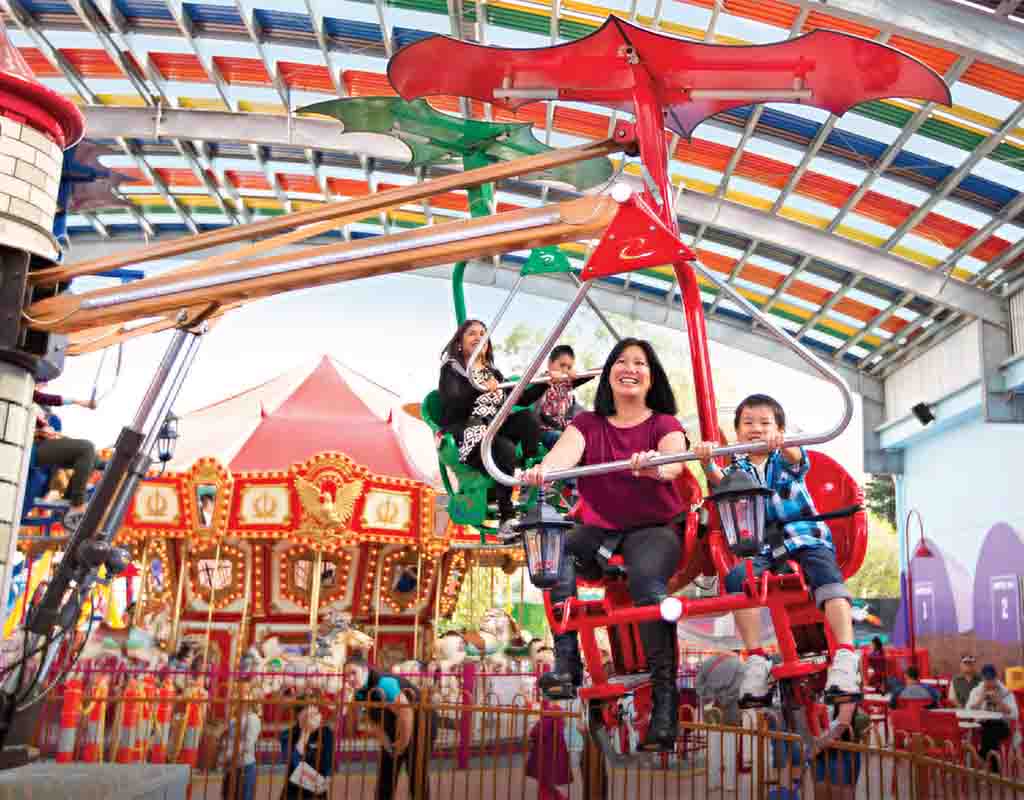
A family favourite since 1982, Rainbow’s End is still providing a day of fun for all the family, with the best of the classic favourites alongside new and exciting activities.

We take a look at the top five reasons why a visit to Rainbow’s End needs to be on your ‘must visit’ list.

1. It’s easy family fun

Family fun at Rainbow’s End is so easy. Book online for guaranteed fun – this means you can quickly get into the action when you arrive. By road there is access from the Southern (SH1) and Southwestern (SH16) motorways. There is plenty of free parking including well-marked accessibility parks. By train or bus, it’s a short walk from Manukau Train Station.

Families will also love the free hydration stations where you can refill your drink bottles all day long. Other additions for parents include stroller hire, and parents rooms with change table, feeding spaces and microwave. There are plenty of food outlets offering a range of family favourites including counter food, made to order, and an Ice Creamery with more than 30 natural flavours.

All this, combined with a huge variety of rides, adds up to a fun and easy family day out!

2. Something nostalgic …

If you were lucky enough to visit New Zealand’s largest theme park back in the 1980’s, you will no doubt remember enjoying activities like Mini Golf, Video Games, Cinema 180 and the iconic swinging Pirate Ship. While those attractions are now just memories, you can still interact with the kids on the Bumper Boats and recently refurbished Dodgems. The popular Log Flume is still going strong as is the Corkscrew Coaster (you might remember it as the Coca-Cola Corkscrew Coaster) and there’s plenty of hilarity still be had on the Gold Rush mine cart ride.

Rai and Bow, the Park characters have had a bit of a glow up and are looking fresh and ready to welcome you all.

These, and other classic theme park attractions such as Family Karts, Sideshows, a children’s Carousel and many more, are still there waiting for you and your reminiscing! If you have children, they will love being able to join in the fun as you fondly recall memories from your childhood.

3. And lots of something new …

If you haven’t been since the 1980’s you’re in for a very pleasant surprise. The old favourites have been complemented with a sizzling range of new activities taking Rainbow’s End into the future of theme parks including Fearfall’s lofty drop, spinning fun on Invader, and the far-from-timid Power Surge.

The most recent fear-inducing addition is Stratosfear. With its 360 degree rotation it’s designed to thrill. The first of its kind in the Southern Hemisphere, you are able to choose from a Very Extreme or Less Extreme ride. Which will you choose?

If fear is not your jam, there are new interactive attractions for you to enjoy including a journey to the 7th Dimension with the Spectra Dark XD (so named as it has 7 dimensions of special effects). Other recent additions include the Rainbow Playlab, with its Virtual Reality and Escape Room.

4. Something for everyone …

From the traditional theme park rides through to the latest in technological fun, Rainbow’s End really does have something for everyone.

For those who love the thrill of adrenalin, there are the BIG 5 thrill rides that offer dramatic drops, fast speeds and intense spins. For those who love to be interactive, try Spectra, the biggest immersive theatre experience in the Southern Hemisphere with  7 dimensions of special effects including laser blasters so you can interact with the story while scoring points against your family and friends.

For the under 8s, Kidz Kingdom is a safe space for them to explore and play. This undercover area has 11 rides and attractions including the kids-size Choco Express roller coaster, a Carousel, “flying” Magic Bikes, plus the giggly fun of the Jumpin’ Star and Surf n Swing.

For more family fun try the Dodgems and Bumper Boats, zoom down the Log Flume, or young drivers can join you in a race in the Family Karts.

On select days you might spot the park’s special characters Rai, Bow and friends on the Centre Stage and throughout the year there are special events such as Night Rides, and 2 for 1 Kidz Kingdom Passes.

5. No matter the weather

Hot and sunny, cold and breezy, or even raining, you can still have heaps of fun at Rainbow’s End. To cool down a bit in the heat of the day, a Bumper Boat ride or Log Flume zoom is just the ticket.

Keep the younger children under cover and out of the elements in the covered Kidz Kingdom, while the older kids can find plenty to keep them occupied in the amazing indoor attractions including Spectra and the new Rainbow Playlab (located right next to Rainbow’s End) where you can experience the best and latest in entertainment technology including Virtual Reality, E-Sports, Escape Rooms, Arcades and more!


View this post on Instagram


A post shared by Rainbow’s End (@rainbowsendnz)

To find out more, visit RainbowsEnd.co.nz

Notes:

  • Check the website for up to date information before visiting.
  • Height restrictions apply to rides and attractions.
  • Ride availability may be subject to maintenance, adverse weather or park developments.
  • Spectator passes are required for non-riding visitors.
  • Entry terms and conditions apply.
  • Entry to Rainbow Lab is free but game costs vary. Entry to Rainbow’s End is not required to visit Rainbow Lab. Opening days and times vary.

What would you like to do first at Rainbow’s End?

author robynWritten by Robyn
Robyn creates content on Kidspot NZ. Her hobbies include buying cleaning products and wondering why things don’t then clean themselves, eating cheese scones with her friends, and taking her kids to appointments. 
Favourite motto to live by: “This too will pass”

The Loveable Rogue Is Back In PETER RABBIT 2: THE RUNAWAY

Sponsored content 

PETER RABBIT™ 2: THE RUNAWAY is back and in a cinema near you this Easter.

In his biggest adventure yet, Peter ventures far beyond the garden to the streets of the big city, where he’ll discover what kind of hero he wants to be.

Peter is trying his best

Thomas McGregor has given up his fight against keeping the rabbits out of the garden. They can come and go, as long as they leave McGregor’s prized tomatoes alone. Peter is trying to behave himself, to be a leader and keep everyone else away from the tomatoes but he can’t shake his reputation especially as Bea’s stories of his adventures gain popularity. Everyone keeps thinking of him as the mischievous rabbit, despite his best intentions to not be.

Meet Barnabas

Peter is feeling discouraged about trying to shake off his reputation for mischief and runs away only to fall in with savvy street rabbit Barnabas. Though he’s deceitful, Barnabas knows exactly what and who he is, and it’s this savvy self-confidence that compels so many other animals to do his bidding, including his tightest gang members – fat rat Samuel Whiskers and feline felons Tom Kitten and Mittens.

Peter finds himself in a world where his mischief is appreciated, but when his family risks everything to come looking for him, Peter must figure out what kind of bunny he wants to be.

Familiar faces

All your favourite characters are returning including Peter’s cousin Benjamin, the girls Flopsy, Mopsy and Cotton-tail, Mrs. Tiggy-Winkle, Pigling Bland, Tommy Brock, even the excitable roosters.

Peter Rabbit 2

Familiar voices

Once again, James Corden is voicing Peter Rabbit while Rose Byrne is back as Bea, now Mrs McGregor, and Domhnall Gleeson as Thomas McGregor.

Flopsy, Mopsy and Cotton-tail are again voiced by Margot Robbie, Elizabeth Debicki and Aimee Horne.

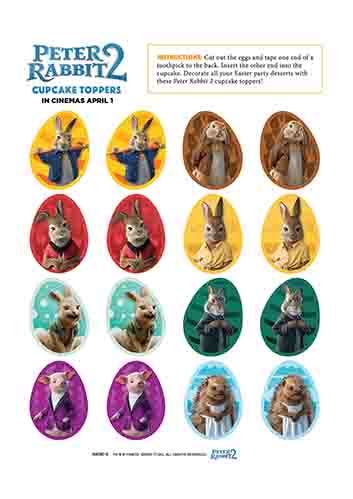
Peter Rabbit 2: The Runaway Colouring Pages & Cupcake Toppers

The loveable rogue is back!

Hop into these colouring pages & cupcake toppers inspired by the film PETER RABBIT™ 2: THE RUNAWAY.

In PETER RABBIT™ 2: THE RUNAWAY Bea, Thomas, and the rabbits have created a makeshift family, but despite his best efforts, Peter can’t seem to shake his mischievous reputation. Adventuring out of the garden, Peter finds himself in a world where his mischief is appreciated, but when his family risks everything to come looking for him, Peter must figure out what kind of bunny he wants to be.

Now streaming at your place

Starring Rose Byrne, Domhnall Gleeson, David Oyelowo, Elizabeth Debicki, with Margot Robbie and James Corden as Peter Rabbit.

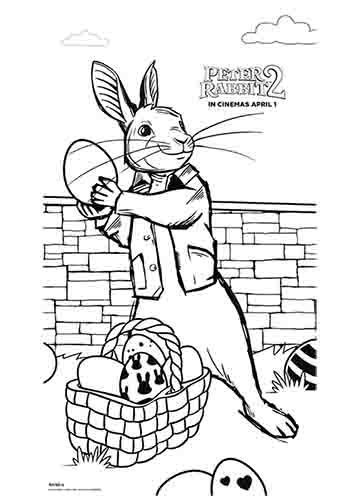
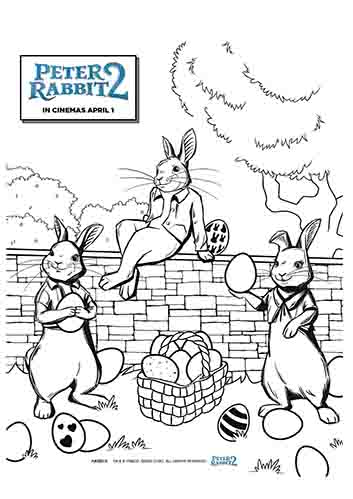
Click the images below to print these fun activities ⬇️

PETER RABBIT™ 2: THE RUNAWAY Easter Basket

Peter Rabbit 2 Heart Colouring Page

peter rabbit 2 colouring page 3 bunnies

peter rabbit 2 cup cake toppers

Nature Days In The Coromandel, Where Kiwis Holiday

Holidays are the perfect time to get the family outdoors and enjoy the beautiful and varied landscapes on our backdoor step. The Coromandel, bursting with dramatic gorges, stunning beaches, green valleys, and misty rainforests, all wrapped up in a relaxed vibe, is the perfect destination for a nature packed family holiday.

We’ve collated some of the best nature inspired family fun waiting for you on The Coromandel .

Please note: Information was correct at the time of publication. You might like to check that tracks and trails are open before you go. Some beaches are patrolled by lifeguards during the summer months only. 

Beaches

Of all the wonderful things you might associate The Coromandel with, the stunning beaches are probably top of the list. From quiet coves where you might be the only visitors through to long sandy beaches loved by families, and surf beaches where some of New Zealand’s most famous surf breaks are waiting, the diversity means there is something for everyone.

The sandy 6km long Whangamatā Beach has a popular left-hand surf break and is the ideal spot for learning to surf. At either end, estuaries are ideal places for paddling and exploring. Surf and paddle equipment can all be hired in the local town. Other popular beaches, also great for fishing, kayaking, swimming or relaxing include Kennedy Bay, Waitete Bay, McGregors Bay (a great place to watch the sun set), Onemana Beach, and Cooks Beach.


View this post on Instagram


A post shared by good for your soul (@thecoromandel)

Hot Water Beach is a great place to warm up as you can dig your own spa at the water’s edge and enjoy the thermal hot water seeping up.

If you prefer to find a beach more off the beaten track, Orokawa Bay is accessed by an easy walking track through native bush from Waihi Beach and makes a great picnic spot (swimming is not recommended). If you continue on to the northern end of the bay you will find a track to secluded Homunga Bay. The interestingly named New Chum Beach is an untouched paradise with no roads and no buildings and has been voted one of the world’s top beaches. Access is via a 30-40 minute walk through spectacular nikau forest and giant pōhutukawa leaving from the northern end of Whangapoua Beach.

Tracks and walks

The interesting geography and flora of The Coromandel can be explored on the many tracks and walks dotted all over this stunning destination. Take in the fresh air, spectacular views and varied landscape on the network of tracks and trails that offer a huge selection for family adventures.

The Karangahake Tunnel Walk combines stunning scenery, lush native flora and historic gold mining relics. Waiomu Kauri Grove Walk takes you through one of the best remaining stands of kauri trees on the peninsula, while along the Shorebird Coast bird lovers will enjoy the vast salt marshes that attract thousands of migratory wading birds for summer every year.

The Coromandel Coastal Walkway follows an old bridle path and is a 10km one way trail. Stunning views combined with a mostly gentle gradient make it an ideal family day trip. Book a tour or shuttle to get you there and back without having to retrace your route.


View this post on Instagram


A post shared by good for your soul (@thecoromandel)

Waterfalls and freshwater pools

The lush rainforests of kauri and other native trees combined with rugged terrain make for stunning waterfalls that are both exhilarating and soothing. A short walk through remnants of an ancient kauri forest brings you to Waiau Falls while Rapaura Waterfalls, also known as “The Seven Stairs to Heaven”, is surrounded by abundant native bush and ferns, watergardens, birds, meandering walks over bridges and streams and a bush walk to the cascading waterfall.

Owharoa Falls in Karangahake Gorge are easily accessed from Waitawheta Road and is a popular swimming spot while Billygoat Falls is officially the tallest waterfall in and North Island and is just a five minute walk from the car park.


View this post on Instagram


A post shared by good for your soul (@thecoromandel)

Bike trails

All across The Coromandel are a network of trails suitable for families with riders at all ability levels. They allow you to easily access the sub-tropical native rainforest, plains, gorges and coastline.

The most well known trail is the Hauraki  Rail Trail, 197km of easy riding suitable for all on two wheels, following old railway lines between historic goldmining towns. Grab your bikes and DIY it or use one of the many bike hire and shuttle transport options.

Ride Coromandel is a new bike park that offers gently sloping trails or epic air. The free to use new bike park has something for everyone including a pump track for the kids, skills area and brand new descent trails.

Scarface Mountain Bike Tracks offer a picnic area, pump track, jump track, kids loop plus access to the the start of a large trail network.


View this post on Instagram


A post shared by good for your soul (@thecoromandel)

Underwater adventures

The Coromandel has a coastline around 400km long and with over 100 islands just offshore there are many options for exploring the fascinating world under the water.

If you haven’t bought snorkelling gear with you, there are lots of places all over The Coromandel where you can hire or buy gear for the whole family. They can also offer day trips out to some of the offshore islands and also diving gear and trips.

You can pretty much pop your snorkelling gear on and have a look around at any of the beaches however a popular spot for snorkelling and swimming is the Marine Reserve at Cathedral Cove, Hahei. Te Whanganui o Hei Marine Reserve, around Whenuakura Island is also popular. Accessible only by water you can get there by charter boat, kayak or SUP.


View this post on Instagram


A post shared by good for your soul (@thecoromandel)

If under the water is not for your family, you can stay on top but still see below from the Glass Bottom Boat Whitianga.

Something different

Nature loves to offer up a few quirky treats and on The Coromandel there are a few real treasures. Starting life as two separate seedlings, over the centuries they grew in diameter, and the space between them reduced until eventually the two trees fused at the base and are now known as The Siamese Kauri. Find it amongst most accessible mature stand of Kauri on The Coromandel, just 500m off the 309 Road from Coromandel Town.

The majestic kauri are also offering another fun variation, this time in the form of a square tree! Around 1200 years old, this tree has an unusual square-looking shape and is can be found along a short but steep walking track that features stunning views and 187 steps.

Across the harbour from Whangamatā lies a beautiful Whenuakura Island with a donut shaped lagoon in the centre, accessible through a hole in the rock. Accessible by water only, it’s best visited with a local guiding company.


View this post on Instagram


A post shared by good for your soul (@thecoromandel)

Fantastic DOC Campsites For Family Holidays

Make the most of the school holidays and plan a camping trip to one of the fantastic DOC conservation campsites. Reasonably priced and located in beautiful settings, they’re a great place to relax and enjoy the outdoors before winter sets in.

There are more than 200 conservation campsites dotted in scenic locations throughout New Zealand and we’ve picked some of our favourites for you to check out.

What you need to know about DOC campsites

Some of the most popular campsites get booked out quickly and online bookings are essential. Click on the links below to find out each campsite’s available facilities, water quality for drinking, how to pay, accessibility (some are boat access only for example), activities, etc.

There are different types of DOC campsites: Serviced, Scenic, Standard, and Basic.

Serviced campsites

Serviced sites generally includes flush toilets, tap water (treated or untreated), kitchen/cooking bench, hot showers, rubbish collection and road access for all types of vehicles. Prices range from $20/night for adults and $10 for children 5-17 years while under 5 are free for an unpowered/tent site. Powered are a little more.

Scenic and Standard campsites

These campsites offer toilets, a water supply (either treated or untreated tap water), and vehicle or boat access. Some may have a wood BBQ, fireplace, cold showers, picnic tables, cooking shelter and rubbish bins. The ‘Scenic’ sites are priced higher than ‘Standard’ because of their location and popularity. Adults are $15/night for unpowered (powered also available) and children (5-17 years) $7.50 where as standard are just $8 and $4 respectively.

Basic campsites

If you are heading to a basic campsite you will need to be fully self-sufficient. Access may be by boat or road and any water supply will need to be boiled to ensure it’s safe. There may be basic toilets.

So now it’s time to dig out the camping gear and explore!

Northland

Urupukapuka Island

Urupukapuka Bay Campsite

  • “Scenic” category

  • Boat access only

  • 60 non-powered/tent sites

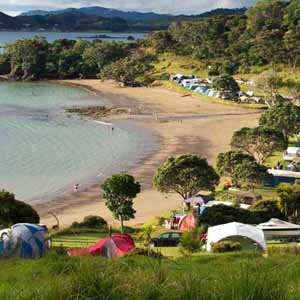
A stunning coastal campsite located in the Urupukapuka Island Recreation Reserve and perfect for beach activities, swimming, fishing, kayaking and exploring walking tracks. The island is accessible by water taxi, passenger ferry, or private boat.

Visit Urupukapuka Bay Campsite

Puriri Bay

Puriri Bay (Whangaruru North Head) Campsite

  • “Scenic” category

  • Access suitable for all vehicles

  • 90 non-powered/tent sites

Overlooking the mouth of Whangaruru Harbour, this campsite has sheltered waters for swimming and boating activities, and a series of interconnected walks.

Visit Puriri Bay Campsite

Uretiti Beach Campsite

Uretiti Beach Campsite

  • “Scenic” category

  • Access suitable for all vehicles

  • 300 non-powered/tent sites

Tucked in behind the Uretiti Beach sand dunes this campsite is ideally located for making the most of the sandy beach which is suitable for fishing, surfing and swimming. Hot showers, non-flush toilets, treated drinking water, and wheelchair accessible.

Visit Uretiti Beach Campsite

Auckland

Great Barrier Island/Aotea Campsites

  • 6 “Scenic” category campsites

  • Island accessible by passenger or car ferry, or by air. Campsite access by gravel roads.

  • A range of non-powered/tent sites

Dotted around Great Barrier Island/Aotea are 6 “Scenic” category campsites and so if you prefer sheltered water or a surf beach, isolated or accessible by road, you will be able to find the perfect holiday spot. Surfing, snorkeling, walking, swimming, kayaking, SUP, are all popular activities.

Visit The Green Campsite (access by foot or boat only)

Visit Whangapoua Campsite

 Motutapu Island Campsite, Home Bay

Home Bay, Motutapu Island Campsite

  • “Standard” category

  • Boat access only

  • 152 non-powered/tent sites

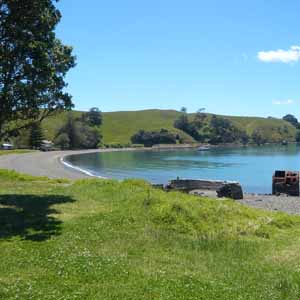
Located at Home Bay on Motutapu Island in the Hauraki Gulf, this idyllic campsite right by the beach is ideal to explore the island’s walkways, stunning coastline, replanted native bush and ever-increasing wildlife. Fishing, diving and snorkelling are also popular activities.

Visit Home Bay, Motutapu Island Campsite

Waikato

Kauaeranga Valley Campsites, Coromandel

  • 8 “Standard” campsites accessible by vehicle

  • 3 campsites accessible only by foot

  • A range of non-powered/tent sites

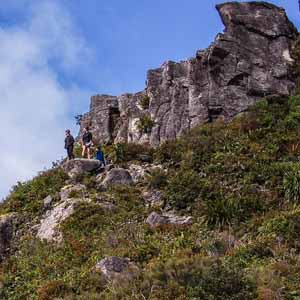
Kauaeranga River in Coromandel Forest Park is a popular holiday and tramping destination. This area is known for panoramic views of the bush, mountains and coastline of the southern Coromandel. If you are tramping there are 3 campsites only accessible by foot – the other sites listed here are accessible by car/campervan.

Visit Totora Flat Campsite

Visit Wainora Campsite

Visit Whangaiterenga Campsite

Arohena Campsite

Arohena Campsite

  • “Standard” category

  • Gravel access road, care to be taken by vehicles, also by boat

  • 50 non-powered/tent sites

Located on the western shores of the Waikato River, Arohena Campsite is perfect for swimming, picnics, fishing and water sports.

Visit Arohena Campsite Campsite

Bay of Plenty

Rerewhakaaitu, Ash Pit Road Campsite

Rerewhakaaitu, Ash Pit Road Campsite

  • “Standard” category

  • Access suitable for all vehicles

  • 51 non-powered/tent sites

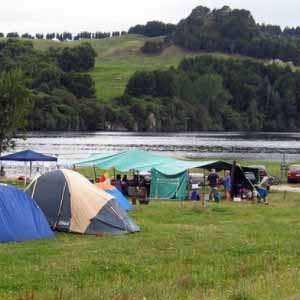
Tucked away at the head of a bay in Lake Rerewhakaaitu, this quiet campsite is ideal for watching water birds from. You can also launch your boat and explore the bay from here.

Visit Rerewhakaaitu, Ash Pit Road Campsite 

Rerewhakaaitu, Brett Road Campsite

Rerewhakaaitu, Brett Road Campsite

  • “Standard” category

  • Access suitable for all vehicles

  • 25 non-powered/tent sites

Also located on the shores of Lake Rerewhakaaitu, this campsite has good fishing, swimming and walking nearby. You can launch your boat from here too.

Visit Rerewhakaaitu, Brett Road Campsite

Wellington / Kapiti

Catchpool Valley Campsite

Catchpool Valley Campsite

  • “Scenic” category

  • Access suitable for all vehicles

  • 150 non-powered/tent sites

Located in the Remutaka Forest Park and beside the Catchpool Stream, this campsite is ideally located for walks in the Orongorongo Valley. Hot showers and flush loos plus a BBQ and shelter for cooking.

Visit Catchpool Valley Campsite

Marlborough

Momorangi Bay Campground

Momorangi Bay Campground, Queen Charlotte Sound

  • “Serviced” category

  • Access suitable for all vehicles and by boat

  • 100 powered, 36 non-powered/tent sites & 2 cabins

A popular north-facing serviced family campsite beside a sheltered bay, popular for swimming, boating and fishing. There is a glow-worm grotto on site as well as hot showers, flush toilets, a jetty and treated drinking water.

Visit Momorangi Bay Campground

Pelorus Bridge (Kahikatea Flat) Campground

Pelorus Bridge (Kahikatea Flat) Campground

  • “Serviced” category

  • Access suitable for all vehicles

  • 14 powered & 40 non-powered/tent sites

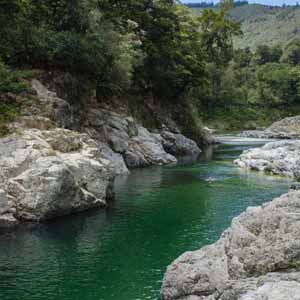
Picturesque camp on the banks of the Te Hoiere/Pelorus River amongst towering kahikatea, beech and rimu trees. Walk, swim in the beautiful clean river, fish, kayak, relax and also enjoy the hot showers, flush toilets, treated drinking water and cooking facilities.

Visit Pelorus Bridge (Kahikatea Flat) Campground

Nelson Lakes

kerr bay

Kerr Bay Campsite

  • “Serviced” category

  • Access suitable for all vehicles

  • 10 powered & 15 non-powered/tent sites

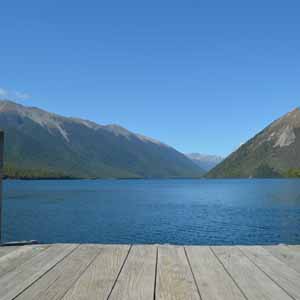
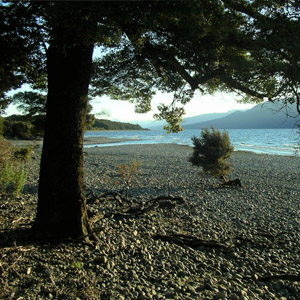
This small campground is next to Lake Rotoiti, surrounded by beech forest, with a boat launching ramp nearby. Enjoy walks, fishing, swimming, hot showers, toilets and cooking facilities.

Visit Kerr Bay Campsite

west bay

West Bay Campsite

  • “Scenic” category

  • Access suitable for all vehicles

  • 40 non-powered/tent sites

Open from mid-December to the end of April each year, this Lake Rotoiti campsite is handily located for walking, fishing , boating, and swimming.

Visit West Bay Campsite

Canterbury

Whitehorse Hill campsite

White Horse Hill Campground

  • “Scenic” category

  • Access suitable for all vehicles

  • 60 non-powered/tent sites

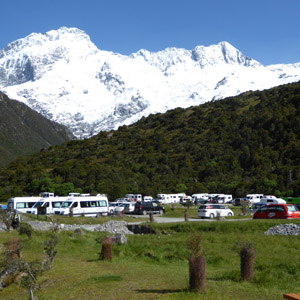
Just a couple of kilometres from Aoraki/Mt Cook Village at the end of Hooker Valley Rd, this peaceful campsite is surrounded by stunning scenery including Mount Sefton and Aoraki/Mount Cook.

Visit White Horse Hill Campground 

Peel Forest Park Scenic Reserve

Peel Forest Campground

  • “Serviced” category

  • Access suitable for all vehicles

  • 34 powered, 47 non-powered/tent sites, 4 cabins

This large campground is tucked away in Peel Forest, a remnant of a magnificent podocarp forest that once covered this area. Good hot showers, large communal kitchen with a shared fridge/freezer. Campground is closed from May to mid-Sep each year. Adjoining Clarke Flat is opened as a Standard campsite during this period.

Visit Peel Forest Campground

Godley Head

Awaroa/Godley Head Campsite

  • “Scenic” category

  • Access suitable for all vehicles via a narrow windy road

  • 25 non-powered/tent sites

Perched on the top of Awaroa/Godley Head, in the middle of a WWII defence battery site, this campsite has great ocean views and a range of scenic walks. Your booking confirmation will include a gate code for entry to the site.

Visit Awaroa/Godley Head Campsite

West Coast

Lake Mahinapua

Lake Mahinapua Campsite

  • “Scenic” category

  • Access suitable for all vehicles

  • 100 non-powered/tent sites

Beside a lake and hugging a forest, boating, water sports, walks, and fishing are popular activities here. Historically, Lake Mahināpua was a main access waterway up and down the coast using paddle steamers. Flush toilets and communal covered areas for cooking.

Visit Lake Mahinapua Campsite

Otago / Southland

Boundary Creek

Boundary Creek Campsite, Wānaka

  • “Standard” category

  • Access suitable for all vehicles

  • 23 non-powered/tent sites

On the eastern side of Lake Wānaka lies this small and popular campsite. Flush toilet and a shelter for cooking under. Perfect location for boating, water sports, and fishing. Dogs on a leash welcome. Book ahead!

Visit Boundary Creek Campsite

Cascade Creek Campsite

Cascade Creek Campsite, Fiordland

  • “Scenic” category

  • Gravel road access, suitable for all vehicles

  • 120 non-powered/tent sites

If you like to fly-fish or take a nature walk, this is a great spot for you.  There is a lovely swimming hole, toilets, and nice spots to camp in.

Visit Cascade Creek Campsite

henry creek

Henry Creek Campsite, Fiordland

  • “Scenic” category

  • Gravel road access, suitable for all vehicles

  • 50 non-powered/tent sites

On the road to Milford Sound and beside the picturesque Lake Te Anau. Private tent sites tucked away next to regnerating beech forest and also good parking spots for campervans,

Visit Henry Creek Campsite

piano flat

Piano Flat Campsite, Southland 

  • “Standard” category

  • Access suitable for all vehicles

  • 50 non-powered/tent sites

Relaxed riverside site in farmland area. Walks, horse riding, biking, hunting and 4WD trips are all popular from this site. Dogs on a leash welcome.

Visit Piano Flat Campsite

Mini Itinerary: 4 Days On South Island’s West Coast

The West Coast is like no other part of New Zealand. Long and narrow with rugged natural beauty and sometimes wild weather, it is both dramatic and hospitable.

Whether you’re escaping on a mini-break or a longer getaway, our itinerary will give you inspiration for an amazing family trip. Do as many or as few of the suggestions as you please.

Please note: Venue information was correct at the time of publication. Please check with individual venues for the latest opening dates, times, prices, etc, before making plans. Regions and venues may have travel and access restrictions due to the Covid-19 Protection Framework.

Getting there

You can get to the West Coast by plane, train and automobile, and all of them are an experience in themself. By car it’s less than 3.5 hours from Christchurch to Hokitika and Greymouth via the stunning Otira Viaduct in Arthur’s Pass. Nelson to Westport takes under 4 hours and if you’re coming through from Wanaka or Queenstown to Franz Josef it will take around 3.5 hours from Wanaka.

You can fly direct to Nelson with Air New Zealand from Christchurch, or with connecting flights from other regional centres. To find out more, visit www.airnz.co.nz. Sounds Air flies in to Westport from Wellington.

The West Coast is also accessible by train from Christchurch while buses also service the Coast from Nelson, Christchurch, and Queenstown.

Getting around

The West Coast is long and narrow – in fact it is never wider than 50km at any point – and so self-drive really is the easiest option. There are some public transport and private shuttle options available.

Making the most of the Coast

With the unique geography of the Coast – 600km long and hugged by rugged coastline to the west and soaring mountains to the east – we have created an itinerary that takes you from north to south, however if you come through from Wanaka, simply reverse the itinerary and work your way up.

Day 1

Your first day takes in some of the sights and historic locations in the top part of the Coast.

After breakfast at your accommodation, pack a picnic lunch and head to the stunning Punakaiki Pancake Rocks and Blowholes. Then head south to the Point Elizabeth Walkway – a well formed walk that combines rugged coastal views with native bush, coastal forest, and historic sights. The track is mostly level as it follows an old gold mining water race.

Become a Kiwi Guardian! Print off the Point Elizabeth adventure map before you head out, then find the Kiwi Guardian post and submit the special code word on it to receive a Kiwi Guardians certificate and medal.

If you haven’t had your picnic yet, the next stop, Coal Creek Track in Runanga, will be the perfect spot. It’s just a half hour bush walk to the impressive Coal Creek Falls from the car park.

The Brunner Mine historic area and site walk is next on the agenda. Explore the interactive displays before you head into Greymouth. Don’t miss the Southern Breakwater Viewing Platform where you can take in the stunning views at the treacherous mouth of the Grey River.

Your last call of the day is the Monteiths Brewing Co. where you can enjoy West Coast hospitality and a great meal. There is a museum onsite plus you can take a guided tour of the brewery too.

Where to stay in Greymouth

For family friendly stays, we recommend checking out the below. Or search here for holiday parks and campgrounds.

Bella Vista Motel Greymouth – centrally located with ample safe parking and with a variety of studios and one-bedroom unit options. Units vary from just tea and toast making facilities to those with cooking facilities.

Kingsgate Hotel Greymouth – this comfortable hotel is centrally located with a range of rooms that sleep up to four.

Day 2

Your second day is bursting with fun activities and amazing sights as you head south to Hokitika.

First stop today is Maggies Kitchen where you can fuel up for the day on great home cooked food before you head to the iconic Shanty Town Heritage Park. There you can learn about the Chinese and European goldminers. Ride the steam train, do some gold panning, ride a flying fox, explore heritage buildings and much more.

Grab some old fashioned lollies then hit the road to the West Coast Tree Top Walkway & Café. Have some lunch and then embark on an exhilarating treetop adventure along a steel platform 20 metres high and over 450 metres long.

Next up, head to Hokitika Beach and take a photo in front of the famous driftwood sign and keep your eyes peeled for some pounamu/greenstone to collect from the beach.

It’s no doubt time to feed hungry tummies by now and the predominantly plant-based menu with a Mexican flavour influence at Gatherers Wholefood and Bar will tick the box. 

Where to stay in Hokitika

For your two night stay in Hokitika, we recommend checking out the below. Or search here for holiday parks and campgrounds.

Beachfront Hotel Hokitika – as its name suggests it’s located right on the beach front complete with stunning views, yet is centrally located in Hokitika. There are five different categories of room plus a restaurant.

Fitzherbert Court Motel – easy off street parking available plus a children’s playground. The one and two bedroom units have full kitchen facilities and can sleep up to six.

Jade Court Motor Lodge – the peaceful surroundings, friendly service and great prices make the Jade Court a great bolt hole in Hokitika. One and two bedroom units are available and all have a full kitchen.

Day 3

From your base in Hokitika, another full day of amazing sights and experiences.

Start the day with a hearty breakfast at Kitchen Hokitika, stock up on some picnic food, then head to the Hokitika Gorge just 33km away. Park and head down the short track through the forest to the viewing platform to marvel at the vivid turquoise water. Carry on to the impressive swing bridge and explore further to another viewing platform.

Head back towards the coast to Lake Mahinapua where you will find the Manaui Tramline. Start at Woodstock Rimu Road and follow the old tramline until you find the turn off to Picnic Point where you can … have your picnic! The return trip is around one hour or you can continue to enjoy the boardwalk across the low-lying swamps.

If you like the idea of getting on the water at Lake Mahinapua, you can go on a self-guided, or guided kayak adventure with West Coast Freedom Waterways. 

Dine in or take away dinner at Fat Pipi Pizza and finally, when it’s dark, head to the Glow Worm Dell which is right on the northern edge of town for a real treat before bed.

Day 4

Today is kiwi and glacier day!

For a delicious start to the day, say goodbye to Hokitika and head south to the Roddy Nugget Café in Ross for a hearty breakfast. Continue on down to Franz Josef and visit the West Coast Wildlife Centre, where you can meet New Zealand’s rarest kiwi in this purpose-built indoor attraction. Enjoy a self-guided tour of this unique and interactive experience that brings together nature, conservation and wildlife.

Grab some lunch at Full of Beans and then it’s time to see the Franz Josef Glacier. You can go on a three hour return self-guided walk from the carpark, or get up really close with a trip with Franz Josef Glacier Guides.

Now relax at the Franz Josef Glacier Hot Pools. Tucked away in the rainforest, the pools are surrounded by natural beauty and suitable for all ages. Finish the day at Monsoon Restaurant and Bar.

Where to stay at Franz Josef Glacier or Fox Glacier

To finish your West Coast adventure, check out these family friendly accommodation options. Or search here for holiday parks and campgrounds.

Bella Vista Motel Franz Josef Glacier – choose from different self-contained options in this centrally located quality motel accommodation.

Rainforest – just out of Franz Josef, Rainforest offers families one and two bedroom raised Deluxe Tree Houses that feature a large hot bubbly spa pool as well as a holiday park experience with campervan sites, motel rooms or cottages.

Bella Vista Motel Fox Glacier – extend your trip a wee bit and travel the 20km to Fox Glacier. The Bella Vista there will welcome you with quality  accommodation with options for up to four people.

Main photo credit: Miles Holden

Explore further

Written by Kidspot New Zealand in partnership with Tourism New Zealand.

Top 10 Family Activities in The Coromandel – Where Kiwis Holiday

The Coromandel is where Kiwis holiday. Handily located, easily navigated, and bursting with amazing scenery and fun family activities, it’s so easy to have a memorable and relaxed family holiday here.

You will instantly feel that lovely holiday vibe with the relaxed and easy pace in The Coromandel, combined with the big outdoors and free or cost-effective activities that are just perfect for families.

There is such a huge variety so we’ve picked our top 10 – which is top of your list?

Please note: Venue information was correct at the time of publication. Please check with individual venues for the latest opening dates, times, prices, etc, before making plans.

1. Whenuakura Island

Whenuakura Island

Just across the harbour from Whangamatā lies a special wildlife sanctuary, one of New Zealand’s most beautiful places. Known by some locals as Donut Island because of its shape, you can access a beautiful lagoon through a hole in the rock. You can only visit by water because of the island’s fragile environment so the best way to discover its beauty is with a certified kayak or SUP guiding company.

2. Fishing

Fishing

The Coromandel is endowed with safe fishing spots for families. If you have some fishing gear, bring it with you, or you can find some reasonably priced gear in local shops. Fish from a beach or wharf, or take advantage of the many local fishing charters.

3. Hot Water Beach

Hot Water Beach

The almost surreal Hot Water Beach is a family favourite. Best visited two hours either side of low tide, bring a spade and dig your own spa pool right there on the beach!

4. Windows Walk, Karangahake Gorge

Karangahake Gorge

Start in the main Karangahake Reserve carpark and set out across the suspension bridges over the Ohinemuri River on a free family adventure. This walk is roughly a one hour loop (2.5km) and there are lots of gold mining remnants including old equipment and tunnels, plus ‘windows’ that look out from the tunnels to the river gorge below. Take a torch or a well-charged phone.

5. Bullswool Farm Heritage Park

Bullswool Farm Heritage Park

Designed with entertaining children of all ages in mind, this brilliant heritage park incorporates a range of farming, kauri and gold mining exhibits, a native bird reserve, and the wonderful farm park with a diverse and interesting array of rarebreed farm animals that can be handfed. It’s just 10 minutes from historic Paeroa, so don’t forget to get a photo in front of the iconic L&P bottle on the way.

6. Cathedral Cove

Cathedral Cove

Well known as one of the ‘must do’ places on The Coromandel, Cathedral Cove is a real gem. Accessible via a scenic 1.5hour return walk, or by boat or kayak through the Te Whanganui o Hei Marine Reserve. There are plenty of local companies who can take you on a magical trip, or pop on the walking shoes and guide yourselves.

7. Whitianga Fun Zone Adventure & Family Park

Whitianga Fun Zone Adventure & Family Park

Just 7km from Whitianga is a family friendly fun zone where there are a huge range of activities that kids of all ages will love. Nestled into the beautiful countryside you will find outdoor laser tag, paintball target shooting, Argo rides, kids quad bikes, a playground, and much more.

8. Cycling on the Hauraki Rail Trail

Hauraki Rail Trail

All along the 197km of this easy Grade 1 family-friendly rail trail ride you will find amazing scenery and interesting things to see and do. While you probably won’t want to take the family on the full 197km, it’s easy to get on and enjoy some of the trail from lots of locations. If you have bikes, simply join the trail wherever it suits or hire bikes from one of the many businesses along the way. You can also arrange to be transported back to your starting point, or book a package deal. Whatever works for you!

9. Ride Coromandel Bike Park

Bike Coromandel

Whether your family wants to cruise on some gently sloping trails or get some epic air, the free to use new bike park has something for everyone including a pump track for the kids, skills area and brand new descent trails.

10. Enjoy a beach day

Coromandel Beaches

No trip to The Coromandel is complete without some relaxing time on one of the many beautiful beaches. Kayak, SUP, snorkel, swim, or just enjoy the sand and the sun. Cast a rod off the beach, have a picnic, make sandcastles and relax and enjoy The Coromandel vibe.

Explore further

Written by Kidspot New Zealand in partnership with Destination Coromandel

5 Places To Travel To In A Campervan These School Holidays

New Zealand is bursting with stunning scenery, from crystal clear lakes and golden sand beaches to snow-capped mountains and lush native forest. To help you decide on your next journey, we’ve put together a list of our top five not-to-be-missed spots to take the family in a campervan in the next school holidays.

The joy of travelling as a family in a campervan is that once you have unpacked – that’s it. You can set out in your home away from home and explore without the hassle of constantly packing and unpacking (and losing things!). So, jump aboard and go explore somewhere new.

Please note: Venue information was correct at the time of publication. Please check with individual venues for the latest opening dates, times, prices, etc, before making plans.

1. Arrowtown

Arrowtown

Year-round, Arrowtown is a top spot, but in autumn it’s extra special as the cottonwood trees that are abundant in the town turn a stunning red and gold. The piles of leaves are perfect for the kids to play in too.

In late April the Akarua Arrowtown Festival is on which includes a number of fun family activities.

Explore Arrowtown

2. Mitre Peak and Milford Sound

Mitre Peak and Milford Sound

Any season is a beautiful time to visit Milford Sound and soak in the stunning views. Soaring peaks and thundering waterfalls make this a memorable stop – and the drive through the Homer Tunnel on the way is an adventure in itself.

Explore Milford Sound

3. Te Waikoropupū Springs and Golden Bay

Te Waikoropupu, photo credit www.nelsontasman.nz

Photo credit: www.nelsontasman.nz

The scenic drive over the Takaka Hill from Motueka is second in its beauty only to Golden Bay itself. Enjoy the laid back vibe of Takaka and then marvel at the Te Waikoropupū Springs (also known as Pupu Springs) – the largest freshwater springs in New Zealand and the largest coldwater springs in the southern hemisphere.

Explore Golden Bay

4. Cape Reinga

Cape Reinga

Generally considered New Zealand’s northern most point, Cape Reinga also marks the meeting point of the Pacific Ocean and the Tasman Sea. The iconic lighthouse stands guard and the nearby beaches are a glorious place to paddle, swim and play.

Explore Cape Reinga

5. Coromandel and Hot Water Beach

Hot Water Beach

An almost surreal experience can be had at Hot Water Beach. The best time to visit is the two hours either side of high tide when an the underground river of hot water flowing under the beach bubbles up through the sand. Take or hire a spade and dig yourself a DIY spa experience.

Explore Hot Water Beach

Explore further

Written by Kidspot New Zealand for Tourism New Zealand.

10 Family-Friendly Nature Adventures In Aotearoa

This great little country of ours has a fascinating a landscape, unique flora and fauna, plus a rich cultural heritage. Throughout Aotearoa there are a number of experiences designed to take you on a memorable journey of discovery about our place.

Here is a selection of some of the best places and activities that can educate and entertain your family.

Please note: Venue information was correct at the time of publication. Please check with individual venues for the latest opening dates, times, prices, etc, before making plans. Regions and venues may have travel and access restrictions due to the Covid-19 Protection Framework.

1. Footprints Waipoua, Northland

Footprints Waipoua

Local guides take you on a memorable journey through nature’s stages of evolution, whilst providing a mythological and interactive interpretation of life in the forest. Visit Te Matua Ngahere (‘The Father of the Forest’) estimated to be between 2,500 and 3,000 years old, and Tane Mahuta (‘The Lord of the Forest’) who stands an impressive 51 metres (150ft) tall.

Visit Footprints Waipoua

2. SEA LIFE Kelly Tarlton’s Aquarium, Auckland

Sea life kelly tarlton's

Home to thousands of marine animals including penguins, sharks, turtles, stingrays, octopus, fish and more. Enjoy over 30 live animal exhibits in spectacular habitat displays, including the world’s largest Sub-Antarctic penguin colony exhibit and amazing underwater viewing tunnels.

Visit SEA LIFE Kelly Tarltons

3. National Aquarium Of New Zealand

National Aquarium, of New Zealand

Discover and learn about saltwater, freshwater and land animal exhibits from New Zealand and around the world. Journey through the Oceanarium in an underwater viewing tunnel via a 50m travelator as fish swim and feed, above and around. Plus you can meet and learn about Little Penguins.

Visit the National Aquarium

4. Zealandia

Zealandia

Explore the native forest at your own pace or be led by a guide and discover more than 40 rare native species. During the day, walk amongst rare birds like hihi, kākāriki and takahē. Spot prehistoric reptiles like the tuatara bathing in the sun. After dark, search for thousands of glowworms and over 150 kiwi roaming free.

Visit Zealandia

5. Whale Watch Kaikoura

Whale Watch Kaikoura

Year round you can learn all about the giant sperm whale in their natural environment with New Zealand’s only marine based whale watching company. In addition you may see four other whale species, New Zealand fur seals, pods of Hector’s and dusky dolphins, the endangered wandering albatross plus a variety of seabirds.

Visit Whale Watch Kaikoura

6. West Coast Wildlife Centre

West Coast Wildlife Centre

An all weather indoor wildlife, nature and conservation centre. Learn about and see live Rowi kiwi and tuatara in a natural bush walk through, plus learn about how glaciers are formed.

Visit West Coast Wildlife Centre

7. Te Anau Glowworm Caves, Southland

Te Anau Glowworm Caves

Cruise on Lake Te Anau then into caves where you can see and learn about fascinating glowworms as you explore the twisting network of limestone passages filled with sculpted rock, whirlpools and a roaring underground waterfall.

Visit Te Anau Glowworm Caves

8. Royal Albatross Centre, Otago

Royal Albatross Centre

Learn intimate insights and view the breeding cycle of the northern royal albatross-toroa, a majestic giant of the seas with a three-metre wingspan. At sunset see kororā, the little blue penguin, scurry up the beach to their cliff-face burrows.

Visit Royal Albatross Centre

And some new locals…

9. Huka Honey Hives, Taupo

Huka Honey Hives

Indoor and outdoor, guided tours take you through the beautiful gardens, introducing you to busy bees. Learn all about bees and the importance of bees to our lives, their essential place in our world, and how you can encourage these fascinating creatures to thrive in your own backyard. In season, you can even extract your own jar of honey from the hive.

Visit HuKA hONEY hIVES

10. Cornerstone Alpaca Farm Tours

Cornerstone Alpaca Tours

Learn about the new locals – alpacas! – with a scenic alpaca farm tour where you can learn about why this non-traditional livestock is good to farm. Get up close with these cuddly animals – they will try not to spit!

Visit Cornerstone Alpaca Tours

Main photo credit: Camilla Rutherford

Explore further

Written by Kidspot New Zealand  in partnerships with Tourism New Zealand.

Join the Catch Up

Join our community of parents and let the Kidspot Catchup be your guide to creating unforgetable family moments.