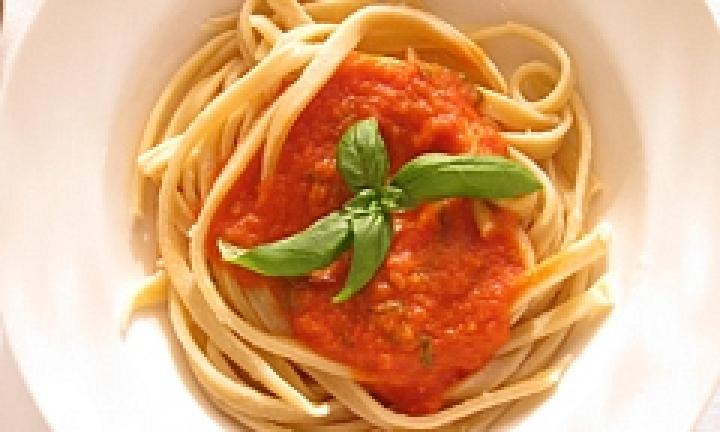
Ingredients
250g pasta flour
2 eggs
3 egg yolks
1 tbsp extra virgin olive oil
1 pinch salt
Allergy Advice
Contains Eggs
Contains Gluten
Equipment
- 1 Clean worksurface
- 1 Fork
- 1 Cling film
- 1 Rolling pin
- 1 Pasta machine
- 1 Knife
- 1 Pasta drying rack or clean broomstick
Instructions
- Sift flour and a generous pinch of salt onto a clean worksurface and form it into a mound with a well in the centre.
- Crack whole eggs into a cup and slide into the well. Add extra virgin olive oil.
- Using a fork, beat the eggs gently, incorporating a little flour in from the sides. Add egg yolks and continue to bring in sides incorporating a little flour at a time. Keep scraping up the sides of your mound as it threatens to spill over.
- Eventually the egg mixture will spill out. Push the flour all over the mixture and combine into a dough ball.
- Roll, fold and knead this until the dough takes on a silky texture. You will have to knead it for at least 5 to 10 minutes to get it to that stage.
- Form it into a ball, cover with cling film and rest in the fridge for 2-4 hours.
- To roll by hand: Roll the dough out into a long rectangle and double it over on itself 4 times as you continue to roll it out. Keep your work bench well floured.
- For the final product by hand, roll it out to the thickness that you want your pasta strands and dust with flour on both sides. Fold it into 8th’s and hand cut slices to form the pasta strands.
- To roll by machine: On the widest setting, pass your pasta through 4 times doubling it over on itself each time before it goes through the rollers.
- Reduce your machine setting and pass it through each setting until you have your required thickness. Remember that the thinnest setting is very thin and really for lasagne sheets.
- Pass your pasta through the cutter (fettucine or spaghetti) and hang over a clean broom stick to dry for a few hours. I like to dust mine with a little flour to keep the strands separated.
Notes
Tip
The type of flour you use is very important with pasta. Don’t try to make pasta with regular plain flour. You really need specifically pasta flour.
Tip
To get a really lovely silky product you need to use the best ingredients possible so make sure that your eggs are fresh and you use good olive oil.
Tip
Homemade pasta needs the simplest of sauces and a little sprinkle of good parmesan cheese.
Variation
Quick sauce – Dice an onion and fry it in some olive oil with a clove of crushed garlic and a tin of diced tomatoes. Add a handful of fresh basil and cook for 10 minutes. Stir a few spoonfuls through your fresh pasta and enjoy the simple fresh flavours.
Storage
You can also freeze it before you dry it so you just pull a bundle from the freezer and drop it into boiling water for 2 mins.