Myth-busting immunisation

Just because diseases such as measles, polio, and whooping cough have almost completely disappeared from our society, don’t be fooled into thinking that they are not serious. Vaccine-preventable diseases can be severe and immunisation helps to prevent them.
Myth #1 – Vaccines are unsafe.

For opponents of immunisation, one of the major concerns is that vaccines cause harm, whether or not they prevent disease. In general, no biological product can be considered 100% safe. However, all vaccines available in New Zealand are required to pass quality, safety and efficacy requirements before they can be licenced.

Myth #2 – Infectious diseases are not serious and are a normal part of growing up.

Some parents believe that the vaccine preventable diseases of childhood do not cause serious illness and are a normal part of a child’s growth. However, over the years, immunisation has controlled and stopped many of the diseases that cause illness or death in children.

Myth #3 – Improved living standards and sanitation have reduced the incidence of infectious diseases, not immunisation.

It is often said that factors other than immunisation are responsible for the decline of communicable diseases. There are many reasons for the decline in communicable diseases, and an improved living standard is one of them. However, vaccination has also had a clear and significant impact. Measles and pertussis are spread by coughing and sneezing and the attack rates are almost 100% no matter what the living and cleanliness standards are. Polio is caused by an intestinal virus which spreads more easily under conditions of poor hygiene, but has caused epidemics in countries like Holland, Finland and Israel, all of which have high standards of hygiene. All the vaccine preventable diseases have shown dramatic reductions in incidence after the introduction of vaccination.

Myth #4 – The vaccines don’t do their job because some immunised children still get sick.

Some parents believe that, since some children still get infected with vaccine-preventable diseases, then the vaccines don’t work. While it’s true that no vaccine has a 100% efficacy rate, there is a simple link between the numbers of vaccinated children, the vaccine’s effectiveness and the number of vaccine failures. For example, measles will attack 100% of a non-immunised population, but where the vaccination has been given, 95% of the population will not get the disease if they are exposed to it.

Myth #5 – The side effects of DTP include brain damage.

The DTP vaccine contains material that will produce immunity to tetanus, diphtheria and pertussis. During the 1970s there was concern that the pertussis part of the vaccination could cause brain damage and encephalopathy, but as a result of ongoing and extensive scientific studies, it has been proven that there is no risk. Not immunising your child against pertussis, however, can lead to brain damage in the event of the disease being contracted.

Myth #6 – Vaccines cause the diseases they are supposed to prevent.

Live vaccines such as the MMR vaccine can display symptoms that replicate the diseases it is vaccinating against; however, these symptoms are not contagious and are not part of the actual diseases. In extremely rare cases, the oral version of the polio vaccination – which is no longer used in New Zealand – could cause paralysis at a rate of 1 in 2.5 million doses.

Myth #7 – Additives in vaccines are toxic.

Formaldehyde (used in the preparation of several vaccines) and aluminium (used in some vaccine adjuvants) are additivies that work to enhance the efficacy or lifespan of a vaccine. These ingredients have been assessed as safe and necessary by The Australian Therapeutic Goods Administration (TGA).

Myth #8 – MMR vaccine causes inflammatory bowel disease and autism.

Suggestions that the MMR vaccine can cause inflammatory bowel disease (IBD) and autism came about in 1998 as a result of research that focussed on the decreased absorption of vitamins and minerals due to IBD in children and its resulting developmental disorders including autism. Since 1998 there has been ongoing research and the initial research has been proven to be deeply flawed. After an extensive study of 6,100 French school-aged children, it has been conclusively proven that there is no association between the MMR vaccine and either autism or IBD.

Myth #9 – Hepatitis B vaccine causes multiple sclerosis (MS)

There was concern over the association of multiple sclerosis and the hepatitis b vaccine after a mass vaccination program in France showed a few cases of MS or MS-like illness associated with hepatitis b vaccine. After halting the program, the data was examined and it was shown that the incidence of the onset of MS in vaccinated people fell within the normal boundaries of the entire population. Mass hepatitis b immunisation programs in New Zealand, Taiwan and Alaska have not shown any illnesses that suggest MS.

——————————-

HPV Immunisation has an excellent safety profile similar to any other childhood immunisations and recommended by health professionals. To protect your child against most HPV cancers, get them immunised at school or visit your local GP.

For more information about the HPV school immunisation programme, visit www.health.govt.nz/hpv

Birthday party idea: messy ooblek

Ready for some mess? Make this goo called ooblek for messy birthday parties. It’s not only fun to mess around with, but can teach kids about the scientific properties of liquids and solids, too. Made with cornflour, ooblek acts as a solid if you punch it or hit it but if you move your fingers through it slowly then it’s a liquid.

Imagine the fun you could have if you put ooblek in a wading pool and ran extremely fast on top of it? The next child might choose to walk through the ooblek very slowly, and he would fall to the bottom.

To make ooblek, you’ll need:

  • Even amounts of water and cornflour (ie, one cup of each)
  • A large bowl
  • Wooden spoon


How to make ooblek:

  • Place cornflour in a bowl.
  • Slowly add water and gently mix together with the spoon (you might need a little more flour or water to get the consistency you want)
  • Finish mixing with your hands and get playing!

Birthday party idea: hanging donuts and biscuits game


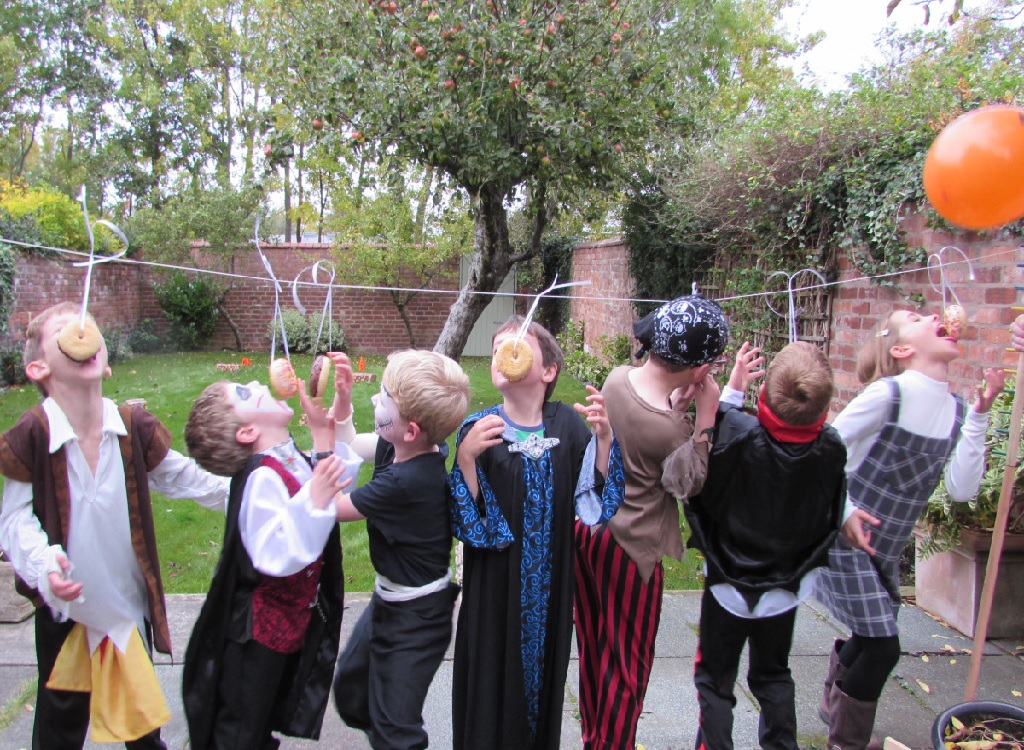
This colourful idea is perfect for a rainbow themed party, and recreates a fun game which is a twist on apple bobbing. To prepare this project, it’s best to make the hanging streamers the day before or morning of the party so the food doesn’t get too stale.

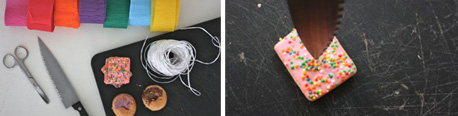
To make hanging donuts and biscuits, you’ll need:

  • Colourful crepe-paper streamers (try any discount store)
  • Biscuits – 100s and 1000s are nice and colourful!
  • Mini iced donuts
  • Scissors
  • String
  • Chopping board

donut biscuit game


donut biscuit game 2


How to make the hanging biscuits for the party game:

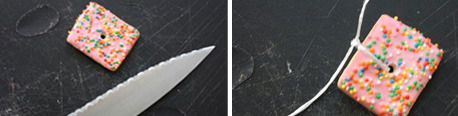
  • Place the tip of a sharp knife into the centre of a biscuit.
  • Twist the knife around gently until it starts to cut through the biscuit, leaving a small round hole.
  • Tie some string through the biscuit or donut hole.
  • Now tie the string with biscuits and donuts attached to the branches of the tree. Alternatively, tie the string in the branches first amongst the streamers and just before game time tie the donuts and biscuits to the ends of the string.

Birthday party idea: invisible ink invitations

The person receiving the letter – or party invitation – simply irons the paper to reveal the message. This activity is perfect for an adventure party. You can even get tricky and make the invisible ink message more fun to read by writing in normal pen and then asking the recipient to iron the message to reveal the party details.

To make invisible ink, you’ll need:

  • Blank paper
  • Lemons
  • Cotton tips or a small paintbrush
  • A bottle
  • Matches (optional)
  • Small cup or bowl


invisible ink


How to create an invisible ink birthday party invitation:

  • Cut and squeeze the lemon into the small bowl
  • Use your paintbrush or cotton tip to write the message or draw a picture. If you look at the page on an angle in certain light you’ll be able to see what you’re writing or drawing (a bit!).
  • Wait for the lemon juice to dry, then have an adult gently “burn” the edges of the paper to age it. Just hold the paper near the flame and it should brown. Do so right near a kitchen sink in case it catches fire!!
  • Roll up and place in a bottle. Attach a note for the recipient so they know they have to iron the paper for the message or image to reveal itself.

Birthday party idea: gingerbread cubby house

To make a Hansel And Gretel lolly house, you’ll need:

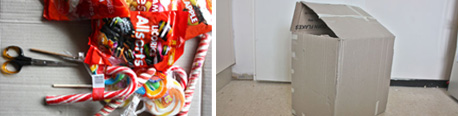
  • A cardboard box or readymade cardboard cubbyhouse
  • Scissors, knife or box cutter
  • Lollies
  • Icing
  • Also handy: masking or packaging tape, butter knife or spatula

cubby house 1

How to make a Hansel and Gretel lolly house:

  • Carefully open up the box and turn it inside out. Tape it back together with masking or packaging tape. Close one end of the box and tape it in place. Now make the top flaps into a roof shape by cutting off the two smaller flaps and sticking the two bigger ones together in a peak.
  • Cut out a door and window in the box.
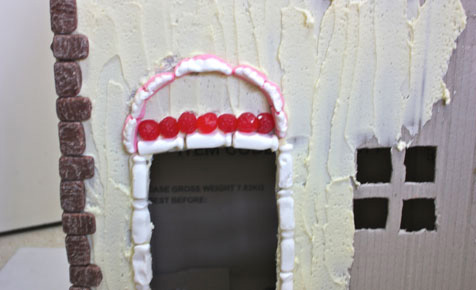
  • Apply icing with a butter knife or spatula and start arranging lollies in place.
  • Pineapple lumps make good bricks, milk bottles as architraves. Smarties would look great as a roof as would wafer biscuits layered to look like roof tiles. Get creative!

Birthday Party Idea: Easy Fringe Piñata

A piñata is a birthday party essential – but it can be a nightmare if you don’t want one plastered with Dora or Transformers. So how do we find a piñata when throwing a non character party? Make one!

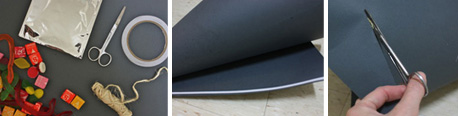
To make an easy fringe piñata, you’ll need:

  • Thinnish cardboard
  • Foil cellophane/wrapping paper or crepe paper
  • Scissors
  • Double-sided tape
  • String
  • Lollies
  • Masking tape (optional)
  • Hole punch (optional)

pinata 1

pinata 2

How to create an easy fringe piñata:

  • Stick a strip of double-sided tape onto the edge of the piece of cardboard and roll into a cone shape. Run your fingers along the taped area to ensure it sticks. If you know small children will be attending the party who won’t be able to crack the piñata open, you can make the cone smaller, so when they hit it and swing it, the lollies fall out of the top easily.
  • Cut the top of the cone to even it up but also make it the size you desire.
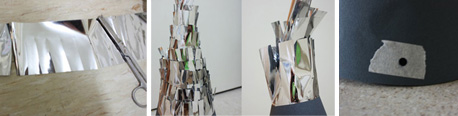
  • Cut the cellophane/paper into 10cm(ish) strips.
  • Make cuts along one side a centimetre or two from the top to create a fringe effect.  It’s quicker to cut while the strips are still folded up, but neater if you open it up first.
  • Wrap around the point side of the cone with the fringe side in line with the point and cut off. Run some double sided tape along the non-fringed edge.
  • Turn the cone upside down so it rests on a flat surface on the wide end with the point upwards. Stick your fringing on the point.
  •  Repeat with more fringing all the way up the cone, overlapping the layer below it each time.
  • As you get closer to the top, tape a piece of masking tape on the inside and outside of each side, directly opposite each other and pierce with a single hole punch. This strengthens the areas that will be weakened by the string.
  • Tie the string through the holes, turn the right way up, fill with lollies and let your party guests at it!

Make a Ballet Ribbon Wand

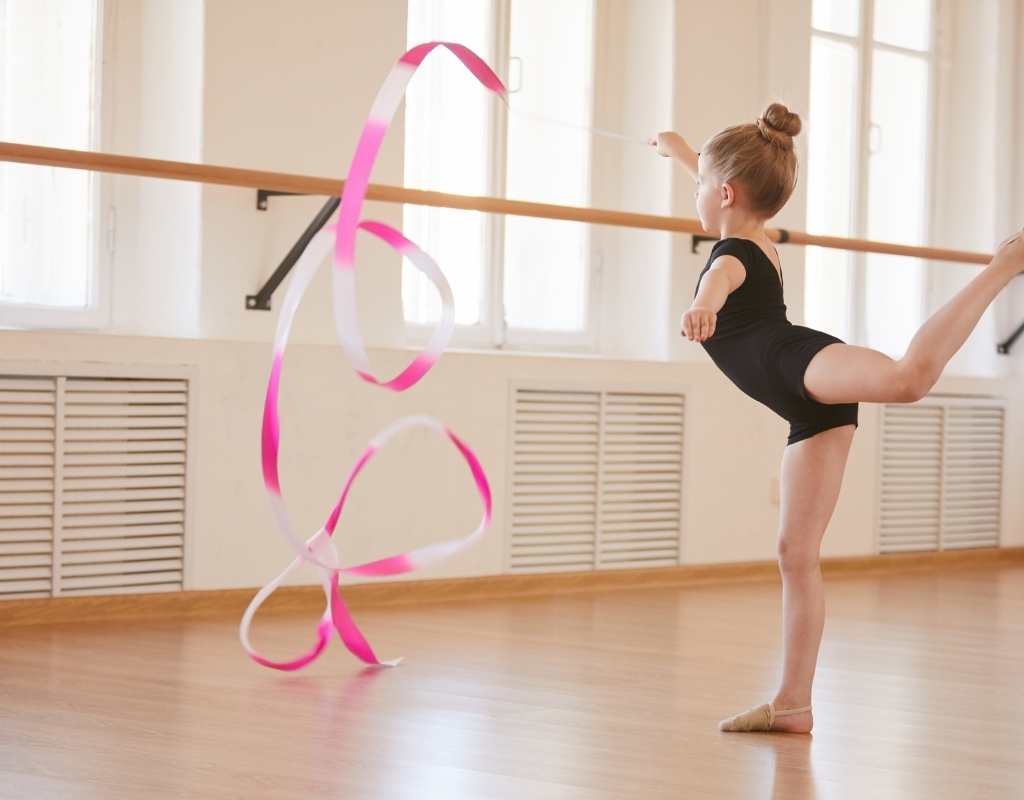
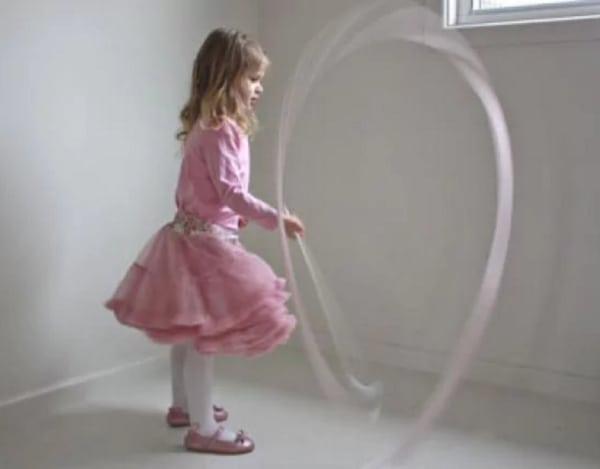
These ribbon wands will delight little dancers, especially those that are all tutu-ed up for a ballet themed birthday party.

This activity would also work well for those who love gymnastics or dancing. This craft can either be prepared ahead to hand out on the party day for kids to take-home as party favours, or you could set up a craft table and have the party attendees make them.

To make ribbon wands, you’ll need:

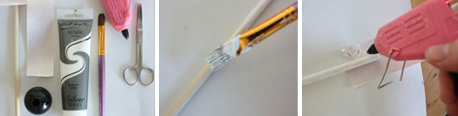
  • Piece of dowel
  • Satin ribbon – at least 2 metres long for each wand
  • Bead with large enough hole to thread the dowel through
  • Hot glue gun
  • Scissors
  • Paint and paintbrush (if you wish to paint it a prettier colour)

wand

wands

How to make ribbon wands:

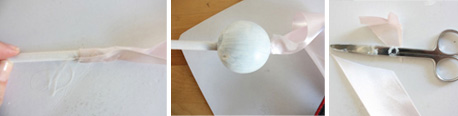
  • Paint the dowel and bead the colour of your choice. Leave to dry.
  • Using the hot glue gun, glue the end of the ribbon to the end of the dowel.
  • Wrap the ribbon around the dowel end so it is smooth and secure.
  • Thread the bead onto the dowel (from the other end) and move it up towards the ribbon. Put some glue on the section of the ribbon that is glued to the dowel and slide the bead over the ribbon so it sits on the glued-down bit.
  • You might need to squeeze a little extra glue into the bead’s hole for extra support.
  • Cut the end of the ribbon at a neat angle.

Ribbon wand

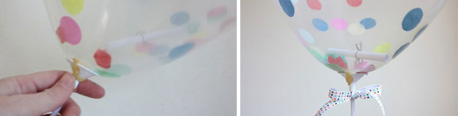
Birthday party idea: Confetti balloon party invitation

Perfect for those who want a polka dot pyjama party theme – or kids who simply want a more memorable way to bring their birthday party invitations to life.

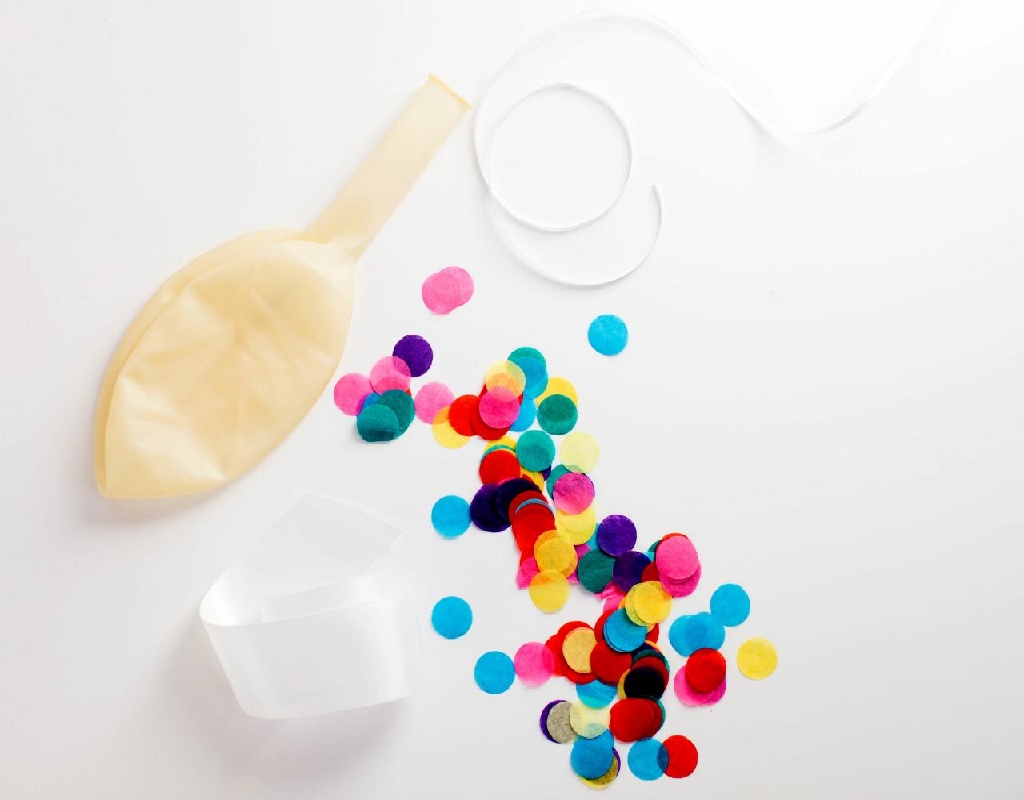
To make confetti balloon party invitation, you’ll need:

  • Some round paper confetti
  • Clear balloons (try party stores) or white pearl balloons that are see-through
  • A paper invitation, rolled-up
  • Polka dot ribbon
  • Balloon stick


confetti invitation


confetti invitations no 2

How to make a confetti balloon party invitation:

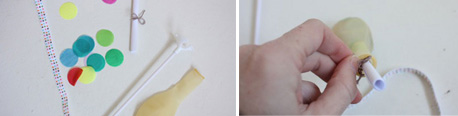
  • Fold the confetti slightly so it fits through the balloon opening. Slip in a handful of confetti in each balloon.
  • Slip in the rolled-up invitation and blow up the balloon.
  • Twist the balloon end onto the balloon stick and shake so the confetti sticks slightly to the wetness from your breath on the inside of the balloon.
  • Tie a piece of ribbon around the balloon stick and, if you like, a little note that reads “pop me”.
  • Hand deliver the balloon to your invitees.

The complete birthday party timeline

4-8 weeks out

  • Decide on the number of guests. If the party will be held outside your home, select and reserve a location. If you choose an outdoor location, come up with a plan for bad weather.
  • Let your child help choose the theme.
  • Make a guest list
  • Book entertainment, if necessary.
  • Order personalised invitations.

2-3 weeks out

One week ahead

  • Decide on the order of activities.
  • Test new games, which you can find on the Kidspot’s Activity Finder.
  • Make a grocery list.
  • Confirm reservations for entertainment or party location.

2-3 days ahead

  • Call guests who haven’t RSVP’d.
  • Shop for food, candles for the cake, lollies for lolly bags or the piñata.
  • Make sure you have a camera or a smartphone that takes good quality snaps.
  • Assemble lolly bags.

One day ahead

  • Clean the party area. Put away items that may be dangerous or distracting.
  • Bake or pick up the cake.
  • Order takeout food (such as pizza), if necessary.
  • Discuss party expectations with your children.
  • Practice saying “thank you” with younger children.

4-5 hours before guests arrive

  • Set the table.
  • Lay out crafts.
  • Inflate balloons.
  • Decorate the house.
  • Tie balloons to your mailbox or front porch so guests can locate the party easily.
  • Find matches for candles.
  • Make sure you have a pen and paper to record gifts.
  • Have a box available to dispose of wrapping paper.

1 hour before guests arrive

  • Take pets to a safe place until the party is over. Some kids may be frightened and others allergic.
  • Dress your children and yourself.
  • Put the food on the table and candles in the cake.
  • Set up crafts and activities.

During the party

  • Greet your guests with the birthday party boy or girl.
  • Make sure younger children know where the toilet is
  • If parents are dropping off children, confirm the pick-up time (and be sure you have a contact number in case of emergency).
  • Take photos (or ask another adult to do so).
  • Enjoy!

The day after

  • Help your child write thank-you notes to party guests.
  • Take time to reflect with your child on what their favourite moments where from the day.

Birthday party tips and tricks

Make your child’s birthday party a simple success with these clever ideas and tips from the Kidspot community.

“I’m planning my daughter’s 4th birthday party, we’re having it in a park. It’s going to be a teddy bear picnic party. All kids will be asked to bring their favourite teddy bear or soft toy. So many ideas stem from this, like teddy bear’s having their own picnic, a goodie hunt in the park, a piñata on a tree, etc. For four year olds, the park is the best place for them to run around, get fresh air and party all in one. ”

Natalie Cossar

“My mum “invented” jelly oranges 25 years ago. The kids would love coming to our parties in particular and eating the jelly oranges. Made by cutting the oranges in half, scooping out the flesh and pouring in jelly, letting them set in the fridge then cutting into wedges. My daughter’s first birthday is coming up and she will be having “Nanna’s Jelly Oranges” at her party too!! It isn’t a real birthday party unless there are jelly oranges!”

Simone Hepton

“Hire toys for your party! It’s cheap and for the first couple of birthdays, even though we might want to organise lots of games, they just want to play. It’s less stressful and everyone has a good time!”

Jodie Gamble

“My best birthday party tip is to make good use of local hire places and toy libraries. Use your local toy library to hire a party pack, complete with play equipment to amuse the older kids. For the younger kids we hired an enormous play pen for the day from a local baby shop – the best $15 we ever spent!”

Rachel Armstrong

“I have always rigged my pass the parcel games so that I can customise the presents for each child and it helps the adults playing to know who is coming up next and make sure that child is actively involved in the game at that stage for their turn. This works really well if you have a mix of kids, and the same toy or present can make the game a bit boring.”

Benoni Henderson

“My best party tip would have to be not to have it running over a sleep time!!!!!”

Anne Seymour

“Make birthday bon bons, with things like matchbox cars for boys and hair ribbons for girls. You can also get the kids to help make them in the colours to match the party. Everyone leaves with a little gift.”

Johneen Reeves

“Every year we make birthdays a big deal because of the milestones that have been reached. I have now had 14 birthday parties with my kids and after attending many others (too many to count) this is the best advice I can give.

By keeping numbers down to a manageable 6-8 kids :

  • You’re children will not be overwhelmed on the day and will get to see and play with all the birthday guests.
  • They will learn the value of good friendship especially when they explain why they want those six children there.
  • It makes it so much more affordable to do a quality party with great food.
  • Games are easy to manage due to short attention spans and prizes can be of a better quality.
  • You’re able to engage longer with parents and find out about their family.
  • You can store all the food you will need in the fridge without having to hire that mobile fridge unit.
  • It’s all about having fun, getting amongst it and making it a day for them to remember. I love them!”

Paula Smith

“My tip is to keep kids parties short and simple! Go back to basics with the party food, and sneak in some healthy choices disguised with fun! For example, balls of different melons, funny fruit and vege biscuit faces, oven baked sweet potato chips, and sugar free lollies and soft drinks. Party bags can have a craft item and a box of sultanas, and a few sugarfree lollies of course!”

Anita Dovell

“The most successful kid’s party I have hosted so far is a combined football party for two age groups. It does not matter how many kids are invited, we have had over forty kids attend. Equally divide the different age groups and at the end of every quarter, have them come and grab something to eat, ie; sausages in bread and a drink, then sweets and lollies and last of all THE BIRTHDAY CAKE. It’s a great day and we have done this for two years now and kids look forward to the party. ”

Leisa Shields

Find More

Slumber party rules

If you’re clear about the rules (no leaving the house, no prank calls, no unsupervised cooking) from the outset, you should be able to remain behind the scenes (there if needed, but not hovering).

Slumber party food

Junk food at slumber parties is a time-honored tradition, but don’t go overboard.

It’s fine to have chips, a small selection of lollies and birthday cake, but supplement these with fruit or a veggie platter and dips so you don’t end up with a party full of tummy aches.

Offer bottled water or juice instead of soft drinks or no one will be going to sleep. Slumber party guests are old enough to make their own food so consider planning a kitchen activity. Make-your-own pizza or tacos work well for this age group.


Slumber party crafts

Crafts aren’t a requirement, but you can certainly include craft-making if your child and his or her friends enjoy making things.

Consider buying inexpensive pillow cases and letting the kids decorate them with fabric pens for a super slumber souvenir. (Slip a piece of cardboard inside when decorating to keep the ink from seeping through to the other side.)

Slumber party activities

Although most preteens will keep themselves entertained, it’s a good idea to plan a few activities.

Some parents like to do one major activity outside the home, such as going to the movies, bowling or swimming.

Not only does this add structure to the event, it should also help tire your guests so they actually sleep!

Party tips from Kidspot mums

Make your child’s birthday party a simple success with these clever ideas and tips from the Kidspot community.

“I’m planning my daughter’s 4th birthday party, we’re having it in a park. It’s going to be a teddy bear picnic party. All kids will be asked to bring their favourite teddy bear or soft toy. So many ideas stem from this, like teddy bear’s having their own picnic, a goodie hunt in the park, a piñata on a tree, etc. For four year olds, the park is the best place for them to run around, get fresh air and party all in one. ”

Natalie Cossar


“My mum “invented” jelly oranges 25 years ago. The kids would love coming to our parties in particular and eating the jelly oranges. Made by cutting the oranges in half, scooping out the flesh and pouring in jelly, letting them set in the fridge then cutting into wedges. My daughter’s first birthday is coming up and she will be having “Nanna’s Jelly Oranges” at her party too!! It isn’t a real birthday party unless there are jelly oranges!”

Simone Hepton


“Hire toys for your party! It’s cheap and for the first couple of birthdays, even though we might want to organise lots of games, they just want to play. It’s less stressful and everyone has a good time!”

Jodie Gamble


“My best birthday party tip is to make good use of local hire places and toy libraries. Use your local toy library to hire a party pack, complete with play equipment to amuse the older kids. For the younger kids we hired an enormous play pen for the day from a local baby shop – the best $15 we ever spent!”

Rachel Armstrong


“I have always rigged my pass the parcel games so that I can customise the presents for each child and it helps the adults playing to know who is coming up next and make sure that child is actively involved in the game at that stage for their turn. This works really well if you have a mix of kids, and the same toy or present can make the game a bit boring.”

Benoni Henderson


“My best party tip would have to be not to have it running over a sleep time!!!!!”

Anne Seymour


“Make birthday bon bons, with things like matchbox cars for boys and hair ribbons for girls. You can also get the kids to help make them in the colours to match the party. Everyone leaves with a little gift.”

Johneen Reeves


“Every year we make birthdays a big deal because of the milestones that have been reached. I have now had 14 birthday parties with my kids and after attending many others (too many to count) this is the best advice I can give.

By keeping numbers down to a manageable 6-8 kids :

  • You’re children will not be overwhelmed on the day and will get to see and play with all the birthday guests.
  • They will learn the value of good friendship especially when they explain why they want those six children there.
  • It makes it so much more affordable to do a quality party with great food.
  • Games are easy to manage due to short attention spans and prizes can be of a better quality.
  • You’re able to engage longer with parents and find out about their family.
  • You can store all the food you will need in the fridge without having to hire that mobile fridge unit.
  • It’s all about having fun, getting amongst it and making it a day for them to remember. I love them!”

Paula Smith


“My tip is to keep kids parties short and simple! Go back to basics with the party food, and sneak in some healthy choices disguised with fun! For example, balls of different melons, funny fruit and vegie biscuit faces, oven baked sweet potato chips, and sugar free lollies and soft drinks. Party bags can have a craft item and a box of sultanas, and a few sugar free lollies of course!”

Anita Dovell


“The most successful kid’s party I have hosted so far is a combined football party for two age groups. It does not matter how many kids are invited, we have had over forty kids attend. Equally divide the different age groups and at the end of every quarter, have them come and grab something to eat, ie; sausages in bread and a drink, then sweets and lollies and last of all THE BIRTHDAY CAKE. It’s a great day and we have done this for two years now and kids look forward to the party. ”

Leisa Shields


Continue reading “Party tips from Kidspot mums”

10 steps to a perfect party

Throwing a great birthday party isn’t as simple as inviting a bunch of kids and providing cake. To make sure your bash is the best – with as little stress as possible – check out these planning tips:

Best Friends

  • If your child has a best friend make sure they can come on the date you are planning for the party before you go ahead with bookings and invitations. The day just won’t be the same without their partner in crime by their side.

Involve the birthday party boy or girl in the planning

  • If your child is old enough, sit down with him or her and offer a few suggestions for the theme and structure of the party, and let the birthday boy or girl choose from your list the one they want. Don’t ask your child to come up with the party plan because disappointment may follow when you say no to a petting zoo on your apartment’s balcony.

Plan

  • Plan what you are going to eat, play and give to each child when they leave. Start collecting party paraphernalia a couple of weeks prior to the big day and store it all in a plastic tub so it’s easy to access when party time arrives.

Guest List

  • Create a checklist to keep track of the who’s who of your party.
  • Big is not always best.
  • The rule of thumb is that the number of guests should be the age of your child plus one once your child is aged three and over.
  • If you are planning games make sure you invite an even number of children so no one is left out.
  • Older children handle bigger groups better than younger children.

Invitations

  • Order personalised invitations six weeks before the party. Send out invitations at least three weeks ahead of time. Many venues provide invitations so make sure to ask if you’re holding the party away from home.
  • There are also free electronic invitations that you email to all invited children and then receive RSVPs electronically.
  • Kidspot Directory has some great online companies who do wonderful invitations

Timing

  • Weekend parties are better for younger children and family can attend too, while older children will enjoy an after school party, if you can manage it. They love spending all day in anticipation of going home together, plus your party won’t clash with Saturday sport. If you are planning a Sunday party, keep in mind aome people may attend church in the morning.
  • The time of day you choose to start your child’s party depends on whether you want to serve a meal or cut straight to cake.
  • If serving a meal, start the party between 11:00 a.m. – 12:30 p.m. or 5:00 p.m. – 6:30 p.m.
  • If you plan to serve cake only, have your party two hours before or one hour after traditional meal times, for example, 2:00 p.m. – 4:00 p.m.

Venue

  • Home parties are generally less expensive than hired venues and you are free to hold the party at whatever time suits your family and guests.
  • Venues, on the other hand, can be exciting and make your job a lot easier. We have a list of party venues in our Kidspot directory.

Menu

  • If you want to serve a small meal, keep the offerings simple. Familiar snacks like pizza or sandwiches work well and can be turned into special party food by using cookie cutters to make star-shaped sandwiches or heart-shaped pizza.
  • If parents are dropping off children at the party, be sure you know about any food allergies. It’s best to avoid anything with nuts (including peanut butter sandwiches) because so many children are allergic to them. Or order in to save time.

Games

  • Sometimes old-fashioned party games work best for the youngest children. Pin the Tail on the Donkey and Simon Says are exciting for four-year olds because they may be discovering them for the first time.
  • Six year olds may like a twist on an old favourite such as Pin the tiara on the princess or the Eye patch on the pirate. Older children will be ready for simple crafts like making pirate hats or treasure boxes.

Present Opening

  • Encourage your child to say thank-you when the present is given to them and to open the card first
  • It is best to decide when the presents are to be opened (when the guest arrives, at a set time during the party or after the party) and explain that to your child before the party starts
  • Send a thank you note to each guest

Best time to host a slumber party


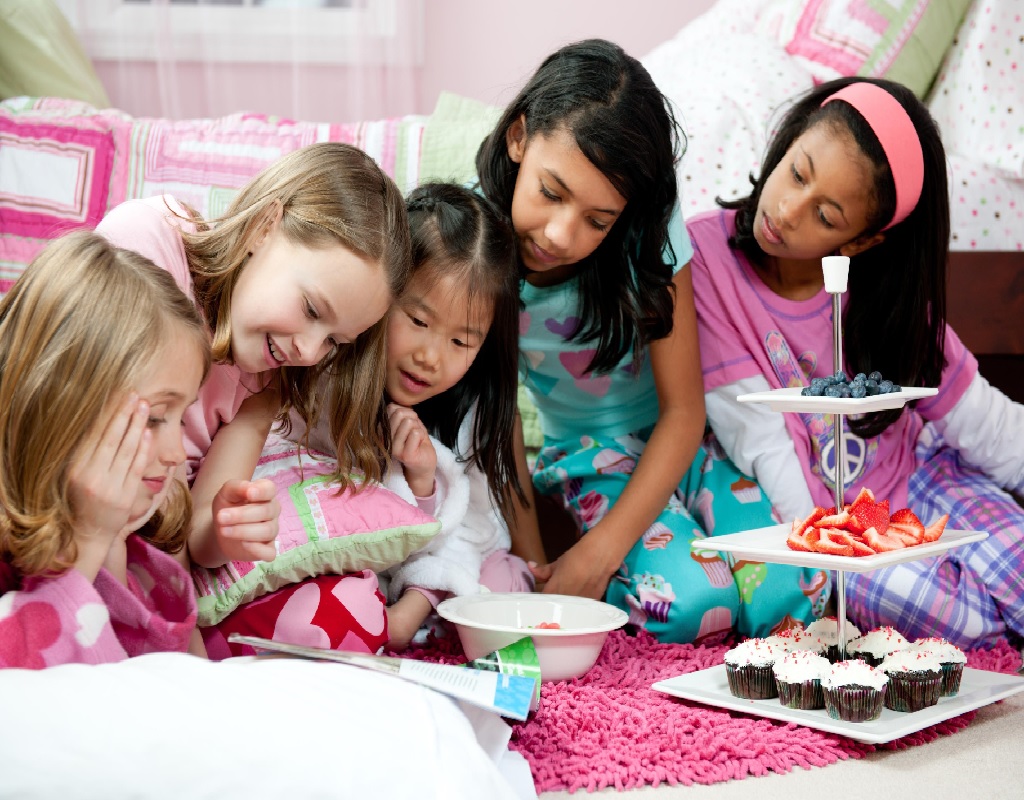
Thinking about holding a slumber party this year and not sure how long (or short!) the party should be? Here are our top tips for choosing the best time for your party:

If you are planning on taking your guests to an activity – seeing a movie, going to the beach or pool – ask them to be at your house at least half an hour earlier than you need to leave. There are always late arrivals and you don’t want to have them spoil your plans.

If you are planning on keeping the party at home, ask guests to arrive late in the afternoon so they can enjoy some games before dinner.

Make sure you specify a pick-up time the next day – and don’t make it too late! Tired children do not make happy house guests so mid-morning usually works best for everyone.

Because slumber parties are held over two days, often some guests need to arrive late or leave early so be sure to know exactly when your guests are coming and going to ensure that they can enjoy most of the slumber party activities.

Best age for a slumber party

While almost all children will at some stage beg you for a slumber party to celebrate their next birthday, slumber parties work best if the guests and birthday child are not too young or old.

What is an appropriate age for hosting a slumber party?

Sleepovers work best for kids aged eight to 14. If your child is younger than eight, she and her friends may not be ready to spend the night away from home, and you may end up having to make phone calls in the middle of the night to parents of weepy homesick guests, so consider hosting a pyjama party instead.

All the guests can come in their PJs at 6pm, play games, have dinner and be picked up by 8 pm. When you do decide that your child is ready for their (and your) first slumber party, keep the guest numbers to two or three so everyone can manage the excitement of the sleepover. As the kids get older you can add extra guests to fit in with the space you have available.

But be warned! The older the guests, the less likely they are to get much sleep and this can affect the whole household. Perhaps consider sending siblings away for the night so that some members of the family get some shut-eye!


Carbohydrates for breakfast

Why do we need to eat carbohydrate?

Carbohydrates are a primary source of energy from food and are made up of fibre and sugar.  Glucose (sugar) is essential for brain function and is the fuel of choice for active muscles.  Although fat and protein can be sources of fuel for the body, carbohydrate is a more efficient source of energy.

Even though low carb diets are espoused as a weight loss ideal, most nutrition experts agree that sustained whole grain carbohydrates provide a great source of long-lasting energy.

What are carbohydrates ?

Even though low carb diets are espoused as a weight loss ideal, most nutrition experts agree that sustained whole grain carbohydrates provide a great source of long-lasting energy.

Most carbohydrates are foods such as rice, pasta, bread, and cereal. Ideally, carbohydrates should consist of 40% of your daily kilojoule intake, with another 30% coming from proteins like meat, fish or dairy.

Types of carbohydrate include:

  • Starch (such as that found in grains and root vegetables)
  • Sugars (including added sugars and naturally occurring food sugars such as lactose in milk and fructose in fruit and honey)
  • Most types of fibre

Sugars and starch are broken down in digestion to single carbohydrate units (including glucose, galactose and fructose) for absorption and then as energy by the body. Fibre is similar in chemical structure but differs in that it mostly passes through the bowel, although we now know that some fibre is also converted to energy in the body.


How many carbs do I need?

To help ensure adequate carbohydrate in the diet, try to include 2 serves of carbohydrate foods from a variety of sources at each meal. One serve of carbs can be:

  • 2 slices of bread
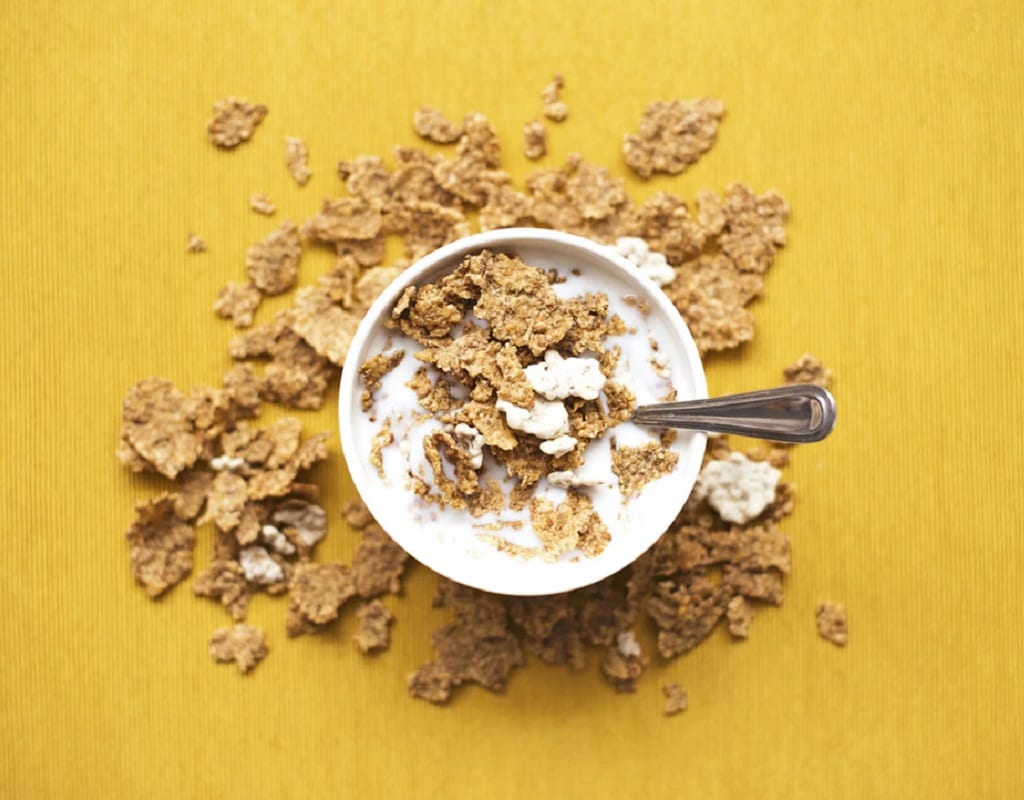
  • 1 cup of breakfast cereal flakes
  • 1 cup of cooked rice
  • 1 medium piece of fruit
  • 1 tub of low fat yoghurt or a
  • 250ml glass of low fat milk.

Which foods contain carbohydrate?

The main sources of carbohydrate in the Australian and New Zealand diet are:

  • breakfast cereals and grain based foods
  • juices and soft drinks
  • starchy vegetables and legumes
  • milk products
  • fruit

Best breakfast nutrition for growing kids

Help kick-start the school day

Ask any teacher the difference a sensible breakfast can make to kids at school and they’ll most likely tell you it improves behaviour and generally makes them more receptive and less disruptive.

Breakfast, as the word suggests, literally means ‘breaking the fast’. After going 10–12 hours overnight without food, children’s energy reserves are low and their bodies, and perhaps more importantly their brains, need fuel.

It’s not surprising then that nutritionists consider breakfast the most important meal of the day. Yet many schoolchildren are still going without it for one reason or another.

The building blocks of a good breakfast

Like any other meal, a balanced breakfast should include a variety of foods, be low in saturated fat and provide carbohydrates for brain fuel as well as vitamins and minerals.

Ideally you should be looking to get your kids to eat around 20% of their daily calories at the breakfast table.

Eating a good breakfast helps give kids a great start to their school day, but how do we get them to eat if they’re ‘not hungry’, ‘running late’ or ‘can’t make up their mind’? Try some of these suggestions:

At home

  • Wholegrain toast with baked beans, a small glass of milk and a piece of fruit.
  • High-fibre cereal topped with fresh or tinned fruit slices, dried fruit or nuts for some variety.
  • A wholegrain toasted sandwich: cheese and tomato or banana which, at a pinch, she can eat on the way to school.
  • Raisin toast with a fruit smoothie (reduced-fat milk, yoghurt and fruit blended with ice).
  • Wholegrain toast and fruit with a cup of MILO and milk. A cup of MILO with milk contains 8 vitamins and minerals (calcium, iron, vitamin B2, B3, B6, B12, C and D). You may be surprised to learn that mixing in MILO adds more nutrients to milk. Using MILO adds 31% more protein, 65% more calcium, plus more iron (32% RDI) and more vitamin D (39% RDI). MILO with trim milk is also low GI to provide sustained energy for active kids as part of a healthy, varied diet.

Breakfast on the run

If your child really does have to leave the house four minutes after she’s rolled out of bed, toss her a wholegrain cereal bar and a small fruit juice, a tub of low-fat yoghurt and a banana, or a bag of cereal mixed with trail mix. She can eat these on the run and still arrive at school fuelled up.

The importance of breakfast

Attentiveness in the classroom can be a key indicator that a child has had breakfast, according to the results of a recent survey of 1,000 Australian primary and secondary school teachers. In contrast, tiredness and lack of concentration are tell-tale signs that a child has skipped breakfast.

The findings revealed:

  • 96% of teachers say students who eat breakfast pay more attention
  • 88% of teachers say that students who eat breakfast perform better at school
  • 79% of teachers say that students who eat breakfast are more interested in learning than those who don’t
  • When asked to nominate their choice of the best breakfast options for students, teachers nominated breakfast cereals as the most popular option.

Dr John’s tips for helping your child succeed at school include:

Dr John Irvine, leading Child Psychologist, says “parents should not underestimate the benefits of a good breakfast in helping kids perform to their best at school”.

“A nutritious breakfast can help kids’ bodies and brains cope with the busy mornings at school”, said Dr Irvine.

Breakfast cereals can be a good option as a breakfast choice.

High fibre diets can also help kids feel full between meals so they can focus on learning and are less inclined to fill up on junk food” says Dr John.

Breakfast and mood

Research has found that breakfast is associated with a more positive mood. Some of the reasons for this include:

  • Be Prepared – summarise notes, complete old exam papers and discuss the exam topics with teachers, family, friends – even your pet dog or plant is a good sounding board. This helps the brain to store information effectively.
  • Do try to have good breakfasts – a nutritious breakfast will help bodies and brains cope with exam stress and busy mornings at school.
  • Take time out – being switched on for top performance also means knowing how to switch off. Use relaxation time to catch up with friends, listen to music or watch a good movie, do some exercise even if it means walking that dog that was prepared to listen to your answers – if you can get the endorphin levels up with fun and exercise that’s good for brain functioning and for fighting depression and stress.
  • Take control – don’t fall for the pre-exam nervous natter outside the exam room. Use your “right” brain – go off somewhere quiet and visualise yourself ploughing through the paper, visualise what you might do after the exam to relax. Just don’t try last minute cramming…it just clogs up the brain.
  • Know your learning style – know how you best learn. Some work best in short bursts, some better in the morning, some better with semi-classical music background, some by seeing their summaries in diagram, mind maps, acronyms or picture form – whatever you do, don’t just read notes, that doesn’t mean you’ve learnt anything, it just proves you can read!
  • Think Positive – use positive self talk and avoid negative people and thoughts before the exam as that gives your performance much more energy.
  • Don’t rush – in the exam room do a few deep breaths, relax ready for action, read the questions first, decide on choices, decide on which to tackle first and prepare your thoughts before launching into attack – that way the examiner knows how you’re thinking and where you’re heading.

Carbohydrates

Several studies have shown that consuming high levels of carbohydrate is associated with better mood. As most breakfast cereals are high in carbohydrate, this offers one possible reason why eating a high carbohydrate breakfast is associated with an improved mood.

Taste

It has been shown that not only do the sensory aspects of food (such as taste) play a role in the enjoyment of food, but the appearance (colour and shape), texture, fat content, temperature and even the sound of chewing all contribute to the overall flavour perceptions of food. If you enjoy what you eat this can help lift mood.

How breakfast and lunch impacts learning

What does your child eat for breakfast before school? Cereal, toast, nothing? Despite over fifty years of evidence supporting the immense importance of a good brekkie to kids’ education, loads of New Zealand kids are still skipping the good stuff.

A study in 2013 (published in something daunting called Frontiers in Human Neuroscience) showed that a lack of brekkie directly impacts on a child’s numeracy and literacy scores – in other words kids who ate breakfast performed significantly better in the classroom. Breakfast makes you smarter? It really does seem to be the case.

It’s not just breakfast. What our kids eat throughout the school day has a huge impact on their ability to pay attention, remember what they’ve learned and, as a result, improve their academic performance. It seems that the better the nutritional quality of the food we pack for them, the better the opportunity we give them to do their best at school.

The great things about breakfast and the school lunch box is that they give us our best chance of controlling what our children eat. Once the breakfast table is set, once the lunch box is packed, there is little chance for pester-power to erode our good judgment. So, what are we waiting for?

Ready to go

Setting things out the night before allows you to simply say, “breakfast is on the table, please help yourself” before they’ve even voiced their first morning “can I have?” Some good choices to have ready are:
Apple and hazelnut bircher muesli – if you make this in small jars, it’s a good ‘on the go’ choice too
Blueberry and Coconut Muffins – These easy, delicious muffins are studded with blueberries, flakes of coconut and whole rolled oats for texture.
Yoghurt parfait – an overnight siesta in the fridge means all the fruity flavours mingle deliciously with the yoghurt

On the go

Fact is, lots of families simply don’t have time to sit down to a decent breakfast, but get a few things ready the night before and in the morning a portable breakfast takes no time at all.
Strawberry and banana smoothie – get this ready the night before and whizz in a blender right before you go
Cheesy quiche in a cup – have everything ready and just microwave on your way out the door
Breakfast pie – get these ready right up until baking, keep in the fridge overnight and put into the oven when you wake.

Interval

This little ‘refuel stop’ at school offers time for a refresh and a little nutritional punch in the morning. This is a great opportunity for us mums to get a good dose of vitamins into little bodies so rather than just one kind of fruit, aim to pack a small portion of mixed fruit each day. A couple of blueberries, raspberries, orange slices and some snow peas and cherry tomatoes make a colour mix that packs the kind of nutritional punch that helps kids feel alert and ready to learn until their next fuel stop. Interval is generally a short break and they will be more likely to eat food that they can munch on the go. Add a small portion of cheese and a few homemade crackers for calcium and carbohydrates that will see them through their busy morning.

Lunch

When you think about it, kids eat a lot at school. With interval and lunch both falling before 1pm at most schools, kids really don’t need to eat a huge lunch at all. But they do need to eat something and if you find the ‘lunch’ part of the lunch box is frequently coming home uneaten, your child will almost undoubtedly be finding it hard to concentrate on afternoon lessons.
What we need to pack are nutritionally good choices that they’ll look forward to and can eat without fuss. Large apples and uncut wraps or sandwiches feel huge to a small child – make a full sandwich or wrap, serve half one day and freeze the other half for the next. Keep portions small but varied and hopefully you’ll have a clean lunch box coming home in the afternoon.
Good choices for lunch time:

Chasing Cait’s summer sorted with Lilly & Lime D Cup and up bikini

Style Coach, Cait Taylor from Chasing Cait loves this season’s Lilly & Lime D Cup and up swimwear collection. To celebrate summer, we spoke to our favourite NZ style crush to find out about her choice of holiday bikini, big boobs, her second pregnancy and the hottest accessory on the beach this summer.

Without a doubt, Cait has got to be one of the most relatable and body positive Style Coaches in New Zealand. Cait’s been blogging since 2010 and is passionate about using her personal style and eye for beautiful fashion to help women look and feel amazing.

Cait has declared Lilly & Lime’s new range “absolutely gorgeous”! She packed the Azure Palm Sophie Balconette top and matching basic brief on her recent family trip to Vanuatu and was blown away by the great style and the fabulous fit.

“The bikini top offered heaps of support for DD/E cup boobs, without looking like a big, heavy top and was still fun and sexy! I love a lower cut bikini bottom, plus I’m pregnant so I needed something that will sit under my tummy this summer. I couldn’t go past the palm print either, so on-trend for summer!”

Lilly & Lime are experts when it comes to bikini fit and size with their speciality bra size swimwear. Emma-Jane Hughes and Ashleigh Hill, who are both a D Cup and up, created the swimwear line in 2016 as they were fed up with having to compromise fashion, for comfort and fit. Lilly & Lime swimwear brings women with larger boobs more variety, style and support.

Like Lilly & Lime, Cait is passionate about dressing people to suit their body shape. When it comes to swimwear advice for women with a D Cup and up, Cait encourages us to be bold.

“I think that women with larger busts always assume that they need to go for black, or other plain dark colours to “minimise” their bust. But, not at all! A good, supportive top, constructed for a larger bust will keep your body looking in proportion so you can rock a bright colour and a cool print and still look amazing! I always look for tops that are constructed like a bra. You want that extra support in the design, but that also doesn’t mean you can’t go strapless! Again, it’s all down to the support in the design”.

Last year, Lilly & Lime was labelled the perfect pregnancy bikini by Australian  mummy blogger, Sophie Cachia and has also been a favourite of New Zealand mummy bloggers Jordan from @withthewhittakers and Ness from @wearethewatsons. Right now, Cait’s pregnant with her second child. We asked her if she had any extra tips for pregnant women or new mums on how to chose swimwear to help them look great and feel supported?

“My biggest piece of advice for gorgeous pregnant ladies and new mums when choosing swimwear is to own your amazing body – it just grew (or is growing) a human for goodness sake! So as long as you feel comfortable in your togs, and nothing is hanging out, or digging in, then own it. Trust me, the more you hide, the most self-conscious you will feel so pick a pair of togs you feel great in, just make sure you get the size right. This is particularly around the boobs, as they probably will have changed shape and or size”.

Cait also gave us the scoop on this season’s fashion-forward tropical accessories. She recommends a gorgeous wide-brimmed hat, a bright colourful kimono and beach towel or bag featuring a palm-tree, flamingo or cactus will have you nailing it in the style stakes. However, Cait was quick to add that summer style does not end here.

“I’m going to be brutally honest. Self-confidence is the hottest beach accessory this summer. Want a bikini body? Then put a bikini on. The end. We spend so much time worrying about what everyone else think about us, but in the end, who cares!”

You can view Lilly & Lime’s entire range at www.lillyandlime.com where they offer free size checks, free shipping and free exchanges.

Sugar and my child

Everyone needs energy to live, grow and thrive. Often the major source energy in their diet comes from carbohydrates, which includes sugars and starches.

What is sugar?

Fructose and glucose are the two of the simplest types of sugars in our food.

As the building blocks of other more complex carbohydrates, fructose and glucose are bound together in nature to create other sugars such as lactose and galactose (found in milk), sucrose (table sugar) and maltose (found in malt).

As more and more building blocks get joined together the more complex the carbohydrate become, eventuating in the formation of starches which are found in foods such as root vegetables (e.g. potatoes, kumara, carrots, beetroot) and grains.

Not all sugars are the same, so it’s important to know what to look for when trying to avoid the intake of excessive added sugars.

Why the fuss about sugar?

The World Health Organisation announced in 2015 that intake of free sugars* should be less than 10% of totally energy intake, and ideally less than 5% for additional health benefits. This is based on reducing the impact of dental caries and also lifestyle related diseases.  Lifestyle diseases are specifically those resulting from obesity which results from energy imbalance.  Sugar, being a major source of energy in our diet, has therefore become a hot topic.  Recent research with NZ parents showed that three out of four parents were concerned about sugar for their children (Bauer research).

What does that mean for our children? Some things to bear in mind:

Newborns have a natural preference for sweetness, so that they are attracted to the taste of breast milk (lactose) – the only food a baby needs for the first six months of life.

From six months is the time recommended to introduce new foods.  This is when your child will learn about other tastes and textures.

Toddlers and young children are generally able to moderate their own energy intakes by consuming the amount of energy they need, as long as they are provided with a healthy balanced diet.

When children are offered energy dense foods, such as those high in sugars, this natural mechanism can be overridden which in turn can lead to an energy imbalance, particularly when children are less active.

Too much sugar in a toddler’s diet may also mean they establish a preference for sweeter food throughout their life.

While gram for gram, sugar is lower in energy than fat, high-sugar foods (or foods with added sugar such as cakes and biscuits) tend to deliver more energy per serve than foods with naturally occurring sugars, like milk and fruit.

It’s recommended that from one year of age onwards children consume 2 cups of milk per day and 2 serves of fruit per day (a serve of fruit for a child is equivalent to what fits in their own hand).  These two important foods provide plenty of natural sweetness along with other important nutrients.

If you are considering a toddler milk, make sure you look for one with no added sugars. As an alternative to plain milk, a toddler milk offers the benefit of added vitamins and minerals.  Like milk, the only sugar it contains should be lactose.

There are three simple ways to avoid giving your toddler’s excess sugar?

1.    Offer a range of different types of food each day including: dairy, fruit and vegetables, breads, pasta, rice and cereals and protein-based foods such as eggs & meats.  Then your child has the opportunity to naturally balance their metabolism, as well as developing a taste for these healthy foods and a varied diet.

2.    Avoid added sugars by looking for products with no added sugar. You may need to become a sugar detective by knowing what to look for on labels to identify added sugars. Glucose, sucrose, syrups, honey and molasses are all types of added sugar.  Avoid drinks with added sugar. After Breast milk, water is the best way to keep toddlers thirst quenched.

3.    Teach your toddler to enjoy some sweet foods in moderation by offering healthy snacks most of the time with sweet treats only occasionally.


* Free sugars’ comprises all sugars added to foods by the manufacturer, cook or consumer, plus sugars naturally present in honey, syrups and unsweetened fruit juices. Under this definition lactose (the sugar in milk) when naturally present in milk and milk products and the sugars contained within the cellular structure of foods (particularly fruits and vegetables) are excluded.

Consumer Research 75% of New Zealand parents are concerned about sugar*

–       69% of Dads

–       78% of Mums

*Sugar rated above screentime, bad beahviour, too much sun, artificial colourings, high fats, salt, origin of food and NZ produced


Written by Cherry Barker, Paediatric Nutritionist, in support of Anmum and  Kidspot. References include European Food Information Council.

Your toddler’s eye development

While your child’s eye experiences more physical development during the first year of life than at any other time, there is still much fine-tuning of the eye muscle and nerve connections that continues throughout childhood.

Your toddler’s eyes

During toddlerhood your child will develop his eye/hand/body coordination, depth perception and eye tracking and teaming, and the best ways you can encourage this development is by playing games that require these skills, such as:

  • Stacking building blocks
  • Rolling a ball backwards and forwards between you both
  • Doing puzzles
  • Playing with toys that lock together such as Lego and K’nex
  • Doing craft activities such as colouring, drawing and cutting with safety scissors
  • Reading books together and looking at illustrations to identify objects

Checking your toddler’s eyes

At about three years of age, it is recommended that your child’s vision be assessed. An eye test will check your toddler’s:

  • eye development
  • general eye health
  • sharpness of vision
  • eye tracking and teaming (the eyes’ ability to work together)
  • focus

About 25% of school children will need some correction of their vision. Unattended poor vision can have a detrimental effect on your child’ ability to learn in the classroom, play sport, and self esteem.

Lazy eye

While having your child’s vision assessed, your doctor will look for any possible signs of amblyopia, also known as Lazy eye. This condition affects between 2-4% of New Zealanders and if detected early (by three years of age), it can usually be corrected. Because young children rarely recognise that their eyesight is anything less than perfect (having nothing to compare it to), it is important that you investigate any of the following symptoms your child may be experiencing:

  • Rubbing her eyes excessively
  • Holding a book closer to her eyes to read than you would consider necessary
  • Closing one eye, or covering one eye, to look at an object
  • Tilting her head forward when doing close work
  • Blinking more than normal
  • Squinting or frowning often

IMPORTANT!

Your child will not outgrow crossed eyes – if you notice any turning of one or both eyes, you need to get this attended to immediately as your child will need treatment to fix the problem.

Your toddler’s eyes and diet

Ensuring your toddler eats a balanced diet can have a huge impact on your child’s eyesight. When meals are rich in vitamins and minerals they help eyes develop in a healthy way. While eating foods from all the food groups is important, some foods offer nutrients that especially help eye health – these include antioxidants such as vitamin A, C, and E as well as Lutein and omega-3 fatty acids found in oily fish and some seeds and nuts.

Lutein is found naturally in dark, leafy green vegetables such as spinach and kale and is found in high concentration in the part of the eye’s retina that is responsible for central vision. Ensuring that lutein is included in your toddler’s diet will support her eye development.

Toddler hygiene

All toddlers get dirty when they play – let’s be honest, most toddlers even seem to get dirty when they sleep. And while that’s all good stuff, you need to begin to teach them some basic rules of hygiene. The more often your toddler is reminded about cleanliness, the faster they will learn to take care of it by themself.

Hygiene: the basics

While you certainly need to teach your child the basic rules of hygiene, the best way they will learn is to follow your lead. Make sure you’re always being a good role-model and follow the same guidelines you set out for them – that you clean your teeth as often as you want them to, that you wash your hands after you’ve played with the cat, that you take care of your own personal hygiene in the same way you want your child to.

At this age, your child isn’t old enough to be entirely in charge of their personal hygiene but if you do the groundwork now and instil a sense of what is expected, as your child matures they will become more responsible until one day (far, far off in the future!), they may surprise you and wash their hands without prompting.

  • Teach about germs and how they can make us sick if we don’t keep ourselves clean. Show when and how to wash their hands properly using soap – make sure that they wash the backs of their hands too.
  • If your child is going to have trouble accessing the taps or the soap, you may have to use a step in the bathroom – perhaps the same one used to get onto the toilet
  • While you wash your child in the bath, explain what you’re doing and then let them have a turn with the soap
  • Teach your child how to clean their teeth morning and night – no matter how much they protest, they won’t be old enough to take charge of this activity until they are about 6 years old, but they can have a turn before you brush their teeth.
  • Teach your child to cover their mouth with the crook of their arm when they cough and how to use a tissue to blow their nose – this one can be tricky though, as some children don’t learn to blow their nose properly until they are close to school age because they struggle to understand how to force air through their nose.

This article was written by Ella Walsh for Kidspot.

The bacteria your kids need for good immunity

Over 70 percent of our immune system lives in and around the digestive tract, which means that most immune problems including allergies, recurrent infections and skin conditions often come back to the health of your gut microflora.

Mel Hearse talked to Tracey Loiterton, qualified Naturopath and Nutritionist at Paddington Clinic about the whys and wherefores of cultivating good gut flora.

Having high levels of good bacteria (gut flora) in the digestive system is essential for building a strong immune system in growing children, explains Loiterton.

“This gut flora is a major player of your immune system, which of course, is your body’s natural defence system that keeps you healthy. In your child’s early years, good gut bacteria can influence the growth and formation of organs crucial to proper immune function,” she says.

Your gut carries a staggering 100 trillion bacteria – which translates to over a kilogram –  in the lining of your intestinal tract. It works to protect your body from external intruders, like those dog hairs your son is allergic to, the bug creating your daughter’s recurrent ear infection, or perhaps the allergens that give your kids those consistently red and itchy eczema patches.

So in short – the health of your body is largely tied into the health of your gut, and it’s hard to have one be healthy if the other is not.

Get in early to get a good gutful

The gut microflora established in your child’s first two years of life can greatly influence their long term immunity, and it is not until age four or five that a child has developed enough good bacteria to constitute a developed digestive system.

“A healthy gut microflora ecosystem is essential to your child’s overall health. Children that don’t have the right balance of gut bacteria are likely to be more prone to colic (gas and pain in the abdomen), and are believed to be at greater risk of developing allergies, for example eczema or asthma when they grow up,” Loiterton says.

Early establishment of a healthy population of gut flora, ideally initiated immediately after birth is therefore key. Breastfeeding* is good for gut health – the New Zealand Breastfeeding Association recommends exclusive breastfeeding for the first six months of life, and recommends continuing to breastfeed as long as possible.

Inclusion of animal fat, protein, primal starches and leafy vegetables is a safe way to promote a healthy gut. Eating fermented foods, such as yoghurt, and introducing a good probiotic supplement to your child’s diet is also highly beneficial, Loiterton says.

Prebiotics (non digestible carbohydrates that act as food for probiotics) are also helpful in promoting growth of good bacteria in the gut, moving through the digestive tract to feed good bacteria.

Foods rich in prebiotics include:

  • Garlic, onion, leek and celery
  • Other green veggies (capsicum, cucumber and broccoli, for example)
  • Bananas
  • Wheat bran, rye-based breads, barley and whole oats
  • Soy beans

Gut busters

Just as there are ways to support to the growth of healthy bacteria, Loiterton says there are factors that can destroy it.

Bear in mind antibiotics wipe out good bacteria as well as the bad, so talk to your doctor about a good probiotic if they are prescribed. Other stomach health stealers are high sugar diets and stress.

So in short, the common sense approach to good health works for your child’s gut health too!

This article was written by Kidspot.com.au and has been adapted for Kidspot.co.nz

*Kidspot is dedicated to the promotion of breastfeeding as the best possible start in life for babies as well as being good for the health and wellbeing of mothers.

The World Health Organization recommends that infants start breastfeeding within one hour of life, are exclusively breastfed for six months, with timely introduction of adequate, safe and properly fed complementary foods while continuing breastfeeding for up to two years of age or beyond. Source: http://www.who.int/nutrition/topics/infantfeeding/en/

Breastfeeding provides babies with the best nutrition and is preferred whenever possible. Good maternal nutrition is ideal for breastfeeding. You should be aware that reversing a decision not to breastfeed may prove difficult. Partially introducing formula could negatively affect your milk supply. Social and financial implications should be considered when selecting a method of feeding. Professional advice should be followed before using an infant formula. Proper use of an infant formula is important to the health of the infant and should only be used as directed.

If you’re worried about breastfeeding, your Well Child nurse or PlunketLine can help.

Encouraging Your Toddler To Eat

Encouraging a toddler to eat a full meal can be tricky and messy! Read our best tips and tricks.

  • Don’t forget that your toddler has a small stomach – about the size of their fist – and so they will know when they’ve had enough to eat.
  • Always offer a range of nutritious food.
  • Ban unhealthy snack foods from the house – that way, you’ll never be tempted to give them to your toddler.
  • Avoid cordials and too much fruit juice as these are high in sugar and take away the appetite for other foods.
  • If your child says they are thirsty just before they eat, offer water only.
  • Encourage your child to help prepare the meal. There is almost always a small task that can be managed by a child – setting the table, getting food from the fridge for you, adding ingredients to a bowl. Save peeling, grating and cutting until they know how to handle kitchen implements properly.
  • Don’t serve your child too much food – it’s better to have them ask for more if they are still hungry than have them sit face-to-face with a mountain of uneaten food on the plate.
  • Don’t use dessert as a bribe to eat the rest of the meal – it rarely works and can often lead to more resistance over dinner.
  • Invite one of your child’s friends over for a meal. The feeling of festivity at the table often encourages a fussy eater to eat.
  • If your toddler rejects everything you put on the plate, try placing all the meal’s food on communal plates in the centre of the table and encourage them to serve themself.
  • If your toddler is too tired to eat at dinner time, try giving them most of their dinner for afternoon tea and then offer a light supper when you eat later.
  • ‘Picnic food’ is sometimes a nice substitute for a meal at the table. Try offering cold meats, bread, raw veggies (grated) and salad on a mixed plate – but don’t stress if it’s not all eaten.
  • Don’t force your toddler to eat. You could cause them to choke – it’s almost impossible to chew and swallow if you’re crying – and may make them tense about eating.

Overeating

Your child is born instinctively knowing how much food they need so they won’t usually overeat. However they can easily lose this skill. If they are always pushed to eat more than they want or is encouraged to finish everything on the plate, they may learn to ignore the body’s messages when they’ve had enough to eat. This can lead to weight problems later.

It’s going to be messy!

Learning to feed themself will be a messy business for your toddler. Let them have fun with their food because the more practice they get doing it for themself, the quicker they will master the skills.

This article was written by Ella Walsh for Kidspot.

Stocking Stuffers For Kids

The best Christmas stocking stuffers for kids are budget-friendly and fun. Check out some of our favourite stocking stuffers, including ideas for crafty, curious, and active kids.

Satzuma Infinity Note Pad

Satzuma Infinity Note Pad

LCD digital notepad that is endlessly re-usable and clears with the press of a button. Easily make notes and draw using the included stylus. Low power consumption, instant erase button, reuse over and over.

Shop now

Minecraft – Chicken Egg Cup and Toast Cutter

Minecraft – Chicken Egg Cup and Toast Cutter

This Egg and Toast Cutter Gift Set makes a great gift for any fan of Minecraft. As well as the egg cup, this set includes an egg topper and a toast cutter which will provide you with 3 blocky shovel-shaped pieces of toast so you can mine for that egg yolk.

Shop now

Little Kiwi and the Goodnight Sing-Song

Little Kiwi and the Goodnight Sing-Song

Little Kiwi’s ready for a snooze, but what’s that noise? Lift the flaps and help him find the perfect sleeping spot: no birds, no frogs, no bugs, and no pesky noises! A funny lift-the-flap story for Little Kiwi fans about pesky sounds and other ‘reasons’ not to get to sleep, by bestselling author Bob Darroch.

Shop now

LEGO Minifigures Spider-Man: Across the Spider-Verse 71050

LEGO® Minifigures Spider-Man: Across the Spider-Verse 71050

Travel to the Spider-Verse for adventures with these LEGO® Minifigures Spider-Man: Across the Spider-Verse characters. There are 12 minifigures to collect from the Marvel film, including Miles Morales and Peter Parker, and each one comes in a mystery box with an authentic accessory.

Shop now

Colour & Sticker Activity Set | Paw Patrol

Paw Patrol Colour & Sticker Activity Set

Little ones will love to colour and decorate their favourite Paw Patrol characters! This Crayola Colour & Sticker Activity Set offers 32 Colouring Pages and four Sticker Sheets featuring Chase, Rubble, Skye and all their friends.

Shop now

Wooden Printing Blocks - Dinosaurs

Wooden Printing Blocks – Dinosaurs

These large printing blocks are hand-carved from jamun wood by skilled artisans in India. The perfect little set for dino lovers, it includes a stegosaurus, brachiosaurus and t-rex. Stamp onto play dough or with ink or paint onto paper.

Buy now

Navigator South 3W 2 LED 100 Lumens Headlamp

Navigator South 3W 2 LED 100 Lumens Headlamp

This Navigator South Headlamp is perfect for outdoor activities at night or in dark conditions. Featuring an adjustable strap, it’s easy to wear and provides a comfortable grip around the head. This headlamp is powered by three AAA batteries included in the pack.

Shop now

LEGO CITY Pizza vs Fire Truck Race Car Pack 60458

LEGO CITY Pizza vs Fire Truck Race Car Pack 60458

Treat your race fan to the LEGO® City Pizza vs. Fire Truck Race Car Pack (60458) for kids aged 5 and up. This fun racing set features 2 soapbox race cars and 2 minifigures. Kids can pit the chef in the sizzling pizza slice against the firefighter in the red-hot fire truck.

Shop now

Wrist Rattles and Foot Finders

Wrist Rattles and Foot Finders

Add a playful touch to your baby’s playtime with these Wrist Rattles and Foot Finders! These vibrant accessories produce delightful sounds as your baby moves, keeping them entertained and stimulating their sensory development.

Shop now

Join the Catch Up

Join our community of parents and let the Kidspot Catchup be your guide to creating unforgetable family moments.