Five fabulous nit-proof hairstyles

Nits. Lice. Head lice. If you have a school-aged child, chances are you have already experienced the hell of head lice. If not, it’s only a matter of time. But take heart, contrary to schoolyard folklore, nits do not mean you are dirty. In fact, my most fastidious (about cleanliness) friends have all experienced the nit curse in equal measure to me (I am not so fastidious.)

But girls are more susceptible – probably because they tend to socialise with each other in a physically close way. That is, they tend to sit in groups, talking or playing games that require them to lean into each other to listen and talk; heads bumping together is also what allows lice to crawl from one head to another.

Boys don’t do this so much. (If you have boys, worms will probably be your thing … ew, sorry to be the bearer of bad tidings.)

The topic of nits and head lice is enough to send everyone into a head-scratching frenzy and certain mistruths seem to fly around when people go into a frenzy.

So here’s some nit facts:

  • Lice do not fly.
  • Lice do not jump.
  • Lice do crawl from head to head.
  • Lice do not discriminate.

Dirty hair, clean hair, long hair, short hair, curly hair, straight hair – they don’t care. As long as it’s a warm and there’s access to blood (via the scalp) they are as happy as a pig in mud.

But the news isn’t all bad –  there are two main things you can do to reduce the risk of contracting head lice.

1. Use the conditioner and comb method to regularly check your child’s hair for lice.

Conditioner doesn’t kill the lice, but it stuns them for about 20 minutes, which means they stop moving around and you can comb them out.

Cover your child’s hair in conditioner. Then use a fine tooth comb, (or a special nit comb) to comb through the hair from scalp to the ends. Work through each section methodically and clean off the comb with a tissue as you go. If you find lice, repeat the process the following day and each day until they are gone. Even when there is no longer any sign of lice, do a comb-out after 7 days (when the eggs you missed the first time will hatch and create another ‘crop’).

Combing the critters out is the best defence. And vigilance. Once a fortnight, do a nit check and comb-out.

2. Tie back your child’s hair

This is the good news! It means you can go a bit ‘Barbie Fashion Face’ with your little girl and experiment with some groovy new hairstyles.

So how many ways are there to tie back long hair? A million. A new hairdo is as good as a holiday! Are we having fun yet?

Here’s five of the easiest and grooviest hairstyles

1. How to do a sock bun hairstyle

Back in the ’90s I used to covet this hairstyle. I didn’t realise there was a very simple trick to it. Watch the video to discover the sock bun secret.

2. How to do a French braid

A French braid is the ultimate nit-proof hairstyle. It involves sweeping up small sections of hair into your main braid and it leaves no wisp uncaptured!

3. How to do a Pheobe Buffay pineapple bun

Phoebe was the flaky one in the TV show Friends. She had long hair and always wore it in some kooky new style. This was one of the best. It’s easy as. The perfect school morning hairdo that looks more complicated than it actually is.

4. How to do a fishbone braid

This is another one that will sweep up all those pesky flyaways.  You may need to spritz the hair with water spray to make it more manageable while you’re braiding. As with all hairstyles, this one is easier with hair that hasn’t been freshly washed.

5. How to do the perfect ballet bun

If you’re looking for the nit-proof hairstyle, look no further. This perfect ballet bun requires lots of hairspray but will gather the hair in a neat, tidy, nit-proof bundle on top of the head. Nit off!

This article was written by Penny Flanagan with editing by Kidspot New Zealand.  Thanks to Kidspot Australia for the creating the instructional videos.

Sources include: Department of Health, Victoria and Department of Education and Early Childhood development head lice management toolkit.

Learning Te Reo Māori

Te Wiki o te Reo Māori (Māori Language Week) is about raising awareness around one of New Zealand’s official languages (the other two being English and New Zealand Sign Language).

Te Reo Māori

The Māori language is used in many ways in New Zealand. As a nation, we have adopted many individual words and phrases into our everyday life, eg

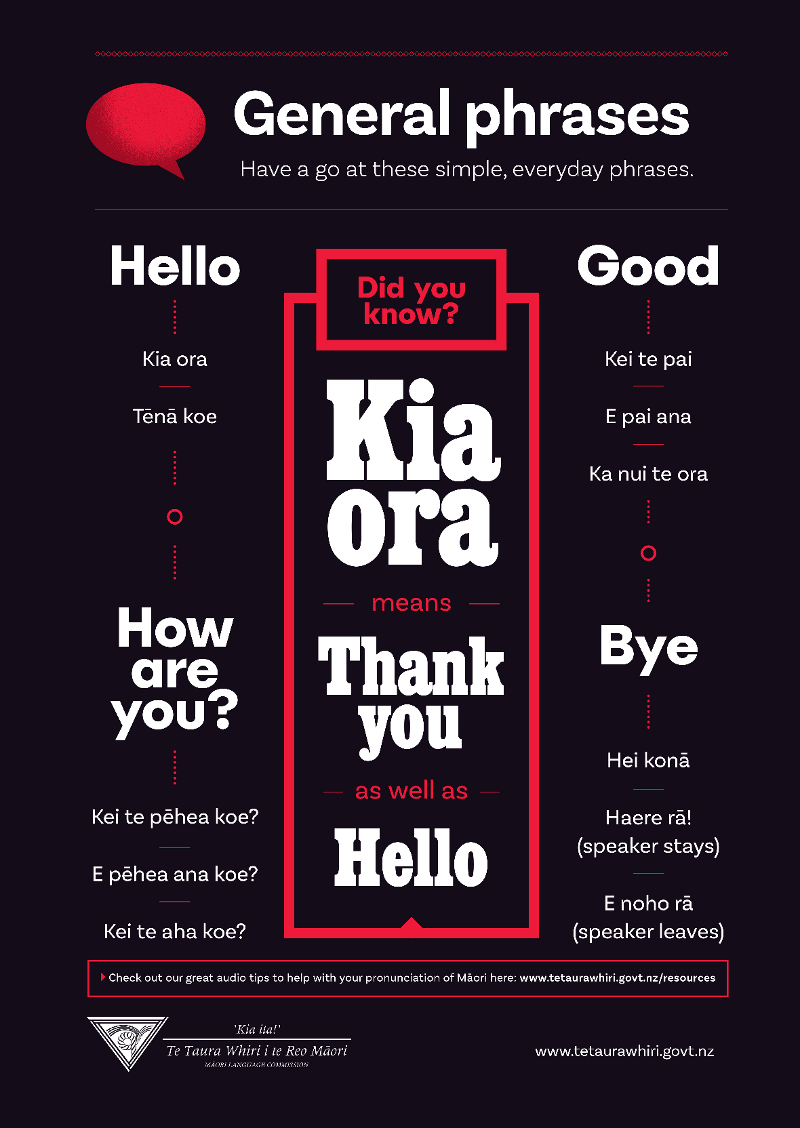
  • Kia ora (informal greeting)
  • Koro (grandfather or elder male)
  • Kai (food)
  • Ka pai (good)
  • Hangi (food cooked in the earth)
  • Whanau (extended family)
  • Haka (we all know this one!)

According to Te Taura Whiri i te Reo Māori, (the Māori Language Commission) about 130,000 people had conversational fluency in te reo Māori and 300,000 were learning the language at school in 2017.

Pronunciation is key

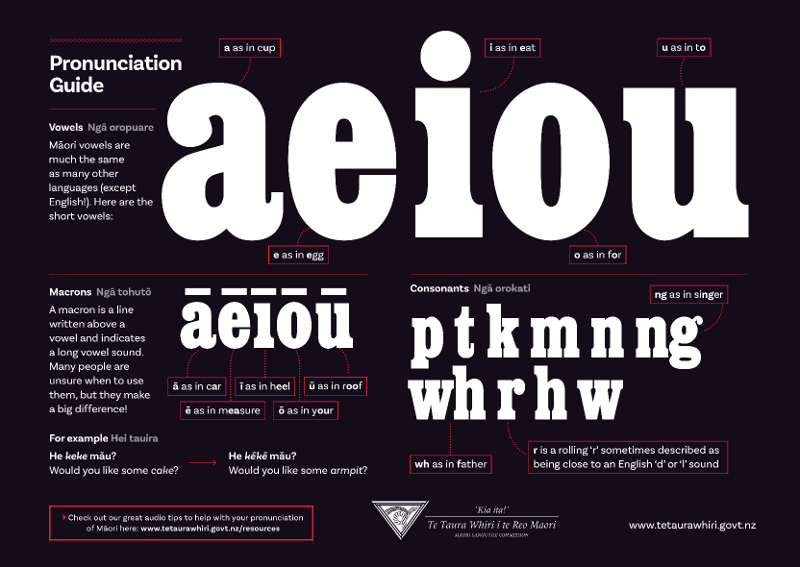
The Māori alphabet contains five vowels and ten consonants. The vowels are: a, e, i, o, u, and are pronounced quite differently to English (see below). Vowels with macrons have a longer sound: ā, ē, ī, ō, ū. The consonants are: h, k, m, n, p, r, t, w and there are two digraphs: wh, ng (two letters that combine to form one sound).

Te Reo Māori

For assistance on pronunciation, visit https://www.tetaurawhiri.govt.nz/en/learn/pronunciation/

Using Te Reo Māori

Here’s some simple words and phrases that you can use in your everyday life, and that you can teach your children.

Conversation:

  • Kia ora – hi
  • Haere mai – welcome / enter
  • Whenua – land / homeland
  • Mōrena – good morning
  • E noho – sit down
  • E tu – stand up
  • Whakarongo – listen
  • Koha – gift / present
  • Aroha – compassion / love
  • Iti – small, little
  • Nui – large, big
  • Hei aha atu – don’t worry
  • Karakia – prayer
  • Meri Kirihimete – Merry Christmas
  • Matariki – beginning of Māori New Year

People:

  • Whaea – mother
  • Tamaiti – child
  • Tamariki – children
  • Whakapapa – genealogy / ancestors
  • Kaumātua – elder or elders, senior people in a kin group
  • Tama – son, young man, youth
  • Tamāhine – daughter
  • Tāne – man/men, husband
  • Wahine – woman, wife (wāhine: women, wives)
  • Kaumātua – elder of group

Days of the week:

  • Rāhina / Mane – Monday
  • Rātū / Tūrei – Tuesday
  • Rāapa / Wenerei – Wednesday
  • Rāpare / Taite – Thursday
  • Rāmere / Paraire – Friday
  • Rāhoroi – Saturday
  • Rātapu – Sunday

(Either version is suitable)

Our body:

  • Waewae – foot / feet, leg / legs
  • Ringa – hand / arm
  • Niho – teeth
  • Māhunga / upoko – head
  • Manawa – heart
  • Puku – stomach / belly

Numbers:

  • Tahi – one
  • Rua – two
  • Toru – three
  • Whā – four
  • Rima – five
  • Ono – six
  • Whitu – seven
  • Waru – eight
  • Iwa – nine
  • Tekau – ten

Our world:

  • Awa – river
  • Moana – sea
  • Wai – water
  • Motu – island
  • Maunga – mountain
  • Ngahere – forest
  • Āniwaniwa – rainbow
  • One – sand

Sport:

  • Whutupōro – rugby (union)
  • Rīki – rugby league
  • Whana poikiri – soccer (association football)
  • Neti pōro – netball
  • Pahiketepōro – basketball

Food:

  • Kai – food
  • E kai – command to eat
  • Inu – drink
  • E inu – command to drink
  • Hua whenua – vegetables
  • Miraka – milk
  • Tīhi – cheese
  • Rīwai – potatoes
  • Ika – fish
  • Ika me te riwai – fish and chips
  • Heihei – chicken
  • Āporo – apple
  • Ārani – orange
  • Panana – banana
  • Kapu – cup
  • Pune – spoon
  • Pereti – plate
  • Hiakai – hungry
  • Kei te hiakai au – I am hungry
  • Hiainu – thirsty
  • Kei te hiainu au – I am thirsty
  • Toa hokomaha – supermarket
  • Toa hoko miraka – dairy
  • Whare kīhini – kitchen

Out and about:

  • Pahi – bus
  • Tereina – train
  • Motuka – car
  • Paihikara – bicycle
  • Hīkoi – walk
  • Oma – run
  • E oma – to run

Where you live

Ever wondered what your town or city’s name means? Check out this guide to 1,000 Māori place names: https://nzhistory.govt.nz/culture/maori-language-week/1000-maori-place-names

The first step is to have a go

Te Reo Māori

Sources: http://www.tetaurawhiri.govt.nzhttps://nzhistory.govt.nz/culture/maori-language-week/100-maori-words and http://www.tewikiotereomaori.co.nz/

Kupu app

The Kupu app translation app is a great place to start your te reo journey. Simply take a picture and Kupu will provide the Te Reo Māori translation for the object.

Happy kids, happy holidays

Holidays are a time for excitement, adventure, fun, laughter and relaxation. Unless you’re a kid that forgot to pack their favourite toy! Then it’s the worst day of their life! Due to unfamiliar surroundings and different routines, you may find that the kids need extra assurance, to help them settle into the holiday. First impressions can make or break a great family holiday. Get everyone off to a great start on that all important first day of a family vacation and you set the tone for the remainder of your trip.  Happy kids make for happy holidays all round!

Research conducted by Booking.com of over 12,000 parents from 25 countries worldwide, reveals how parents cope in those make-or-break first 24 hours of a trip. From food snack packs to travel games and other insider tips, parents reveal the necessities they rely on to keep kids happy on holiday.

Happy holiday ideas from Kiwi parents

When Kiwi parents were asked how they best prepare for the first day of a holiday, they cited the two most important things to pre-empt disaster were to bring travel games and books to occupy their little ones as well as having an emergency food snack pack to hand (both 51%).

The full results were as follows:

  • Packing an emergency food snack pack (51%)
  • Bring travel games and books to occupy them (51%)
  • Packing key items (e.g. swimming costume / ski gear) separately or at the top of the case (44%)
  • Cover them in mosquito/insect repellent / sunscreen (38%)
  • First aid kit on hand (38%)
  • Ensuring they’ve bought comforts from home so the space doesn’t feel too alien (33%)
  • Packing travel adapters and chargers at the top of the case (30%)
  • Scoping out the quickest route to the beach / ski slopes (28%)
  • Enrolling the kids in advance into kids’ club (9%)
  • Renting a buggy/baby stroller (9%)

Yet as two in five parents (41%) believe that the first 24 hours of a trip can be memorable, it’s sometimes the trials, tribulations, excitement and drama that are the things which can really make a holiday special.

Share your tips below for happy holidays with kids.


Research commissioned by Booking.com and independently conducted among a nationally representative sample, provided by Research Now. In total 18,496 respondents were surveyed (1,000+ from the UK, US, Brazil, China, Germany, Italy, Spain, France, India and Russia and 500+ each from Australia, Argentina, Belgium, Canada, Denmark, Hong Kong, Croatia, Indonesia, Japan, Mexico, Netherlands, New Zealand, Sweden, Thailand and Taiwan), which included over 12,000 parents. Respondents completed an online survey between 27th April and 15th May 2017.

Booking.com – the world leader in booking hotel and other accommodation online. Guaranteed best prices for any type of property and no booking fees.

Wrap Up For Winter School Holiday Fun

Cross your fingers as much as you like for some great weather during the winter school holidays but Mother Nature will no doubt have other plans.

Kidspot has a treasure trove of fun activities, games and crafts for kids to enjoy indoors, but when the weather does break, there’s plenty to do out of the house too. So, wrap up warm and take a look at our ideas for winter fun.

Visit local attractions

When was the last time you took the family to the local zoo, museum, aquarium, art gallery or historic house? During winter crowds tend to be smaller as you’re not competing with quite so many overseas tourists and holidaymakers. Many attractions also have activities for the kids including crafts, hands-on interaction and activity sheets to complete as they make their way around (these are great for keeping the kids occupied, giving you a few moments of peace to explore the exhibits). To avoid quivering bottom lips, be sure to check the times for any special activities and if you need to book ahead.

Get your skates on!

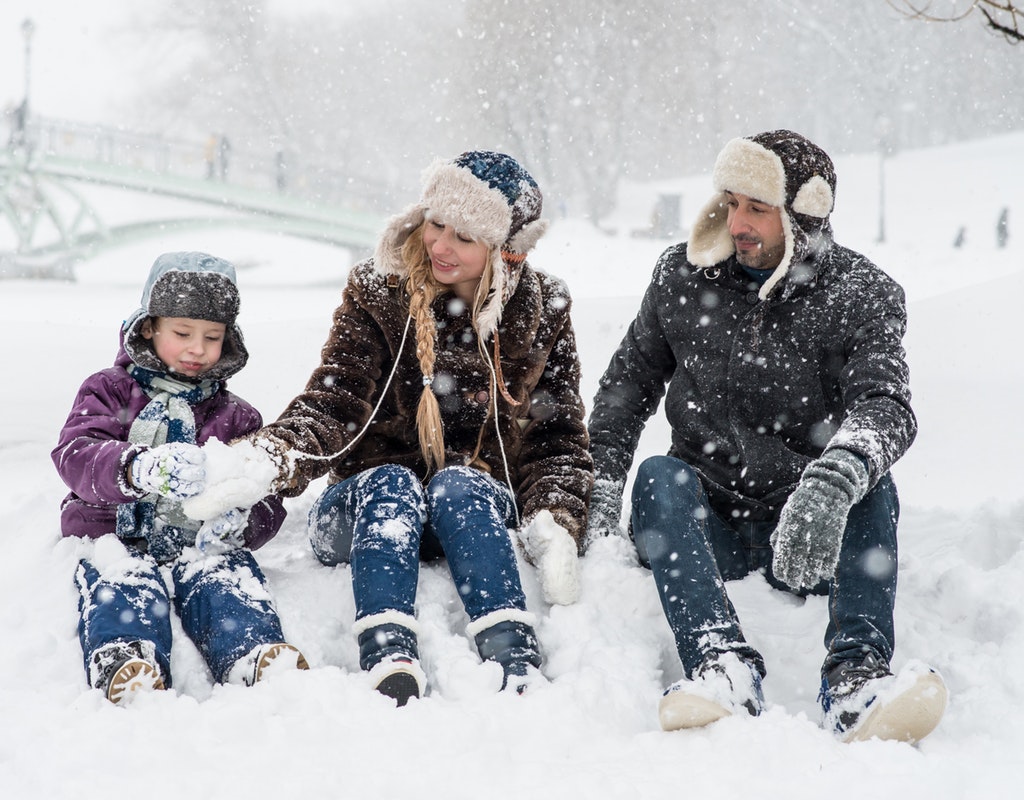
Even if you’re not in an area that sees a lot of fluffy white snow during the winter, the kids can still enjoy some winter fun. The whole family can experience the fun of ice-skating at pop-up rinks which are becoming popular. There are also a few permanent rinks around the country. Skate hire is usually available as well as helmets for the little ones and ‘seals’ or similar apparatus that help the novice skaters to keep their balance! Keep an eye on one-day deal and voucher websites for offers.

Become one with nature

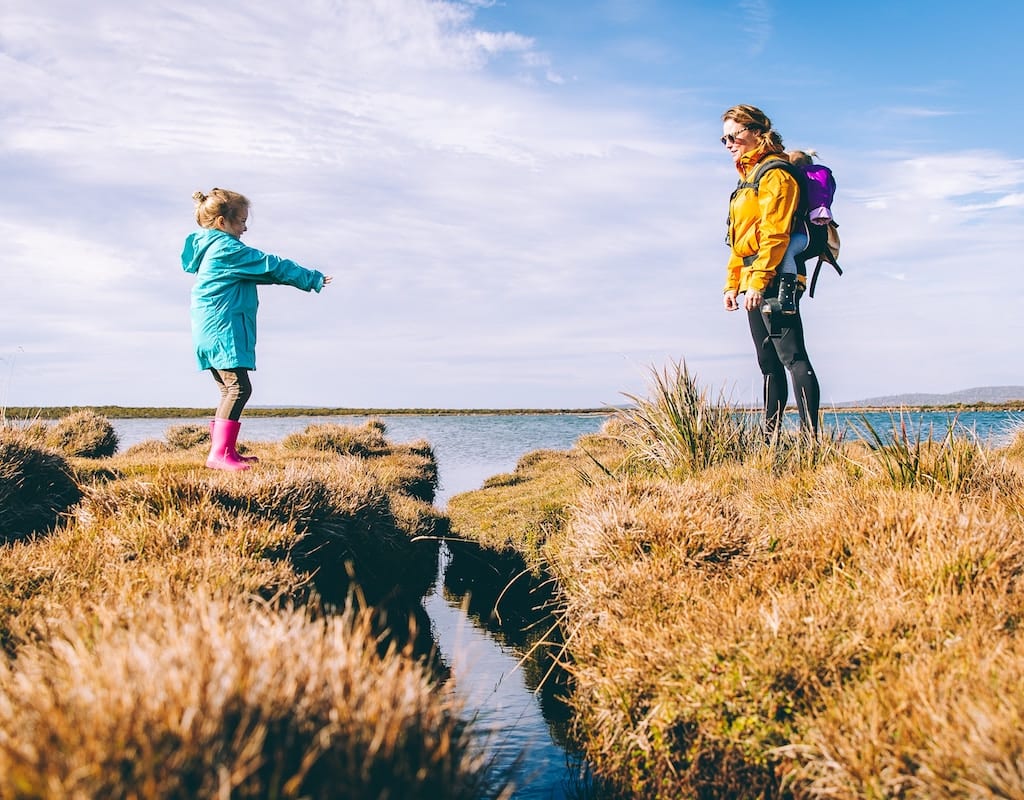
The nights and mornings may be cold but we do tend to benefit from some beautiful sunny days in winter. Grab some warm clothing and sturdy shoes, pack some snacks and drinks and head out for a short bushwalk to clear the cobwebs and get some much-needed fresh air. Do your research beforehand to make sure you’re not taking on the Everest of all bushwalks and choose one that little legs will manage OK. Added attractions like waterfalls, lookouts, bridges or dams can increase the interest factor. Be sure to check the weather forecast before you head out.

Even just a stroll around the park to the playground, seashell spotting at the beach or a kick-about with a ball, will put everyone in a better frame of mind. When you arrive home, forget the five-minute showers for one day and warm up those little toes and fingers with a long warm bath full of bubbles and bath toys.

Making the most of the darkness

Being on the ‘other’ side of the world means that sometimes our traditions don’t really match up with our weather. Christmas in the middle of summer is great for beach BBQs, but not so much for seeing the full glory of Christmas lights. Firework displays for Guy Fawkes and New Year’s tend to start rather late while waiting for the sun to set. In the dull and dreary winter there’s no such problem! So make the most of the earlier darkness with ‘after dark’ activities like night sky planetarium shows, after dark experiences at zoos and nature reserves, mid-winter ‘Christmas’ fairs and night time events that won’t keep the kiddies up too late. Check your local what’s on guide for events.

Make a splash

Let’s face it. We are Kiwis. We love the water. But without a wetsuit or a good dose of bravery, we’re not heading out for a swim at the beach any time in the next few months. Indoor pool complexes and aquatic centres not only boast heated pools, they also often have saunas or spa pools for the adults. Bring your partner along and tag-team so you both get some time-out. Ask at your local pool about school holiday events including fun inflatables, movie nights and specials.

School holiday programmes

There’s an abundance of school holiday programmes to choose from offering everything from horse riding and snowsports to foreign language and music classes. Even if you don’t need childcare throughout the holidays, many school holiday programmes are flexible enough for you to sign the kids up for just one or two days, enabling the kids to have a great day out doing something fun with their peers. For a more budget-friendly alternative, local libraries often run school holiday activities with the added benefit of encouraging a love of reading. Don’t forget to sign out some books while you’re there for some quiet time at home.

Movie time

Whether you’re heading to the cinema to escape the cabin fever or having a pyjama day at home with a DVD, movies are a great way to entertain the kids. You can also use the movie as inspiration for other activities like crafts, colouring-in, role play or puppets.

Join the Catch Up

Join our community of parents and let the Kidspot Catchup be your guide to creating unforgetable family moments.