Reusable Menstrual Products

Lots of women are looking at something a little different from the traditional pads and tampons and giving reusable menstrual products a go. What are the options if you want to try reusable sanitary products? Are they really as good as people claim?

Menstrual cups

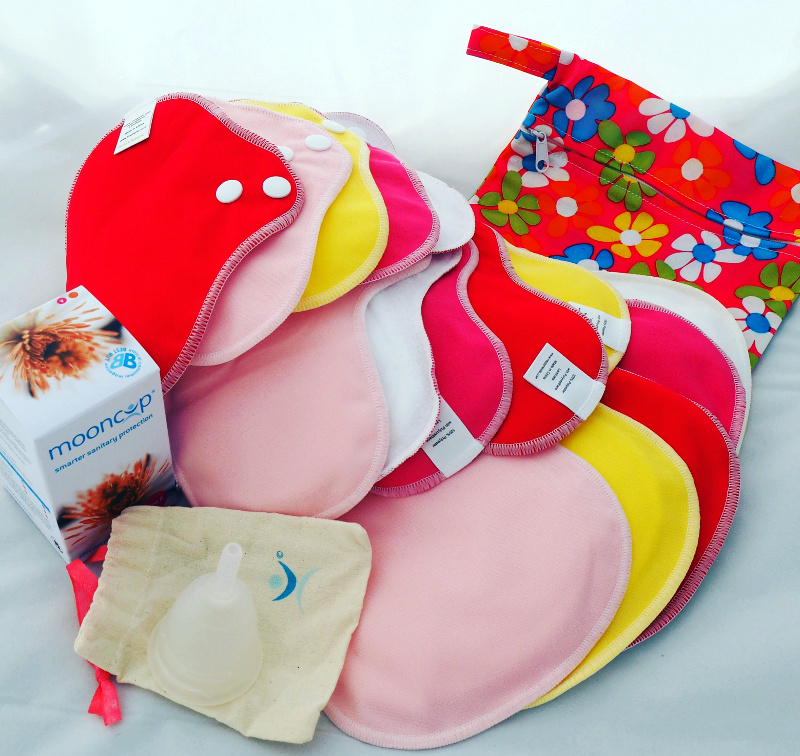
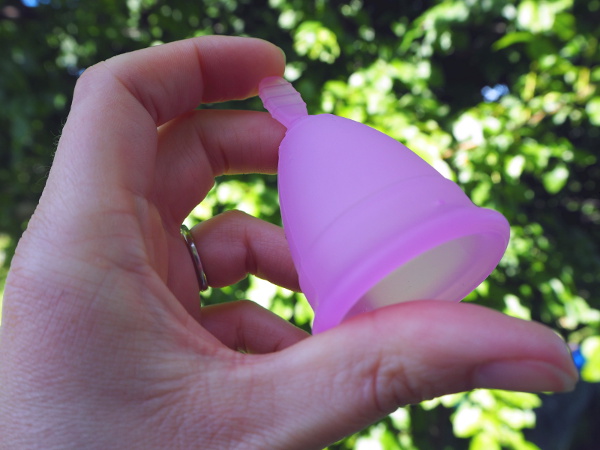
Menstrual cups are not a new idea, the first ones were patented in the 1930s. The popularity of them though certainly is new. All kinds of women are now trying these reusable cups and making the switch. A menstrual cup is usually made from medical grade silicone and is worn internally, slightly lower than you would wear a tampon. Rather than absorbing blood, the cup collects it, so that it can be emptied over the course of the day. It varies from woman to woman how often it needs to be emptied. It can be left for up to 8 hours or overnight. Like tampons, you can swim, do sports and sleep with a menstrual cup in. A cup does take a little bit of practice to use and get used to. Most women find that once they make the switch, they love using a cup and don’t want to go back to tampons.

Menstrual cup

Washable pads

If you usually use sanitary pads, you might prefer to give washable pads a try. Once upon a time, women would have used rags as sanitary pads, but today, washable pads aren’t that different to disposable ones. Rather than sticking to the underwear, the cloth pads usually have wings with a snap or button on them. These fasten around the bottom of your knickers, holding the pad in place. Some pads can move around a little, as they do not attach directly to the underwear, but wearing a firm fitting pair can help prevent this and give a better fit. When out and about, you can keep the pads in a small, zip-up, wet bag. This means that you can carry home used pads cleanly and easily. The pads are washed in cold water, which stops the blood from staining and then dried before the next use. There is no need to use special washing detergents or stain removers. Many women soak the pads first, in cold water, often with a little salt added to help remove stains. A small lidded container like an ice cream box is ideal for this. Washable pads are also ideal after giving birth. The fabric is often a lot more comfortable when you can be feeling quite tender in that area.

Period Pants

Period pants are still quite new to the market. The idea behind these is that the absorbency is built into the underwear. Fabrics are used that are highly absorbent, but not too bulky. A fresh pair is worn each day, with the previous pair being put to wash. These are an all in one solution, rather than attaching pads to your own underwear.

This article was written by Kelly Sweeney from Nappyneedz. Nappyneedz stock a range of menstrual cups and washable pads and are happy to give advice and information on using them. They also specialise in great quality and affordable cloth nappies. Visit them at www.nappyneedz.co.nz.

Nappyneedz

Tips to maximise your child’s learning potential

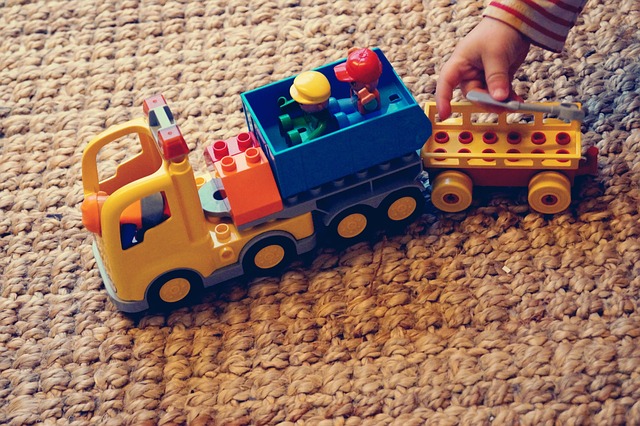
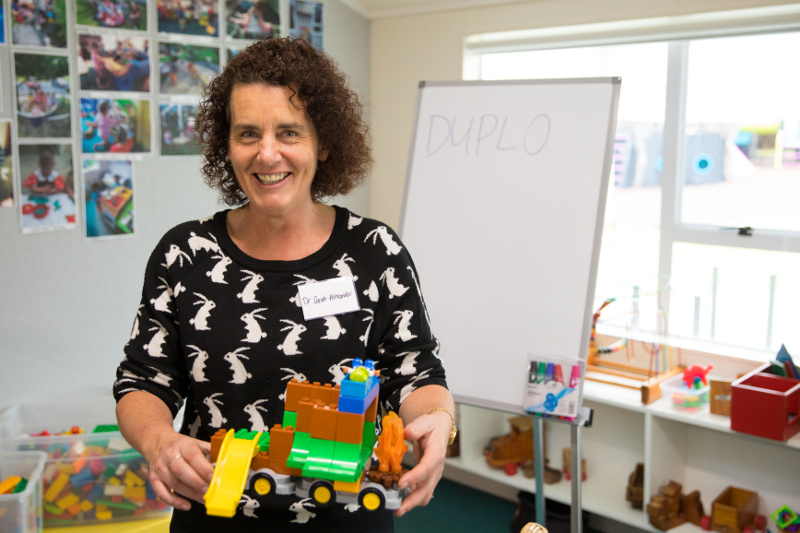
With a view to helping parents prepare children for the big move to school life, LEGO® recently held a DUPLO® Play Workshop in conjunction with Playcentre. Dr Sarah Alexander, Chief Executive of Child Forum, has shared her tips from the workshop for parents and carers to maximise their child’s learning potential, getting them more ready for school.

Problem Solving

As little ones grow, they start to develop the ability to think in unusual ways, solve problems and ultimately pave their way to becoming an adult.

Dr Alexander commented: “Learning how to problem solve is about shifting the responsibility back to the child to find a solution. Playing with DUPLO will consistently involve problem solving. DUPLO and creative play opportunities are unlimited in terms of increasing the level of difficulty and possibilities of what a child can create.”

Dr Alexander advised there are different types of problem solving with DUPLO:
• STEM skills. “Learning the basics of engineering, how to ensure a structure is secure and safe. For example, making the base of a DUPLO tower strong and sturdy enough to keep the tower standing,” she said.
• Imagination. “When the child is participating in imaginary play, they can create problems within that world, for example, the cat is stuck up the tree, what can we build to get the cat down safely?”

Co-Construction

“Co-construction is when an adult and child are learning together. Giving your child ownership, the child can strengthen their own learning through teaching. Put yourself in the position of a learner, ask the kids to show you how to do things, this is huge for the child’s development, showing them that you value their thinking.”

Lego Duplo

Early Maths

Embed mathematics learning into your language for kids to pick up from.

Dr Alexander advised: “Introduce the language of numbers and maths through playing with DUPLO. This can start with counting, whenever you are picking up blocks, count aloud so the child is hearing the numbers all the time, and they are becoming familiar. For example, how many blocks have you got? We’ve got one block, do you need four more blocks, okay one, two, three, four.

“Eventually they will start to pick up on the order of numbers, then they learn to match objects to numbers, they know that in their hand they have two blocks and now they have three blocks.

“This is how equations are introduced, it can be a very natural thing that just happens with DUPLO, the children are still having fun without realising they are doing maths.

“In the future when they are learning equations, they’ve had that concrete experience doing them, they have gained knowledge and a good grounding of maths through play,” said Dr Alexander.

Recall and Memory

“With children it is important that through this play, you don’t just let a child learn something For example, building a house that stays standing and then tick it off and say to yourself, now they know how to build a house. The research has shown that if you can talk about it later with your child and recall it then it is more likely to be remembered. The child is more likely to go back to their house and build a more difficult version of it, or maybe build an office building instead of a house if you have talked to them about building that house frequently.

“Your presence within their learning is vital, bring their play up in conversations. For example, do you remember yesterday when we were building that tower and you told me that it fell over to easily, why don’t we have a go again and see if we can make it sturdier?”

“Recall helps memory but it also helps to build and extend on learning.”

Scaffolding

‘Scaffolding’ is a term for a method of teaching, about giving support to children with their learning – similar to the support and structure a scaffolding base gives in construction.

Dr Alexandra advised that parents should use scaffolding techniques to help extend a kid’s knowledge and to constantly adapt as they go. She commented: “Children’s knowledge will be changing all the time and parents/teachers need to adjust their support techniques accordingly. Scaffolding can help support a child to a higher level of performance. Creating opportunities for a child to reach a new level of development. For example, there are some more bricks over there, can you add them into your construction?”

The above information was kindly provided by LEGO® DUPLO®.

About DUPLO
LEGO® DUPLO® products provide children aged 1 1/2 to 5 with fun, creative, high-quality play experiences that support children’s learning and development. While playing is all fun and games for kids, as it should be, the different types of LEGO DUPLO play – constructive, exploratory, and role play – entertain but at the same time lay the foundation for essential developmental milestones. With mutual values DUPLO and Playcentre formed a partnership in 2016. This Workshop was held free for parents of Playcentre in Auckland on Saturday 2nd of September, helping parents to maximise learning opportunities with DUPLO. For more information, visit the LEGO website.

About Dr Sarah Alexander
Dr Sarah Alexander is the Chief Executive of Child Forum – New Zealand’s leading childhood education national organisation, and a former Early Childhood Education Teacher. She is also a mother of five and has a wealth of knowledge in pre-school development and learning through play.

How to treat a jellyfish sting

Pack the chilly bin, grab the boogie board, slop on sunscreen and head off to the beach for a great day out – but beware of jellyfish lurking in the water and up on the beach!

Jellyfish are beautiful, almost hypnotic creatures … when viewed from out of harm’s way! Katey Rawstron, Assistant Aquarist at Sea Life Kelly Tarlton’s in Auckland, passed on these tips about what to do if you are unfortunately stung by a jellyfish.

Busting the jellyfish myths

  • Jellyfish aren’t only found in the ocean – they can appear in lakes, rivers or streams that are connected to the oceans.
  • Jellyfish washed up to shore aren’t dead – always proceed with caution and do not touch them!
  • Jellyfish aren’t deadly – however the way you react to a sting can impact this.
  • You should NOT urinate on the sting area – despite what popular culture has demonstrated, urinating on a sting may cause the nematocysts to release more toxins.
  • You should NOT rinse a jellyfish sting with warm water – your best approach is to pour hot water (but not scalding).
  • Bluebottles are not a true jellyfish – contrary to popular belief, bluebottles are actually a colony of thousands of tiny hydroid animals.

What to do if you are stung by a jellyfish

  1. If you are at the beach when you encounter a jellyfish, immediately seek assistance from a First Aid officer or lifeguard.
  2. Treat the sting by rinsing the area with hot water (but not scalding) to help lessen pain.
  3. Carefully pluck any visible tentacles with tweezers. We recommend wearing gloves in the process as the tentacles can easily reattach themselves!
  4. If pain persists, be sure to consult a healthcare professional.

What NOT to do

  • Scrape out stingers
  • Apply ice or ice packs to a sting
  • Rinse with seawater
  • Rinse with urine
  • Rinse with fresh water
  • Apply alcohol, ethanol or ammonia
  • Rub the sting
  • Apply pressure bandages

Jellyfish

Information and images kindly provided by Kelly Tarlton’s SEA LIFE Aquarium. Visit their website for visitor information.

Kelly Tarlton’s SEA LIFE Aquarium is just one of many attractions included in the Merlin Annual Pass, giving you discounts at visitor attractions in New South Wales, Queensland and Victoria.

The Kidspot Engagement Group

Be part of our Engagement Group

Kidspot is expanding with new and exciting topics, blogs, recipes and activities. We want to involve our readers with more conversations, social engagement and fun, so we have created a special opportunity with rewards to be won by our most active and engaged members. And we want you to be a part of it!

Through our Engagement Group, you can accumulate points for engaging with our content and be rewarded with prizes!

If this sounds like something you would like to be involved in, just head over to our Kidspot Engagement Group on Facebook and click on “JOIN GROUP”. Then email us and let us know your full name, your Facebook profile name and your email address. You can join at any time but the earlier in the month you join, the earlier you can start accumulating points!

(If you decide that the Engagement Group is not for you, you can just click on “Joined, Leave Group” at the top of the group page at any time.)

How it works

Each month you will have the opportunity to earn rewards by engaging with our social media, website articles and blogs, as set out below and in the Group.

In order to take part you need to:

  1. Be a member of the Kidspot Engagement Group on Facebook
  2. Like the Kidspot NZ Facebook page
  3. Register your name, Facebook profile name and email address with us. When you join the group, send an email to kidspotsocial@kidspot.co.nz with the subject ‘Engagement Group’.

Accumulating points

From the 1st of each month until the last day of the month, you will earn points for quality engagement, as follows:

A) Post a comment or photo in response to a ‘Highlight’ post on the Kidspot NZ Facebook page* – 1 point
*The list of Highlight posts eligible for these points will be posted in the group and updated throughout the month.
(Maximum of 1 point per post)

B) Post a comment on any Kidspot NZ website article or blog* – 2 points
*Excludes free product trial pages and competitions
(Maximum of 2 points per article)

C) Post a comment on ‘Key’ Kidspot NZ website articles or blogs* – 5 points
*The list of Key articles eligible for these points will be posted in the group and updated throughout the month.
(Maximum of 5 points per article)

D) Participate in ‘Bonus’ engagement, as confirmed in the group from time to time.

Reward levels

At the end of the month, if you have earned enough points, you will qualify for the following:

BRONZE: earn 50 points – go into the draw for 1 x $50 Prezzy Card
SILVER: earn 75 points – go into the draw for 1 x $100 Prezzy Card
GOLD: earn 100 points – be rewarded with a $25 Prezzy Card plus go into the Bronze and Silver draws*
*Only 20 Gold rewards are available each month. If more than 20 people qualify for the gold reward, the 20 members with the highest amount of points will receive a $25 Prezzy Card. All other Gold achievers will be entered into the Bronze and Silver draws.

Example:
Gold: to earn 100 points, comment on 16 Key articles (80 points), 9 other articles (18 points) and 2 Facebook posts (2 points).

Terms and Conditions

Click here for the group terms and conditions

PLEASE REMEMBER that we are looking for quality engagement on our Facebook posts and website articles. If a post is just one or two words, or is irrelevant to the topic, it won’t qualify for points.

By being a member of the group, you are under no obligation to meet any of the points goals.

(1st August 2018)

9 Tips To Help Kids Prepare For Tests

We all know that teenagers sit some epic exams, particularly at the end of the school year. But don’t forget that primary and intermediate children also face regular tests that could bring just as much stress for them. How can parents help their children cope with these?

Test skills

Most of the test-doing skills, such as time management, reading through questions and knowing what to expect, will be taught by teachers.

But parents can also help their children face the pressure of tests and exams.

The experts at KidsMatter have a whole lot of strategies for parents. Many children, they say, will cope well with the challenge of tests, exams and assessments but parents and carers should be aware of how their responses can add to, or relieve, the pressure felt by children.

Common behaviours when children feel nervous or stressed

Sometimes children tell us how they are feeling through their behaviour, says KidsMatter.

These changes in behaviour could indicate stress or nervousness:

  • being more irritable
  • easily upset
  • clingy or fidgety
  • displaying less interest in activities they normally enjoy

“Some children can find it difficult to put into words how they are feeling, so it is often up to parents and carers to recognise that their child needs some extra support.” says KidsMatter.

What can parents do to help?

1.Being there’ emotionally – During times of stress, children usually need extra nurturing, comfort and understanding from their parents and carers to help them feel secure and confident. Be open and receptive to how children are feeling as well as provide comfort and attention when needed.

2. Discuss feelings – Encourage children to talk about how they feel. Listen with empathy so they feel understood and know that their feelings are normal. Help your children to understand that talking about feelings can help to manage them.

3. Support children’s confidence – Teach children to be brave by showing them you believe they can do it, and encourage them to ‘have a go’ even if they are feeling nervous. Providing positive feedback for effort, celebrating successes and encouraging them to keep trying will help your children to feel confident in approaching assessments.

4. Help with relaxation skills – Breathing slowly to calm down and helping them to imagine themselves coping well during a test are really helpful ways of managing anxiety. Doing it with them is a fun way to start.

5. Teach helpful thinking – Instead of saying to themselves ‘I can’t do this’ encourage them to say ‘I’ll give it a go’.

6. Lead by example – Show your child how you cope positively with feeling anxious or stressed by thinking out loud e.g., “I feel a bit nervous, but I’m going to try my best”. Remaining calm and positive when your child is feeling anxious can help them to feel more confident.

7. Help your child have clear expectations – Talking through what will happen. You may even wish to talk to the school about where the test will take place and see if you can visit beforehand.

8. Discuss problem-solving – Brainstorm situations that might arise during the test and then come up with possible solutions with them. For example, ask them what are three things that they might be able to do if they freeze in the exam and feel sick – possible strategies include taking 10 slow breaths to calm down and refocus, taking a sip of water if it is available or letting a teacher know they feel unwell.

9. Teach confidence-building tricks – For example, looking through the paper and completing questions they know they can answer first before trying more difficult ones.

If you’re still worried

If you feel your child’s level of stress or anxiety becomes excessive then some options to consider are:

  • Talk with your child’s classroom teacher about how your child is managing at school and the resources your school can offer.
  • Talk with your GP or paediatrician who can help to explore what is happening for the child and family and also provide referrals to other practitioners who may be able to help if necessary.

School exams and stress

No one ever forgets the awful sweaty palms and moments of panic just before an important exam, and while many might view it as a rite of passage, there are some helpful ways that you can lighten the load for your child as exam time approaches.

What’s stress?

Stress is a feeling of tension, excitement or pressure to do well which alerts your body to be ready to put a large effort into whatever the focus of stress is.

Stress is part of everyday life and it helps give you the energy and drive to put a sustained effort into an activity and succeed. Stress causes the release of the hormone adrenalin into the body, which produces a feeling of tension or excitement – what we often refer to as ‘butterflies’. If the cause of our stress is not alleviated at some point, and our body remains under stress, there will be a build-up of adrenalin which can cause harm to our body.

Signs that stress may be a problem:

  • Over-tired but may have trouble getting to sleep
  • Being physically run-down and prone to small ailments
  • Muscular tension
  • Frequent headaches
  • Diarrhoea
  • Expressing a feeling of anxiety, helplessness or a general sense of feeling overwhelmed
  • Excessive complaining and whinging
  • Getting upset or angry easily and frequently
  • An inability to concentrate
  • Being “jumpy” and “fidgety”
  • An inability to express enthusiasm for activities
  • A general disengagement with activities that are usually popular

If you are at all concerned about your child’s stress levels, talk to their teacher or school counsellor. Your family doctor may also be able to assist.

This article was written by Ella Walsh for Kidspot. Sources include S.A. Govt’s Parenting and Child Health and NSW Govt’s NSW Public Schools.

Reducing Exam Stress For Kids

Exams are stressful enough as it is, without your child feeling unprepared going into them. You can’t take the exam for them but you can give them some guidance and tips for preparing for test time.

Before your child goes into the exam hall remind them to take it one question at a time and not to get overwhelmed by the size of the paper.

Different strategies work for different people, so it might help to talk to your child’s friends and find out what works for them. You’re bound to find a trick that helps and then you can encourage your child to use those strategies when they’re feeling pressure.

Make sure they’re not putting too much pressure on themselves and remind them that you’re there to help – whether it’s to help them revise, refuel, or to do the last-minute dash to the shop for that all-important lucky pen.

What can I do to alleviate exam stress?

  • Find a quiet space for them to study without distractions.
  • Find out what they’ve been studying and how their time-plan is working.
  • Offer to lighten the load around the house during their study period.
  • Remind them to have breaks from study – at a certain point they will not be studying efficiently if they never take a break
  • Develop some revision techniques with them – there are many ways to revise and they don’t all work for everyone, but revising methodically and calmly is the best way to study, as opposed to a panicked cram session the night before an exam.
  • Help them to find balance. While studying is important, it’s also important that they take regular breaks, engage in some physical activity and eat regular and nutritious meals.
  • Make sure that the weight of your expectations isn’t what’s causing their excessive stress.
  • Encourage them to take some time away from the books for friends.
  • Make sure that they ask for help if they need it.
  • They may be interested in learning a bit of yoga or meditation. At the end of a long study session, it can really help power down an overworked brain.

REMEMBER!

If your child is obviously not able to do well or is not working as well as they can, remember that there are other ways to do well in life without passing exams. You don’t necessarily flunk life if you flunk an exam!

On the day of the exam:

Having a plan of action on the day of an exam may help your child to focus and stay calm.

  • Double-check the time and place of the exam and leave plenty of time to get there.
  • Make sure they have everything they need to write with etc – and provide spares for just-in-case.
  • Eat a good breakfast – even with a stomach in knots, they need to eat something that will sustain them.
  • Go to the toilet just before the exam starts. A nervous stomach can result in a nervous bladder!
  • Once in the exam, they should read all the directions on the paper first and view all the questions so they know exactly what they need to do.
  • Remind them to plan out the allotted time so they have enough time for each question.
  • If they’re feeling overwhelmed, tackle the easiest questions first. If there is something that’s too hard, leave it and come back to it if there’s time at the end.
  • Once pens are down and the exam is done, encourage them not to torment themselves by rehashing everything they imagine they did wrong.

This article was written by Ella Walsh with editing by Kidspot NZ. Sources include S.A. Govt’s Parenting and Child Health and NSW Govt’s Dept of Community Services

Save yourself the work! Get kids to look after their pets

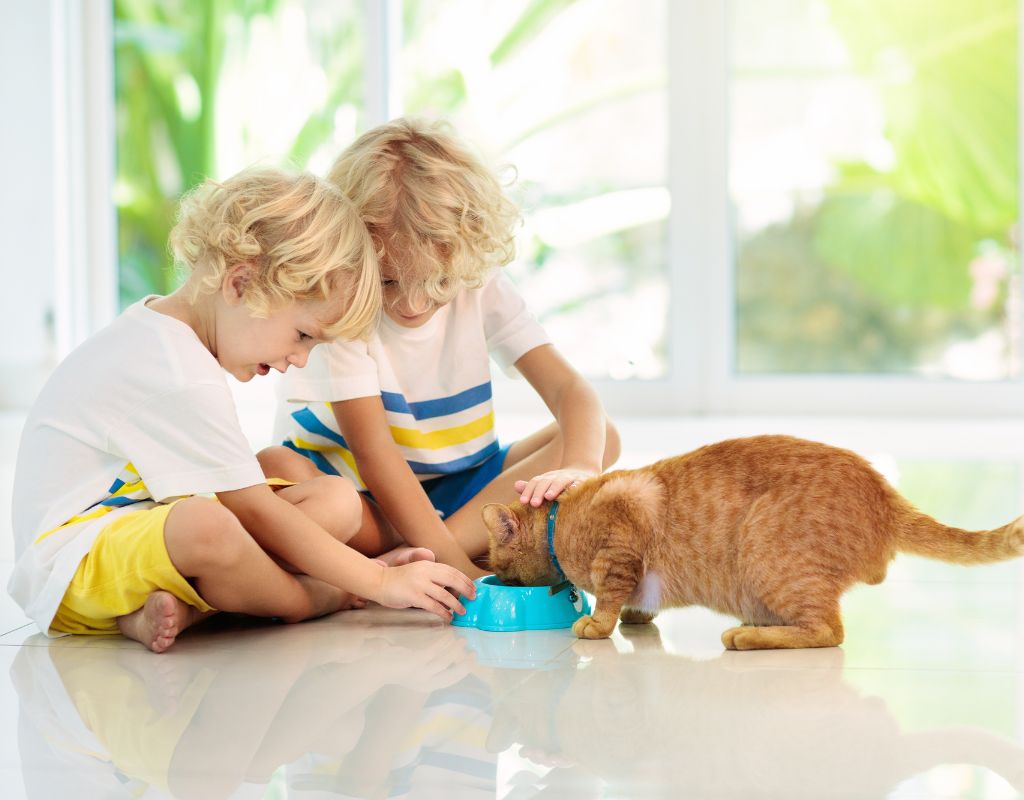
Kids love pets, and studies show that owning a pet creates plenty of benefits such as encouraging respect for living things, and even improved academic performance (when a pet is kept in the classroom).

Owning a pet can also foster a sense of responsibility in kids — but only if mum doesn’t end up doing all the work to feed, wash and tidy up after the family pet. Here’s how to hand back the pooper scooper and make your kids responsible for their furry friends.

Pet care tip one: Create a pet feeding and walking roster

Make a schedule detailing who’s walking, feeding and cleaning up after your pet, then write out a roster and pin it to the fridge. It will be more effective if you keep the days and times as regular as possible, so your child can remember what they need to be doing and when. For example, make Sunday afternoons rabbit hutch cleaning time, so it becomes a regular after-lunch weekend chore.

Pet care tip two: Motivate them

Praise your child every time they undertake a pet-related chore, especially if you don’t even ask them to do it, then add a star to their cat reward chart dog reward chart or general reward chart. Praise and reward your child immediately after the job has been done – if you use a happy tone of voice, your dog might even show signs of excitement, helping keep your child motivated. Hey, and don’t forget to keep YOURSELF on track by refusing to do the pet tasks yourself because it’s quicker and easier! Remember, you are being a better parent by teaching your child the responsibility of looking after their animal.

Pet care tip three: Involve the kids in dog training

Take your kids to dog training classes. These are not just for puppies – even adult dogs can benefit from training. The dog will get used to youngsters giving commands, and your children will learn more about their pet’s behaviour and how to behave appropriately around them. Some dogs try to assume authority or “pack leadership” over small kids in the family, so teaching your child how to train and command the pet is important.

Pet care tip four: Let your kids pick their pet

A great way to encourage a child’s long-term love for an animal is to let them pick out their new friend. If the child is old enough, they may be able to help choose a cat or dog breed. Even small children can pick a fish, along with some aquarium accessories – then let them know that cleaning the fish bowl is their job, too. Likewise, if you are planning on getting your kids a pet rabbit, guinea pig or mouse. Take your child with you to the pet store to chose their pet and learn about all the care products that come with their new furry friend. The sales person will also give your kids a few care instructions. Remind them to listen carefully to these as they will be carrying them out.

Pet care tip five: Allocate water and feeding duties

Even a 3-year-old child can begin to be responsible for a pet. While they might not be able to fill a bowl with fresh water, they can let you know when the water is dirty. At feeding time, show a young child how to measure food and let them pour the food in the bowl. At around ten years of age, it is entirely age-appropriate for a child to be completely responsible for feeding and watering their pet.

Pet care tip six: Turn dog walking into a game

Encourage kids to take their dog out for a walk by combining sporty games with pooch walking. Running, catching and chasing games in the park will keep both canine and kids more amused than a pavement stroll, while ‘fetch frisbee’ will burn off energy for kids and give your dog extra exercise by jumping in the air.

Pet care tip seven: Teach kids to treat their pet

If your children like cooking, get them to help you make the recipe below for dog biscuits and treat the family dog. Showing love for an animal is part of caring for a pet. Your kids will enjoy getting their hands messy, you’ll save money going to the supermarket or pet shop and your dog will absolutely love the biccies.

Bonus: Homemade dog biscuit recipe

Indulge your fur baby with these crunchy homemade biscuits for a treat. Beef stock makes them full of flavour while seeds give your dog nutrients. Makes 20 large biscuits or 40 small biscuits.

Ingredients:

  • 2 cups wholemeal flour
  • 2 tbsp canola oil
  • 2/3 cup semolina or cornmeal
  • 2 eggs, beaten
  • 1/4 cup milk
  • 1tbsp powdered beef stock
  • ½ cup water
  • ½ cup sunflower seeds
  • Flour extra, canola spray

How to make the dog biscuits:

  • Preheat oven to 200°C
  • Combine all ingredients in a mixing bowl
  • Mix with a spoon until it becomes a dough – you may need to add a little more flour/semolina to make into pliable dough
  • Roll out onto a floured surface and cut into shapes with a knife or cookie cutter
  • Place on baking trays sprayed with canola oil. When the biscuits are laid out, spray canola oil across the top of each
  • Bake in oven for 10-15 minutes then cool on bench/wire rack
  • Store in an airtight container for one week or in the freezer for two months

Notes:

  • This recipe is so easy that I am now wondering why I have been wasting money at the pet shop and supermarket?
  • This is a great recipe to make with the kids – after all, your dog won’t care in the least how many little hands have gone into the dough before it’s baked!
  • This recipe was created by Melissa Klemke for Kidspot, Australia’s best recipe finder.

This article was written by Joanna Bounds.

Continue reading “Save yourself the work! Get kids to look after their pets”

Make your own cat collar (and save the birds!)

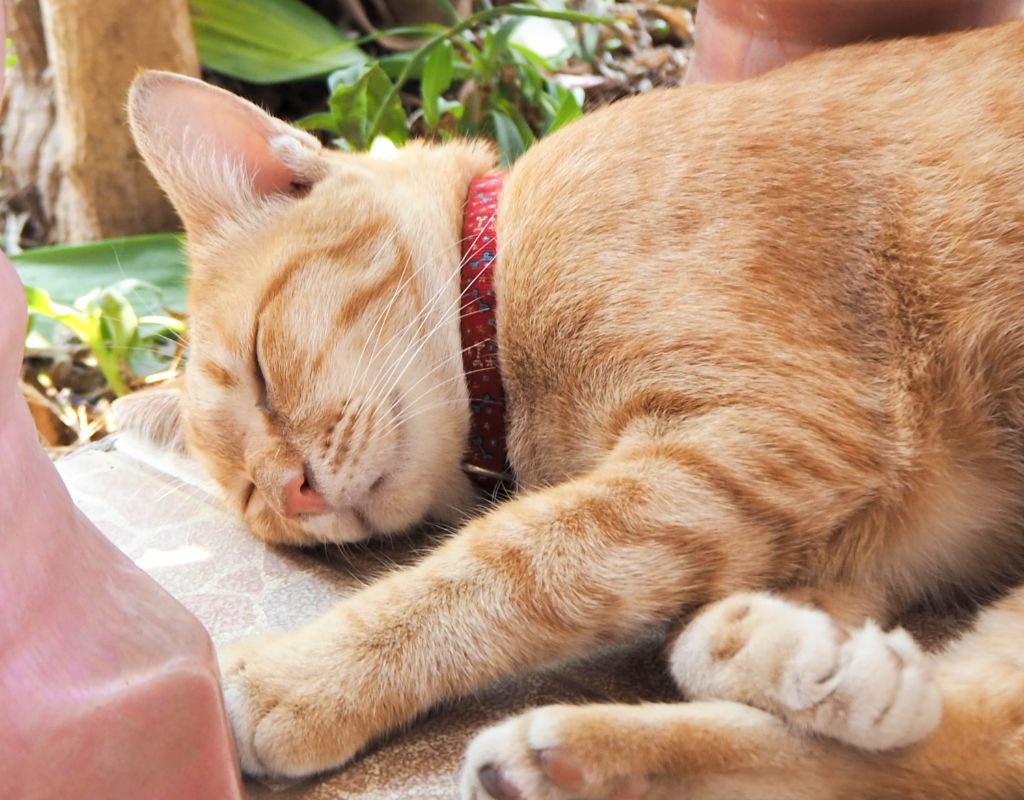
These anti-predation cat collar covers are based on research which showed a significant reduction in the amounts of birds caught when cats were wearing a bright “scrunchy” type of collar. They are simple to make and can open up the discussion with your child about how pet cats affect our environment.

They slip on over the cats existing safety collar.

You will need:

  • 2 x pieces of bright fabric (about 25cm by 25 cm)
  • Scissors
  • A side dish (diameter about 19cm)
  • Small lid (diameter about 7.5cm)
  • A marker/ pen
  • Needle and thread

Watch the video below for a full tutorial from Erin Willson of ‘Making With Purpose’.

This craft was created by Erin Willson from Making With Purpose. “We buy little (and often reclaimed), use what we can find, and make things that have the purpose of bettering ourselves and the flora and fauna around us.”

Visit her Facebook page for more ideas.

Empowering Our Kids at School

Sending my kids back to school feels like a double-edged sword. On one hand there is the relief that comes when peace and calm reigns over the house during the day – which is absolute bliss for a work-at-home mum. On the other hand, there are the nerves that naturally come when I say goodbye to my boys in the morning.

Will they have a good day? Will they have a friend to play with at lunchtime? Are they coping OK with school work and responsibilities?

Then, of course, going back to school means the return of the dreaded homework and the making of lunches and sight words and the nagging from me about all of the above.

This year I plan on doing things a little differently.

To be honest with you, I think I have mollycoddled my boys in the past. I’ve been the one who has packed their bags, made their lunches, cleaned their shoes. Heck, I’ve even sat up late at night finishing an assignment for one of them in my best/worst childish scrawl while the child whose homework I was doing slept peacefully in bed. I know, I know … that is no way to teach them. Hence why there are changes coming.

This year, I am all about empowering my boys. Equipping them with the tools and the confidence to do more for themselves when it comes to school –  because after all, isn’t that what school is about? Learning and developing their skills.

Here are five ways we can empower our kids so that they have the best chance for success and enjoyment at school.

1. Homework

My two primary school boys are given a homework sheet each Monday, which outlines the tasks they are expected to do at home during the week. In our house, homework is one of the biggest causes of meltdowns in the afternoon and it’s usually because it gets left to the last minute and then the panic sets in.

Towards the end of last year, I made my boys a weekly homework printable. The first thing they do when they bring home their homework sheet is sit down and plan out how they will conquer their tasks and on which days they will do what.

There are some afternoons that we have sport commitments and so there is simply no time for homework on those days. Unfortunately for them, it doesn’t mean they don’t have to do it – it just means that they need to plan their homework around those commitments and use the other days more efficiently to ensure everything is completed on time.

Breaking the homework down into bite-sized chunks makes it less daunting for them. I mean, that pretty much applies to anything in life, right?

I purchased the boys a couple of hard document cases so they can transport their homework and readers to and from school with ease. Hopefully this will help to avoid their homework sheets and their efforts at the end of the week from being shoved to the bottom of the school bag and damaged.

For my high school-age son, it’s all about staying on top of the assignments. A month at a glance desk pad that he can record and highlight when his assessments are due, will help to keep him on track.

Finally, I’ve made sure that the younger kids have a homework station set up somewhere central. A place where everything is stored including pens, pencils, glue, scissors. I’ve also included a document tray where their homework and readers are filed so there is no more of the “I can’t find my maths book/reader/homework sheet” excuses.

Our homework station also includes a noticeboard where the kids homework schedules are pinned up, along with their weekly schedules that tell them what days they have library, sport and news, etc.

2. Lunches and laundry

I admit I am a bit of a control freak, so I tend to take the ‘I’ll just do it myself’ approach to everything involved in running the house … including school lunches. I think it is time my kids learn to do a little more for themselves and helping to make their own lunches is a good place to start. It can be as simple as helping to put together a lunch menu and choosing the daily snacks, to actually making the sandwiches or lunch meal for themselves.

As for laundry, we follow the ‘if you want it washed, then you put it in the laundry’ principle. I refuse to go hunting for dirty school shirts and shorts, etc. I put a load of school clothes on once a day and I wash only what has been placed in the laundry. The kids also need to help with the folding and the sorting.

3. Make them accountable

I plan on getting the kids involved in labelling their belongings, and I mean labelling EVERYTHING.

The rule in our house is: I will buy everything at the beginning of the year, but if they lose something through their own carelessness, like a hat or a lunch box, then they will need to replace it themselves out of their own pocket money. They learn pretty quickly to look after their stuff when they have to fork out themselves for a replacement.

The same level of care is expected with school shoes. Every year we parents collectively invest plenty of money into school shoes for our kids and there is no doubt that they last longer when they’re cared for. So I have put together a shoe care kit and it will be a weekly job for the kids to clean and polish their own school shoes.

4. Preparing for the day ahead

The kids are responsible for preparing for the day ahead and this is done before they go to bed at night. They use the weekly schedule on their noticeboard to guide them in what they need to pack for the day, including library books, homework, lunches, and notes, plus their clothes and shoes are laid out ready for the morning.

We have introduced a school notes system for this coming year, and the kids are in charge of making sure the note mail bag is pulled out in the evening and packed again in the morning.

5. A problem solving diary

The most important thing to me is empowering my kids emotionally. The school years can be a minefield as our kids navigate their way around friendships, hormones, stress and self-confidence.

At the beginning of the school year, my boys choose a journal and I encourage them to write in this journal any time they have something on their mind. Personally, I think journalling the highs and lows of your day and writing ideas and solutions for problems is helpful for anyone of any age.

It’s up to the kids if they choose to share their journals with us. Two out of three of ours do and we find it is a fabulous way of opening up one-on-one discussions with them at bedtime. My boys tell me that keeping a journal helps them to get things off their chest, and I am more than convinced that we are onto a good thing with this.

This article was written by Sonia Stackhouse for Kidspot.com.au and has been adapted for Kidspot.co.nz

Miscarriage or stillborn – the difference a day makes

‘Miscarriage’ and ‘stillborn’ are medical terms to explain different time periods. The level of grief surrounding losing a baby, however, can not be governed by the dates on a calendar.

In June 2016, celebrity chef Gordon Ramsay, shared a heartbreaking post on social media, relaying the sad news that his wife, Tana, had miscarried their son at five months. The choice of terminology caught my eye. In New Zealand, a miscarriage is when a baby dies before 20 weeks gestation and a stillbirth is after the 20 week mark (or if the baby weighs 400g or more). The medical definition does however differ from country to country and the World Health Organisation defines a stillbirth as being after 28 weeks gestation.

Miscarriage and Stillbirth

I know the pain that Gordon and Tana Ramsay will be feeling all too well, as do many others. My daughter was ‘born sleeping’ at 20 weeks and three days. I never referred to her birth as a miscarriage. I always say that she was born premature and passed away. At the time, as a first-time mum, it felt that if I referred to her impromptu entrance into this world as a miscarriage that I would be downplaying the grief that myself and my partner felt. After all, so many women have miscarriages. But this, to me, was different. I gave birth to a baby girl. I held her in my arms. I have photos and handprints and footprints. She had a name. She was alive in this world, if only fleetingly.

But the difference between a miscarriage and a stillbirth is nothing more than dates on a calendar. With hindsight I realise that it doesn’t matter what terminology is used. It isn’t fair to think that my daughter’s passing is any harder, any more grief-filled, any more emotional than another mother’s baby who just happens to not be as far along in her gestation as I was. Really, there isn’t a magical day in your pregnancy when you suddenly love your unborn child and everything before that was just medical hoohaa which doesn’t warrant the same level of grief.

Losing a baby is beyond words. It’s your heart being ripped out of your chest and stomped on. It’s a level of grief that is hard to imagine unless you have been through it and, oh so sadly, too many of us have. Whatever we call it, it is heartbreaking.

The facts and figures

It is estimated that one in every four women will suffer a miscarriage. The exact figures are hard to calculate as many women will miscarry before they even know that they are pregnant. Once diagnosis of the pregnancy has occured, the estimated rate of miscarriage is 20 to 25 percent. Miscarriage is most likely to occur in the first 12 weeks of pregnancy, with the chances of a miscarriage occuring drastically declining the closer the pregnancy gets to the end of that first trimester.

In New Zealand in 2014 there were reportedly 656 deaths of babies aged from 20 weeks gestation to less than 28 days old (or weighing at least 400g if gestation was unknown). The rate of stillbirths worldwide has declined by almost 20% in the last 15 years or so.

Have you experienced a miscarriage or stillbirth?

This blog was written by Julie Scanlon, Editor for Kidspot NZ.

Sources include Health, Quality & Safety Commission New ZealandHealth Navigator New Zealand and World Health Organisation.

For support and further information, visit the Sands New Zealand website.

Continue reading “Miscarriage or stillborn – the difference a day makes”

Getting kids to eat veges the key to ending childhood obesity

The biggest epidemic to threaten New Zealand children this century is obesity. In New Zealand, one in nine children (aged 2-14 years) are identified as obese and we rank as the third most obese nation in the OECD. In addition, a further 21% of kids are considered to be overweight. They are figures that will have an impact on our children’s health, both now and into the future.

We are a nation of food lovers. Our seafood, meat and fruit are world-class and we love nothing more than to boast about our fresh and bountiful produce. But our eating habits are far from ideal. We covet our Friday night fish and chips, we pile up our plates at all-you-can-eat buffets, and we consume ice-cream like no other nation on the planet! Occasional treats are great, but we are consuming these “treats” all too often and forgetting what our bodies really need to be healthy. And our kids are watching us.

Grow, harvest and prepare

Getting kids to make brave food choices with fresh food they grow, harvest and prepare is part of the mission of the Empower food education programme. They are marking World Obesity Day on 11th of October with a great vegetarian pizza recipe that kids will love making and eating (recipe below).

The Empower programme, run by not-for-profit partners Garden to Table and Life Education Trust, equips Kiwi kids with practical, hands-on knowledge about nutrition and growing food. It was launched in March this year and already, schools all over the country have signed up.

Garden to Table Ambassador Niki Bezzant says one of the keys to solving the obesity crisis is education. “It’s a big part of the picture when it comes to helping the next generation live longer, healthier lives than us. Programmes like Empower, that help kids join the dots between growing, cooking and feeling good, are crucial.”

Food education programmes recommended by World Health Organization

In fact, food education programmes like Empower were recommended by the World Health Organization (WHO) in a 2016 report on ending childhood obesity. The report said nutrition and health education must be included in school curriculums, and to make food preparation classes available to children, their parents and caregivers.

Life Education Trust Chief Executive John O’Connell said through classroom and practical hands-on learning, Empower is designed to equip and empower children with the knowledge of a balanced diet, meal planning, key nutrients and how to grow food.

“The WHO’s report on ending childhood obesity identified the importance of teaching children in schools about nutrition, and also food preparation. We support teachers to integrate NZ Curriculum-linked resources into their teaching – both inside and outside of the classroom. Schools don’t need huge vegetable gardens or commercial kitchens to get involved either,” he says.

Make eating vegetables a joy

One of the most effective ways to make a difference to our children’s health is to make eating fresh, nourishing food a joy, Garden to Table Executive Officer Linda Taylor says.

She invites children to make a pizza using Niki’s recipes (with a side of kale chips, perhaps!) and to post photos of their efforts on Facebook and Instagram.

“It’s easy and fun to include seasonal veges in your cooking, and letting children take the lead can be a great way to get them involved. We’re looking forward to seeing the creative ways children have prepared Niki’s pizza recipe, using lots of veges.”

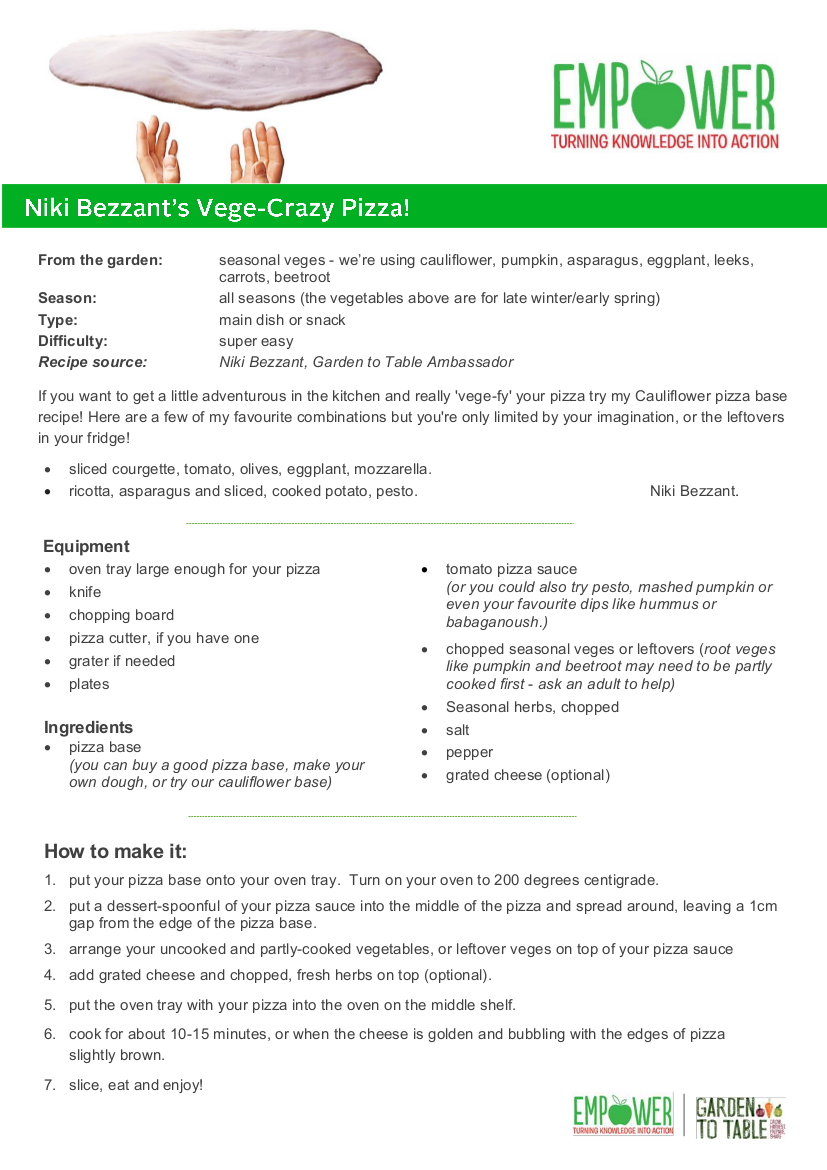
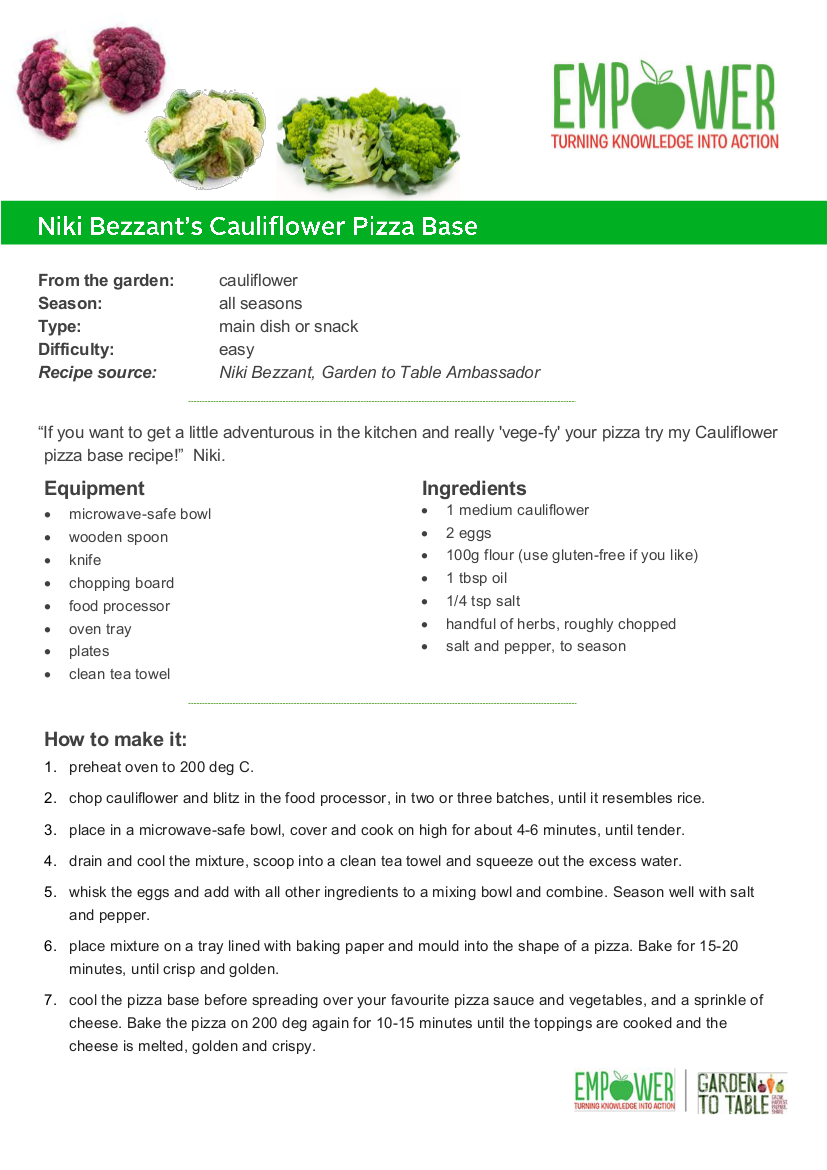
Try this great vegetarian pizza recipe created by Garden to Table Ambassador, Niki Bezzant.

Niki's Vege Pizza
For a printable PDF or larger version, click the image.
Niki's Cauliflower base
For a printable PDF or larger version, click the image.

Find out more

To find out more about the Empower food education programme, visit their website, empowerkids.org.nz.

The danger signs of teenage depression

More than ever before, our teens are subjected to strong influences, demands and stresses that can take their toll on vulnerable adolescents. When they are unable to cope, depression can find a way in. Dr Justin Coulson explains the danger signs to look for.

In its mildest form, depression is the most common psychological problem for teenagers. While it was uncommon a generation or two ago, we now see more diagnoses than ever, and some experts predict that depression will become the psychological ‘flu’ of the 21st century.

We usually describe depression as ‘feeling sad’, but without being aware of its other symptoms, it can be misdiagnosed.

How to know if your teen is depressed

“I hate me. I really hate me. I hate the way I look. I hate the way I feel. I hate how I do everything wrong. The world would be better off without me. My family would be better off without me. I shouldn’t even be alive.”

Depression has emotional symptoms (like a loss of enjoyment in activities that were once fun), but it also has cognitive symptoms (like pessimism and hopelessness). It has motivational symptoms (like feeling apathetic), and it also has physical symptoms (like eating and sleep disturbances).

According to the psychological model that has been used for the last two decades, adolescent depression requires a person to be:

  • Extremely depressed
  • A loss of interest and pleasure in most or all activities
  • Significant weight loss or weight gain
  • Insomnia, or sleeping too much
  • Being physically agitated and constantly moving (although some people with depression don’t want to move at all.)
  • Fatigue
  • Feelings of worthlessness, or feeling guilty for anything and everything
  • Being overly indecisive, having difficulty concentrating, or not wanting to think about anything
  • Feeling like life would be better if they were dead.
  • Most psychologists would give a diagnosis of depression to your teenager if they exhibited at least five of these nine symptoms at the same time, consistently, during a two-week period.

How common is depression in young people?

Depression is relatively uncommon in pre-adolescent children – studies indicate somewhere around 1-2 percent.

Adolescents appear to experience depression at similar rates to adults. Close to 20% of us will experience depression at some point in our lives, with around 5-6 percent of our teens (and us) having a clinically depressive episode in any given year. Our daughters are particularly vulnerable, with research indicating depression is twice as likely to affect females than males.

What causes depression?

Most research supports the model that states people have a biological or psychological predisposition to depression, which combines with stressful life events (environment) to leave us feeling depressed. The stressful life events will vary from person to person, but might include loss, being rejected, failing or being humiliated. While many of us experience these things regularly with no depressive outcomes, some people (and teens) develop inadequate or ineffective coping strategies. This can then spiral into negative thinking, and depression occurs.

What do I do if I think my teen is depressed?

Some people’s natural reaction might be to tell them to ‘pull themselves together’, but this is rarely an effective strategy. Instead, I suggest the following:

  • Have a good heart to heart. If their symptoms match those listed above, suggest a visit to the GP for more advice. Then get a referral for a psychologist.
  • If depression is diagnosed, research generally suggests the best treatment is a combined pharmacological (drugs) and cognitive-behavioural therapy (CBT) approach.
  • Research tells us that even if our teenagers get good help, they’ll struggle to work through their symptoms if their parents are depressed. So make sure every parent is ok, too.
  • Encourage your children to spend time with friends who help them feel good about themselves.
  • Make sure their school environment is a positive one.
  • Discourage alcohol and drug use – and be clear about it.
  • Reduce stress in their environment.
  • Encourage exercise, appropriate sleep and healthy eating.
  • Help them be good at something. Developing competence builds confidence and feelings of worth.
  • Lastly, if you spot your adolescent slipping into any negative thinking habits, talk to them about it. Build your relationship with them. Help them know how much you value them by spending time with them. Your relationship with them may be the thing that makes all the difference.

Mental health awareness

Mental illness affects one in five New Zealanders every year. To acknowledge and support those struggling with mental illness, Mental Health Awareness Week (MHAW) runs every year with a focus on actions which, when built into day to day lives, could improve the wellbeing of individuals, families, communities and organisations.

The five actions are (click on the actions for more information from MHAW):

Where to turn to for help

1737, Need to talk? – Free call or text 1737 to talk to a trained counsellor

Depression.org.nz – 0800 111 757 or text 4202

Lifeline – 0800 543 354

Suicide Crisis Helpline – 0508 828 865 (0508 TAUTOKO)

Kidsline – 0800 54 37 54 for people up to 18 years old. Open 24/7.

Youthline – 0800 376 633, free text 234, email talk@youthline.co.nz, or find online chat and other support options here.

Rural Support Trust – 0800 787 254

Samaritans – 0800 726 666

What’s Up – 0800 942 8787 (for 5–18 year olds). Phone counselling available Monday-Friday, noon–11pm and weekends, 3pm–11pm. Online chat is available 3pm–10pm daily.

thelowdown.co.nz – Web chat, email chat or free text 5626

Anxiety New Zealand – 0800 ANXIETY (0800 269 4389)

Supporting Families in Mental Illness – 0800 732 825.

It’s not OK (Are you OK?): 0800 456 450 : Open 9am-11pm 7 days a week : Community-driven behaviour change campaign to reduce family violence

If it is an emergency or someone is at risk, including yourself, call 111.

This article was written by Dr Justin Coulson for Kidspot Australia and adapted for Kidspot New Zealand.

Raising a psychologically healthy teenager

There is a strange self-esteem paradox: If you need it (self-esteem), you don’t have it. And if you have it, you don’t need it.

Adolescence is a period of development where self-esteem can take a battering. As physical changes occur, teens become obsessed with body image. As social changes occur, relationships change and not always in ways that make our teenager feel good about himself. As personality develops, questions race around a teenager’s mind as she fights to create her own identity.

Self-esteem only becomes an issue, though, when our adolescent does not feel worthy of esteem and love. Many experts will encourage parents to build their child’s self-esteem by finding ways to praise her when she does something well. Or simply tell him that he’s great!

While positive feedback can be helpful in some circumstances, self-esteem may suffer once the kind words stop. Self-esteem can demand an incessant stream of confirmation of worth from others to stay at a high level.

Research suggests that there are better ways to build self-esteem without actually focusing on self-esteem.

Build better relationships

There is an enormous amount of research showing that when people feel as though their relationships are sound, they feel good about themselves. This is because when our relationships are positive, it indicates that we are worthy of someone else’s esteem and love. We believe that we must be good people if they love us and care for us, and so we feel good about ourselves.

If your child has low self-esteem, one of the first things you might consider to improve his self-esteem is to help him build more positive relationships with you and with his peers.

Most teenagers will resist parents efforts to improve relationships, so you will need to be creative as you work on your relationship with your son or daughter. Encouraging new relationships with friends is also an effective and important way to increase your child’s sense of worth without directly dealing with ‘self-esteem’.

Develop competence and effectiveness

One of the problems with the ‘self-esteem movement’ that was particularly popular in the 1980s and 1990s was that parents were encouraged to tell their kids how great they were, regardless of what they did! This was a problem because kids saw through the phony praise. Regardless of how much we mean it when we tell our children they’re amazing, they won’t buy it unless they are doing something amazing. Therefore, if we want our children to develop a sense of confidence and esteem, we should give them opportunities to develop competence at something.

If your child has low self-esteem, a second thing you might consider (aside from building better relationships) is to have her participate in an activity that taps into her strengths. (Even better if she has friends who do it too, as relationships and competence can both be built together). Whether it is singing, dancing, playing a sport, sewing, cooking, speaking another language, story writing, or whatever, research assures us that as we develop our competence we feel better about ourselves.

The VIA Institute on Character is a terrific resource that surveys your teenager and helps him to identify his strengths. Encourage your child to take the survey and talk about his newfound strengths. It’s free. It’s scientifically sound. And there’s even a survey for adults to discover their strengths too. Each survey takes around 30 minutes.

Increase autonomy and responsibility

Adolescence is a time of significant change for our children. They push, sometimes very hard, towards being independent. They want to do things for themselves. They want to make their own decisions.

One useful way for parents to help their children feel better about themselves is to allow them the autonomy to begin making more of their own decisions, and to be responsible for those decisions. Depending on the age of your child, it may relate to music and movie choices, curfews, school or career decisions, use of phones and computers, wearing of makeup and so on. As children begin to make their own decisions, and deal with the associated responsibility, they will feel more responsible and more competent. Their relationships with others will generally improve.

It is likely that an increase in autonomy and responsibility will result in mistakes. This is normal. It can also be painful. It is up to us, as parents, to be there, guiding, supporting, and renegotiating (seemingly endlessly) as our children become adults.

As our children develop into teens, they often begin to question themselves. Self esteem can be hurt. All of this is part of the process of developing an identity, figuring out one’s place in the world, and growing into an adult. Parents can help their children successfully navigate this challenging time by helping them build better relationships with family and friends, develop competence in conjunction with using their strengths, and being responsible for making their own decisions.

This article was written for Kidspot by Justin Coulson, Ph. D. Justin is a relationships and parenting expert, author and father of five children. Find him on Facebook, Twitter, and at happyfamilies.com.au.

Continue reading “Raising a psychologically healthy teenager”

Duffy and Global Girl Save the World

Books are the cornerstone of our children’s learning. Literacy skills help all of us to effectively learn about the world around us, communicate our ideas and impart knowledge. Therefore the value of exposing kids to books from an early age and throughout their schooling years can not be under-estimated.

The Alan Duff Charitable Foundation, known as Duffy Books in Homes, is a charity that donates brand new books to kids attending low decile schools. They are proud to provide free books to over 100,000 New Zealand children in 520 schools, three times a year. The charity also has a fantastic theatre show that tours participating schools.

Now Duffy Books in Homes is pleased to present their first public show at The Auckland Performing Arts Centre during the October 2017 school holidays. ‘Duffy and Global Girl Save the World’ is an entertaining show that features puppetry and exciting science experiments! Take the kids along for some school holiday entertainment.

Duffy Books in Homes presents an entertaining and fun show to inspire children to protect our environment for future generations.

Duffy and Global Girl Save the World

The show is suitable for 5 to 12 year-olds and runs for 45 minutes. Tickets are $5 per person and under fives are free.

Book now at The Auckland Performing Arts Centre website.

Find out more about Duffy Books in Homes here including how you can help support literacy in New Zealand, fun activities for the kids and applying to be a Duffy School.

Protecting your children in today’s world

How did we even get here? I just read an article about how to protect your children in an active shooter situation. I hate that this is even a thing!

Originally published in 2017.

The world we live in

Seemingly every day lately there has been a news report about a mass shooting, stabbing, suicide bomb or terrorist attack. France, Belgium, Turkey, Germany, Iraq, Japan, USA … all over the world. Living in New Zealand, we are far, far away from the troubles of the world – or we like to think so. I do take some comfort in the fact that our little country at the bottom of the Pacific does tend to get forgotten about sometimes. This is my ‘get out of jail free’ card when channel surfing inadvertently reveals another shocking news report to my wide-eyed children. It’s all far away. Plus, the good guys always win, right?

When it all changed

I can distinctly remember the moment I realised my children would grow up in a world that had changed. My partner and I had just returned from a two week road trip in North America. Our trip finished in New York, just seven weeks after 9/11. The city was on edge, emotional and broken. Each day we travelled through the tunnels to Manhattan we saw heavily armed police. Every time a fire engine passed by in the street, everyone would stop and stare silently, watching it go past, then go about their day, heads down. Ground Zero, still smoldering, was beyond words. We passed the thousands of messages, tributes and missing persons posters pinned to fences and walls, silent but with tears in our eyes for the families torn apart.

Just days before arriving in New York, I discovered that I was pregnant. Arriving back in the UK where we were living at the time, I can clearly recall sitting in the bedroom, staring out the window, consumed by a thought – the thought that my baby would never get the chance to live in a world that hadn’t seen the atrocities of that day.

That’s not to say that the world was perfect before that day. Far from it. Prior to 9/11, I had heard IRA bombs go off in London, been stuck in a tube train while a suspect package was investigated and kept in lockdown in an office because of a bomb exploding at the train station. It’s just that it never felt like the whole world was on a downward spiral of hate – not back then.

Lockdown

Day to day criminal activity can often impact on our children. My kids have been in lockdown at their school a couple of times. Thankfully, they were just precautionary. Whilst we don’t want to scare our kids, it is important that they always follow instructions in an emergency situation and so lockdown drills are commonplace in schools now.

A Michigan mum had the reality of active shooter situations brought home to her when she asked her daughter why she was standing on the toilet seat in the bathroom. Her child’s response was a harsh reminder of the world we are passing on to our kids.

Safety first

Although we certainly don’t have a high threat level here in New Zealand, some of the suggestions made by Rachel Norman in her article, ‘How to protect your children in an active shooter situation‘ are valid for any country and any emergency situation, including:

  • Think about what you would do in an emergency situation BEFORE it happens.
  • If a place or situation makes you feel uneasy, leave. Never doubt that mother’s instinct!
  • Be aware of your surroundings. Look, listen, and observe what is happening around you.
  • When indoors, know where the exits are.
  • Practice kid ‘wrangling’. If you had to leave where you are right now with all of your kids, could you do it quickly? Who do you carry? Who can grab your hand and run? Can older children take younger ones?
  • Know how your equipment works. Can you work like a ninja to get that five point pushchair harness off in seconds? Do you know how to quickly turn the sound off on your phone?

And most of all, teach and nurture your child’s compassion, acceptance, empathy and kindness, in the hope that one day they won’t have to teach their children how to survive a terrorist attack or active shooter situation.

her world julieWritten by Julie Scanlon

Julie is Editor for Kidspot NZ and our MVP. Her hobbies include laughing uncontrollably at her own jokes, annoying her family by asking questions about movie plots, and never taking anything too seriously. She speaks a little Spanish and a lot of Yorkshire. 

Favourite motto to live by: “It ain’t nothing but a thing”

Carbon monoxide – the silent killer

With the tragic death of two five month old triplets in the UK over the weekend, the dangers of carbon monoxide are back in the news. Whilst carbon monoxide poisoning was initially suspected in the death of Sarah Owens’ five month old boys, Charlie and Noah, police have now ruled this out. The silent, deadly gas has taken lives before though, so it’s a timely reminder to be vigilant.

Carbon monoxide is a killer

In 2015, an Ashburton mother and her three children died from carbon monoxide poisoning after leaving a car running in the garage which was connected to the house. Cindy George, was housesitting when herself, her daughter and two sons succumbed to the poisonous gas. Ms George had reportedly run the car inside the closed garage so the car battery wouldn’t go flat. The door connecting the garage to the house was inadvertently left open, allowing the carbon monoxide from the car’s exhaust to tragically move through the living areas.

The deadly gas can also be released by some heating appliances that aren’t designed to be used inside. Police believe that a Taumarunui couple who passed away in their bedroom in 2009, were likely to have died from carbon monoxide poisoning from an outdoor patio gas heater which was being used inside the room. The year before, two men died in a cabin in Ruapuke after they brought a charcoal barbecue inside to heat the cabin. Other deaths have been linked to the use of outdoor gas cookers in confined spaces.

What is carbon monoxide?

Carbon monoxide (CO), is a colourless, odourless gas with no taste. It doesn’t irritate your nose, mouth or skin. If inhaled, depending on the concentration, it is capable of causing illness and even death. Carbon monoxide enters the bloodstream through the lungs and attaches to red blood cells, stopping them from carrying oxygen around the body. The reduction in the oxygen supply can affect the function of the brain and heart.

What are the symptoms of carbon monoxide poisoning?

The first symptoms of carbon monoxide poisoning are mild headaches and dizziness. This is often followed by weakness, nausea and confusion. As the concentrations of CO in the blood increase, victims may suffer chest pains, hallucinations, convulsions and loss of consciousness.

If carbon monoxide poisoning is suspected, you must act quickly. Assess whether it is safe to intervene before attempting any course of action. Turn off the source of the CO, move yourself and others out of the affected area immediately (get outside) and seek urgent medical treatment. If you are unable to move others, immediately call 111 for assistance. Open doors and windows, if it is safe to do so.

Avoiding carbon monoxide poisoning

    • Always follow the instructions when operating machinery and appliances to ensure correct ventilation.
    • Ensure your heating systems (including water heaters) and any other gas, oil, or coal burning appliances are installed by a qualified technician and are serviced every year.
    • Do not use unflued gas heaters or portable flameless chemical heaters (catalytic) indoors. Always check the instructions for correct usage.
    • Never run a vehicle in the garage with the door shut.
    • Do not use portable generators indoors.
    • Have your chimney or flue inspected and cleaned every year.
    • Carbon monoxide alarms can be useful as a precaution but should not be used as a substitute for correct installation and maintenance of equipment. If you want to install one, seek professional advice for correct installation and placement.

Sources for this article include the Centre for Disease Control and Prevention and Worksafe NZ.

I’m scared of having a smear test

Okay, cervical smear tests are a bit invasive and uncomfortable and it can be nerve-wracking waiting for the results. But there’s no escaping these facts: women who have regular cervical smear tests can reduce their chances of developing cervical cancer by up to 90%.

In New Zealand, women are advised to have a cervical smear test (also known as a pap smear) every five years. Cervical screening is recommended if you are:

  • a woman or anyone with a cervix;
  • aged between 25 and 69;
  • sexually active or have ever been.

Free screening is available for women and people with a cervix who:

  • are Māori or Pacific, any age
  • are 30 years and have not had a test in the past 5 years or  never had a screening test
  • require follow-up testing (for any age)
  • hold a Community Services Card (for anny age).

Smear tests help prevent cervical cancer

Cervical cancer is one of the most preventable and curable of all cancers. According to the NZ Ministry of Health, mortality from cervical cancer has dropped by nearly two-thirds since the introduction of the national screening programme.

With regular screening, abnormal cells can be found and treated early, before they become cancer.

New Zealand’s National Cervical Screening Programme offers regular screening (usually every five years). Cervical screening looks for the human papillomavirus (HPV) that causes most cervical cancers. By having regular screening and being immunised against HPV, you can help to protect yourself against cervical cancer.

Two screening options

In late 2023, HPV screening became the new method for cervical screening in Aotearoa New Zealand. HPV testing looks for the human papillomavirus (HPV), which causes cell changes that may lead to cervical cancer.

This change means that there are now two options for how your screening sample is obtained.

Vaginal swab

The vaginal swab testing can be quick and easy for a less-invasive option. You can either self-test, or your health professional can help. This may not be suitable for everyone depending on your screening history. Your health professional will be able to advise you and may recommend that you have a cervical cell sample taken. Some people may also prefer to have their sample taken as a cervical sample.

Cervical sample

A cervical sample (previously known as a smear test) is taken by a health professional. A cervical sample also tests for HPV. You may prefer to have a cervical sample test instead of a vaginal swab.

The procedure is quite quick but, yes, it does require inserting a speculum into the vagina to allow the person doing the test to see the area of the cervix where they need to sample the cells.

The cells are gained by rotating a sampling spatula or brush over the cervix. You may feel some dull pressure while this is being done. While some women can feel a little embarrassed by the procedure , it’s worth remembering the for the person doing the test, it’s part of their everyday work.

What if it hurts?

While a cervical sample test can be uncomfortable, it should not hurt. There are various ways to make the procedure more comfortable.

Some women find using relaxation techniques like deep breathing, guided visualisation or meditation useful. If you’ve had problems in the past, talk to the practitioner about your difficulties and discuss what may make the process more comfortable for you.

Each woman is the best expert on her own body, and any information you can share with the test provider will help them in making the experience more comfortable for you. Factors that may make the procedure more uncomfortable include:

  • vaginal dryness, particularly in post-menopausal women
  • anxiety, which can cause tensing of the muscles
  • a retroverted (tilting backwards or upwards) uterus, which can make the cervix difficult to reach if a woman is lying in a particular position.

Worried about the results of your test?

If you do a vaginal swab test and HPV is found, you may be required to have the cervical sample as a follow-up test, or referred directly for further investigation.

While about one in 10 smear results will come back with a comment attached or an indication of a problem, this doesn’t necessarily mean cancer. It just means that something requires a re-check or some action.

According to the NZ Ministry of Health information site, Time to screen, results may include:

Normal Results

No atypical or abnormal changes were detected.

Unsatisfactory results

Unsatisfactory results mean that the test could not be read at the laboratory because not enough cells were on the slide, or blood or mucus hid most of the cells. In this case, you will need to have another smear within three months.

Inflammation or infection

Occasionally your smear may show that inflammation or infection is present. Discuss this result with your smear taker or doctor. Often no treatment is required.

Atypical changes

These changes are borderline between normal and abnormal. They are called atypical squamous cells of undetermined significance (ASC-US).

Mild (low-grade) changes

These mildly abnormal cells are called low-grade squamous intraepithelial lesions (LSIL). This means changes in the surface cells of the cervix. LSIL is the lowest grade of change. If have atypical or mild (low-grade) changes, your smear taker may advise you to have another smear in 6-12 months. Quite often, the next smear will be normal. You may be referred to see a specialist (colposcopist). If you are over 30 years old, your smear taker may recommend you have an HPV test.

Moderate to severe (high-grade) changes

These more serious abnormal cell changes are called high-grade squamous intraepithelial lesions (HSIL). In some women, they may develop into cancer if they are not treated. You will be referred for colposcopy. It is important that you attend your colposcopy appointment. Your smear taker will discuss with you having an HPV test, if you have had a high grade result.

Glandular cell changes or adenocarcinoma-in-situ (AIS)

Although the cervical smear test is not designed to detect glandular cell changes, such changes are sometimes found. You will be referred for a colposcopy, and it is important for you to go to your appointment.

Cancer

If your smear test shows any changes suggestive of cervical cancer, you will be referred to a specialist. The sooner this is treated, the better the chances of success. It’s important for you to go to your appointment.

Doctor’s tips

Jean Hailes GP, Dr Amanda Newman, says no matter how long it’s been between smears, it’s “better late than never”. She says doctors are not there to judge you or reprimand you for not maintaining a regular schedule.

“Just make having a pap smear your top priority today. It’s one of those great tests because it’s simple and so highly effective at detecting even the smallest changes within cells on the cervix,” she says.

Dr Newman says the smear is also a great chance to book in a full health check with your doctor or nurse. “Just make sure you schedule a double appointment,” she advises.

Related women’s health articles

This article was written by Fiona Baker and edited for Kidspot New Zealand. Sources include The Jean Hailes Foundation for Women’s Health and Time To Screen (NZ Ministry of Health)

This article contains general information only and is not intended to replace advice from a qualified health professional.

Updated February 2024

Five fabulous nit-proof hairstyles

Nits. Lice. Head lice. If you have a school-aged child, chances are you have already experienced the hell of head lice. If not, it’s only a matter of time. But take heart, contrary to schoolyard folklore, nits do not mean you are dirty. In fact, my most fastidious (about cleanliness) friends have all experienced the nit curse in equal measure to me (I am not so fastidious.)

But girls are more susceptible – probably because they tend to socialise with each other in a physically close way. That is, they tend to sit in groups, talking or playing games that require them to lean into each other to listen and talk; heads bumping together is also what allows lice to crawl from one head to another.

Boys don’t do this so much. (If you have boys, worms will probably be your thing … ew, sorry to be the bearer of bad tidings.)

The topic of nits and head lice is enough to send everyone into a head-scratching frenzy and certain mistruths seem to fly around when people go into a frenzy.

So here’s some nit facts:

  • Lice do not fly.
  • Lice do not jump.
  • Lice do crawl from head to head.
  • Lice do not discriminate.

Dirty hair, clean hair, long hair, short hair, curly hair, straight hair – they don’t care. As long as it’s a warm and there’s access to blood (via the scalp) they are as happy as a pig in mud.

But the news isn’t all bad –  there are two main things you can do to reduce the risk of contracting head lice.

1. Use the conditioner and comb method to regularly check your child’s hair for lice.

Conditioner doesn’t kill the lice, but it stuns them for about 20 minutes, which means they stop moving around and you can comb them out.

Cover your child’s hair in conditioner. Then use a fine tooth comb, (or a special nit comb) to comb through the hair from scalp to the ends. Work through each section methodically and clean off the comb with a tissue as you go. If you find lice, repeat the process the following day and each day until they are gone. Even when there is no longer any sign of lice, do a comb-out after 7 days (when the eggs you missed the first time will hatch and create another ‘crop’).

Combing the critters out is the best defence. And vigilance. Once a fortnight, do a nit check and comb-out.

2. Tie back your child’s hair

This is the good news! It means you can go a bit ‘Barbie Fashion Face’ with your little girl and experiment with some groovy new hairstyles.

So how many ways are there to tie back long hair? A million. A new hairdo is as good as a holiday! Are we having fun yet?

Here’s five of the easiest and grooviest hairstyles

1. How to do a sock bun hairstyle

Back in the ’90s I used to covet this hairstyle. I didn’t realise there was a very simple trick to it. Watch the video to discover the sock bun secret.

2. How to do a French braid

A French braid is the ultimate nit-proof hairstyle. It involves sweeping up small sections of hair into your main braid and it leaves no wisp uncaptured!

3. How to do a Pheobe Buffay pineapple bun

Phoebe was the flaky one in the TV show Friends. She had long hair and always wore it in some kooky new style. This was one of the best. It’s easy as. The perfect school morning hairdo that looks more complicated than it actually is.

4. How to do a fishbone braid

This is another one that will sweep up all those pesky flyaways.  You may need to spritz the hair with water spray to make it more manageable while you’re braiding. As with all hairstyles, this one is easier with hair that hasn’t been freshly washed.

5. How to do the perfect ballet bun

If you’re looking for the nit-proof hairstyle, look no further. This perfect ballet bun requires lots of hairspray but will gather the hair in a neat, tidy, nit-proof bundle on top of the head. Nit off!

This article was written by Penny Flanagan with editing by Kidspot New Zealand.  Thanks to Kidspot Australia for the creating the instructional videos.

Sources include: Department of Health, Victoria and Department of Education and Early Childhood development head lice management toolkit.

Learning Te Reo Māori

Te Wiki o te Reo Māori (Māori Language Week) is about raising awareness around one of New Zealand’s official languages (the other two being English and New Zealand Sign Language).

Te Reo Māori

The Māori language is used in many ways in New Zealand. As a nation, we have adopted many individual words and phrases into our everyday life, eg

  • Kia ora (informal greeting)
  • Koro (grandfather or elder male)
  • Kai (food)
  • Ka pai (good)
  • Hangi (food cooked in the earth)
  • Whanau (extended family)
  • Haka (we all know this one!)

According to Te Taura Whiri i te Reo Māori, (the Māori Language Commission) about 130,000 people had conversational fluency in te reo Māori and 300,000 were learning the language at school in 2017.

Pronunciation is key

The Māori alphabet contains five vowels and ten consonants. The vowels are: a, e, i, o, u, and are pronounced quite differently to English (see below). Vowels with macrons have a longer sound: ā, ē, ī, ō, ū. The consonants are: h, k, m, n, p, r, t, w and there are two digraphs: wh, ng (two letters that combine to form one sound).

Te Reo Māori

For assistance on pronunciation, visit https://www.tetaurawhiri.govt.nz/en/learn/pronunciation/

Using Te Reo Māori

Here’s some simple words and phrases that you can use in your everyday life, and that you can teach your children.

Conversation:

  • Kia ora – hi
  • Haere mai – welcome / enter
  • Whenua – land / homeland
  • Mōrena – good morning
  • E noho – sit down
  • E tu – stand up
  • Whakarongo – listen
  • Koha – gift / present
  • Aroha – compassion / love
  • Iti – small, little
  • Nui – large, big
  • Hei aha atu – don’t worry
  • Karakia – prayer
  • Meri Kirihimete – Merry Christmas
  • Matariki – beginning of Māori New Year

People:

  • Whaea – mother
  • Tamaiti – child
  • Tamariki – children
  • Whakapapa – genealogy / ancestors
  • Kaumātua – elder or elders, senior people in a kin group
  • Tama – son, young man, youth
  • Tamāhine – daughter
  • Tāne – man/men, husband
  • Wahine – woman, wife (wāhine: women, wives)
  • Kaumātua – elder of group

Days of the week:

  • Rāhina / Mane – Monday
  • Rātū / Tūrei – Tuesday
  • Rāapa / Wenerei – Wednesday
  • Rāpare / Taite – Thursday
  • Rāmere / Paraire – Friday
  • Rāhoroi – Saturday
  • Rātapu – Sunday

(Either version is suitable)

Our body:

  • Waewae – foot / feet, leg / legs
  • Ringa – hand / arm
  • Niho – teeth
  • Māhunga / upoko – head
  • Manawa – heart
  • Puku – stomach / belly

Numbers:

  • Tahi – one
  • Rua – two
  • Toru – three
  • Whā – four
  • Rima – five
  • Ono – six
  • Whitu – seven
  • Waru – eight
  • Iwa – nine
  • Tekau – ten

Our world:

  • Awa – river
  • Moana – sea
  • Wai – water
  • Motu – island
  • Maunga – mountain
  • Ngahere – forest
  • Āniwaniwa – rainbow
  • One – sand

Sport:

  • Whutupōro – rugby (union)
  • Rīki – rugby league
  • Whana poikiri – soccer (association football)
  • Neti pōro – netball
  • Pahiketepōro – basketball

Food:

  • Kai – food
  • E kai – command to eat
  • Inu – drink
  • E inu – command to drink
  • Hua whenua – vegetables
  • Miraka – milk
  • Tīhi – cheese
  • Rīwai – potatoes
  • Ika – fish
  • Ika me te riwai – fish and chips
  • Heihei – chicken
  • Āporo – apple
  • Ārani – orange
  • Panana – banana
  • Kapu – cup
  • Pune – spoon
  • Pereti – plate
  • Hiakai – hungry
  • Kei te hiakai au – I am hungry
  • Hiainu – thirsty
  • Kei te hiainu au – I am thirsty
  • Toa hokomaha – supermarket
  • Toa hoko miraka – dairy
  • Whare kīhini – kitchen

Out and about:

  • Pahi – bus
  • Tereina – train
  • Motuka – car
  • Paihikara – bicycle
  • Hīkoi – walk
  • Oma – run
  • E oma – to run

Where you live

Ever wondered what your town or city’s name means? Check out this guide to 1,000 Māori place names: https://nzhistory.govt.nz/culture/maori-language-week/1000-maori-place-names

The first step is to have a go

Te Reo Māori

Sources: http://www.tetaurawhiri.govt.nzhttps://nzhistory.govt.nz/culture/maori-language-week/100-maori-words and http://www.tewikiotereomaori.co.nz/

Kupu app

The Kupu app translation app is a great place to start your te reo journey. Simply take a picture and Kupu will provide the Te Reo Māori translation for the object.

Happy kids, happy holidays

Holidays are a time for excitement, adventure, fun, laughter and relaxation. Unless you’re a kid that forgot to pack their favourite toy! Then it’s the worst day of their life! Due to unfamiliar surroundings and different routines, you may find that the kids need extra assurance, to help them settle into the holiday. First impressions can make or break a great family holiday. Get everyone off to a great start on that all important first day of a family vacation and you set the tone for the remainder of your trip.  Happy kids make for happy holidays all round!

Research conducted by Booking.com of over 12,000 parents from 25 countries worldwide, reveals how parents cope in those make-or-break first 24 hours of a trip. From food snack packs to travel games and other insider tips, parents reveal the necessities they rely on to keep kids happy on holiday.

Happy holiday ideas from Kiwi parents

When Kiwi parents were asked how they best prepare for the first day of a holiday, they cited the two most important things to pre-empt disaster were to bring travel games and books to occupy their little ones as well as having an emergency food snack pack to hand (both 51%).

The full results were as follows:

  • Packing an emergency food snack pack (51%)
  • Bring travel games and books to occupy them (51%)
  • Packing key items (e.g. swimming costume / ski gear) separately or at the top of the case (44%)
  • Cover them in mosquito/insect repellent / sunscreen (38%)
  • First aid kit on hand (38%)
  • Ensuring they’ve bought comforts from home so the space doesn’t feel too alien (33%)
  • Packing travel adapters and chargers at the top of the case (30%)
  • Scoping out the quickest route to the beach / ski slopes (28%)
  • Enrolling the kids in advance into kids’ club (9%)
  • Renting a buggy/baby stroller (9%)

Yet as two in five parents (41%) believe that the first 24 hours of a trip can be memorable, it’s sometimes the trials, tribulations, excitement and drama that are the things which can really make a holiday special.

Share your tips below for happy holidays with kids.


Research commissioned by Booking.com and independently conducted among a nationally representative sample, provided by Research Now. In total 18,496 respondents were surveyed (1,000+ from the UK, US, Brazil, China, Germany, Italy, Spain, France, India and Russia and 500+ each from Australia, Argentina, Belgium, Canada, Denmark, Hong Kong, Croatia, Indonesia, Japan, Mexico, Netherlands, New Zealand, Sweden, Thailand and Taiwan), which included over 12,000 parents. Respondents completed an online survey between 27th April and 15th May 2017.

Booking.com – the world leader in booking hotel and other accommodation online. Guaranteed best prices for any type of property and no booking fees.

Wrap Up For Winter School Holiday Fun

Cross your fingers as much as you like for some great weather during the winter school holidays but Mother Nature will no doubt have other plans.

Kidspot has a treasure trove of fun activities, games and crafts for kids to enjoy indoors, but when the weather does break, there’s plenty to do out of the house too. So, wrap up warm and take a look at our ideas for winter fun.

Visit local attractions

When was the last time you took the family to the local zoo, museum, aquarium, art gallery or historic house? During winter crowds tend to be smaller as you’re not competing with quite so many overseas tourists and holidaymakers. Many attractions also have activities for the kids including crafts, hands-on interaction and activity sheets to complete as they make their way around (these are great for keeping the kids occupied, giving you a few moments of peace to explore the exhibits). To avoid quivering bottom lips, be sure to check the times for any special activities and if you need to book ahead.

Get your skates on!

Even if you’re not in an area that sees a lot of fluffy white snow during the winter, the kids can still enjoy some winter fun. The whole family can experience the fun of ice-skating at pop-up rinks which are becoming popular. There are also a few permanent rinks around the country. Skate hire is usually available as well as helmets for the little ones and ‘seals’ or similar apparatus that help the novice skaters to keep their balance! Keep an eye on one-day deal and voucher websites for offers.

Become one with nature

The nights and mornings may be cold but we do tend to benefit from some beautiful sunny days in winter. Grab some warm clothing and sturdy shoes, pack some snacks and drinks and head out for a short bushwalk to clear the cobwebs and get some much-needed fresh air. Do your research beforehand to make sure you’re not taking on the Everest of all bushwalks and choose one that little legs will manage OK. Added attractions like waterfalls, lookouts, bridges or dams can increase the interest factor. Be sure to check the weather forecast before you head out.

Even just a stroll around the park to the playground, seashell spotting at the beach or a kick-about with a ball, will put everyone in a better frame of mind. When you arrive home, forget the five-minute showers for one day and warm up those little toes and fingers with a long warm bath full of bubbles and bath toys.

Making the most of the darkness

Being on the ‘other’ side of the world means that sometimes our traditions don’t really match up with our weather. Christmas in the middle of summer is great for beach BBQs, but not so much for seeing the full glory of Christmas lights. Firework displays for Guy Fawkes and New Year’s tend to start rather late while waiting for the sun to set. In the dull and dreary winter there’s no such problem! So make the most of the earlier darkness with ‘after dark’ activities like night sky planetarium shows, after dark experiences at zoos and nature reserves, mid-winter ‘Christmas’ fairs and night time events that won’t keep the kiddies up too late. Check your local what’s on guide for events.

Make a splash

Let’s face it. We are Kiwis. We love the water. But without a wetsuit or a good dose of bravery, we’re not heading out for a swim at the beach any time in the next few months. Indoor pool complexes and aquatic centres not only boast heated pools, they also often have saunas or spa pools for the adults. Bring your partner along and tag-team so you both get some time-out. Ask at your local pool about school holiday events including fun inflatables, movie nights and specials.

School holiday programmes

There’s an abundance of school holiday programmes to choose from offering everything from horse riding and snowsports to foreign language and music classes. Even if you don’t need childcare throughout the holidays, many school holiday programmes are flexible enough for you to sign the kids up for just one or two days, enabling the kids to have a great day out doing something fun with their peers. For a more budget-friendly alternative, local libraries often run school holiday activities with the added benefit of encouraging a love of reading. Don’t forget to sign out some books while you’re there for some quiet time at home.

Movie time

Whether you’re heading to the cinema to escape the cabin fever or having a pyjama day at home with a DVD, movies are a great way to entertain the kids. You can also use the movie as inspiration for other activities like crafts, colouring-in, role play or puppets.

Join the Catch Up

Join our community of parents and let the Kidspot Catchup be your guide to creating unforgetable family moments.