Free Experiences To Have In Your Own City

Looking for a fun way to spend the day as a family but not wanting to spend a fortune? We’ve searched out the best FREE family-friendly activities in five of New Zealand’s favourite cities.

Whether you’re an out of town visitor or looking to explore your own city, here’s some great places to start.

Please note: Venue information was correct at the time of publication. Please check with individual venues for the latest opening dates, times, prices, etc, before making plans.

Auckland

Auckland’s Wynyard Quarter is a hub of activity for young and old with restaurants, play spaces, markets and something new to discover at every turn.

The Silo Park Playspace is a unique playground made from recycled and salvaged materials, allowing kids to really use their imagination and enjoy free play. Don’t miss the Sounds of Sea interactive art works and the Wind Tree for paddling or sailing toy boats.

Climb a volcano! Maungawhau / Mount Eden at 196 metres is the highest volcano in Auckland.

Cycle or walk to the top for a stunning view – a great way to burn off some energy.

Being the ‘City of Sails’ Auckland is surrounded by great beaches. Kohimarama Beach Reserve, Mission Bay, Long Bay, Point Chevalier, Cheltenham and Browns Bay are all close to the city and great for a family day out, or take the drive over to Piha Beach on the rugged West Coast.

Auckland Art Gallery Toi o Tāmaki offers free drop-in sessions on Saturday and Sunday afternoons. Inspired by the art on display in the gallery, families can create art together. Play Gallery Games (available from the information desk) and engage kids in the Creative Learning Centre.

Auckland Domain was developed on another volcanic cone with wide open spaces, bush walks, duck ponds, Sensory and Wintergardens, the Cenotaph and the Auckland War Memorial Museum (free entry for Auckland residents).

For an easy day trip from Auckland head north to Matakana for the Saturday Farmers’ Market then soak up the sun at beautiful Omaha Beach.

Hamilton

Hamilton Gardens features an amazing array of themed gardens, making them a great place to explore as you never know what you will find next. On a hot day the kids will love the paddling pool surprise in the American Modernist Garden. Your senses will take a trip around the world as you discover beautiful plants and flowers and amazing architecture from Italy, China, India and more. (Note: Entry to the enclosed gardens is free for Hamilton residents only).

As well as telling the story of the Hamilton and Waikato region, Waikato Museum Te Whare Taonga o Waikato features changing exhibitions with many aimed at the curiosity of children.

Regular free arts and crafts events are held and there are also free activity sheets for kids to complete as they explore the museum.

Hamilton has an abundance of parks and playgrounds. Parana Park is the ideal place for a play and a picnic lunch. The Potter Children’s Garden features multiple paddling pools, playful sculptures and unique play equipment. It’s also close to other attractions including the Waikato River and the River Walk. Hare Puke Playground, Dominion Park Playground and Hamilton Lake Domain are also great for kids.

Tauranga

The Waterfront Playground at Herries Park (The Strand) has a wonderful marine theme and some unique play equipment. The Hairy Maclary and Friends Waterfront Sculptures, celebrating the stories by Dame Lynley Dodd, are nearby. The kids will love to pose for photos with the popular characters.

Just a little further down the road, Mount Maunganui has some great walks. The base track around the Mount (Mauao) takes about 45 minutes to walk. If you’re feeling energetic there are several tracks up to the summit for spectacular views.

Then, of course, there’s the famous Mount Maunganui beach! On the harbour’s edge, Pilot Bay offers safer swimming for little ones and cruise ship spotting.

Joined to Mount Maunganui ocean beach by a man-made bridge, Moturiki Island offers a short five to ten minute walk to the northern tip where a blowhole shoots water skyward during high tides or big swells. There’s rock pools to explore but remember to supervise children near the water.

Ten minutes drive from the city, McLaren Falls Park is a beautiful spot and popular for bush walks and picnics. It’s a short stroll to the waterfall and after dusk you can see glow worms on the Waterfall Track.

Wellington

The Museum of New Zealand Te Papa Tongarewa, is a wonderful place for the family to explore. With fascinating collections, changing exhibitions, an outdoor bush walk, colossal squid, and more, it’s a full day out. Te Papa is also home to the amazing World War One exhibition, Gallipoli: The Scale of Our War – a truly world-class feature brought to life by Weta Workshop.

Especially good on a sunny day, a walk along the waterfront is full of things to explore. There’s a playground at Frank Kitts Park, where you can grab an ice-cream while you people watch, and at the far end, Freyberg Beach is a sandy beach right in the city. Fascinating sculptures and art installations plus the quirky City to Sea Bridge offer distractions along the way.

For the best view in Wellington, head up to the Mt Victoria Lookout for a sweeping panorama of the harbour.

Rated one of the best museums in the world, Wellington Museum will take you back in time through a series of interactive exhibitions on the settlement of Wellington and experience the sights, sounds (and smells!) of history.

Wellington Botanical Gardens are a great place to explore and enjoy a picnic, plus there’s a duck pond and a great kids playground.

Become a Kiwi Guardian! Print off the Wellington Botanic Gardens adventure map before you head out, then find the Kiwi Guardian post and submit the special code word on it to receive a Kiwi Guardians certificate and medal.

Christchurch

Get the kids out into the fresh air by taking a stroll around Hagley Park and the Botanic Gardens. Try a little scavenger hunt, pack a picnic, feed the ducks, explore the playground or play pooh sticks on the bridges over the picturesque Avon River. The Canterbury Museum is also located in the Botanic Gardens (free entry).

The Margaret Mahy Family Playground is a spectacular venue. The playground caters for all ages and has some of the coolest playground equipment around plus facilities to ensure a great day out.

For kids who would love to take to the skies, The Air Force Museum of New Zealand is on the site of the former Wigram Air Force Base. There’s plenty to keep the kids busy and the whole family engaged with over 30 historic aircraft to view, interactive exhibitions and a flight simulator. For $6 the kids can take part in a scavenger hunt with a prize.

For some beachside fun, Sumner Beach is hard to beat. Swim in warmer weather or bring a kite when the wind gets up. Kids will love to climb and explore in and around Cave Rock and finish the day with an ice-cream from the beachside promenade. New Brighton Beach is famous for its pier but there’s also a great beachside playground with splash pad and a seaside market 10am-2pm on Saturdays.

Discover some of the amazing street art and murals that have turned Christchurch into a creative and funky urban area.

her world julieWritten by Julie Scanlon

Julie is Editor for Kidspot NZ and our MVP. Her hobbies include laughing uncontrollably at her own jokes, annoying her family by asking questions about movie plots, and never taking anything too seriously. She speaks a little Spanish and a lot of Yorkshire. 

Favourite motto to live by: “It ain’t nothing but a thing”

Make Your Own Wheat Bag

These simple and easy-to-make wheat bags will help soothe aching joints or warm up cold hands and feet.

What you will need

  • fabric (something thick like corduroy, cotton or flannelette)
  • fabric scissors
  • sewing machine
  • chopstick
  • wheat (buckwheat is recommended for lower fire risk)
  • dried lavender (optional)
  • sewing needle
  • thread

How to make the wheat bags

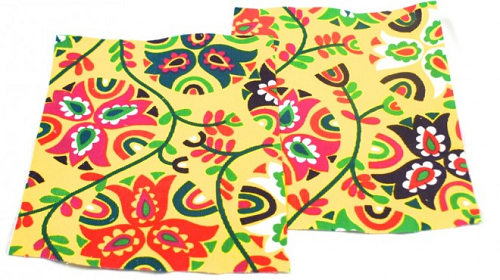
Using your fabric scissors, cut your fabric into two rectangle shapes. It doesn’t matter what size, as long as they are both the same.

Wheat Bag

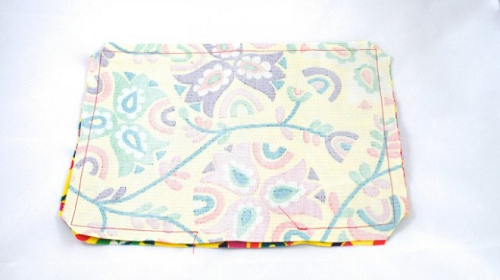
Place your two pieces of fabric face to face, with the wrong side of the fabric facing outwards. Sew the two pieces together with a seam allowance of approximately 1cm and leave an opening of about 1-2cm so the wheat can be added in later. Reinforce the opening by doing a back stitch (stitching back and forward a few times) on each side of the opening.

Cut off the corners so that it doesn’t bunch up when you turn it inside out and you get nice points.

wheat bag corners

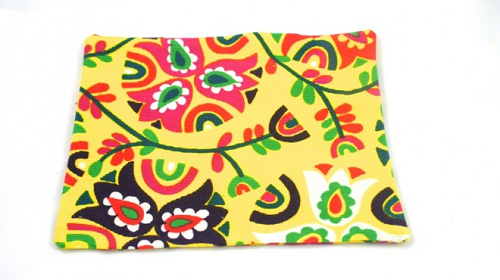
Turn it right side out. You can use a chopstick or a pencil to push out the corners into points.

wheat bag empty

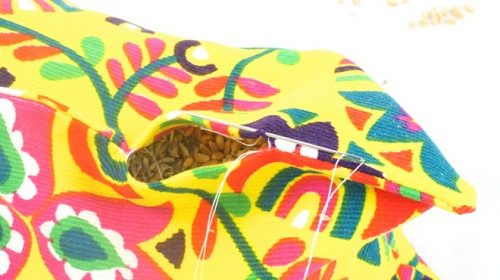
Fill the bag roughly three-quarters full with wheat. I make a funnel out of thick paper to make it simple, but you could just spoon it straight into the bag if you like.

wheat bag fill

I have added around a cup of dried lavender to this bag as well so that it smells nice when heated. Lavender is said to induce calm and sleep, which can’t be a bad thing!

Hand sew the opening of the wheat bag closed using a slip stitch. If you’re not sure what a slip stitch is, here is a simple video tutorial. It just means you won’t see the stitches after you’ve sewn.

wheat bag close

And you’re done! Now that you know how quick and easy they are, you’ll be making one for each member of the family and for everyone you know as handmade gifts!

Notes

  • When you’re ready to use your wheat bag, just pop it in the microwave (along with a cup of water, see note below) for 30-second intervals until you reach the desired temperature. It will depend on the size of your wheat bag and on your microwave settings as to how long it will need to be heated for. I put mine in for 90 seconds, which is perfect for me. Be careful not to overheat the bag or the wheat will burn.
  • Sit a cup of water in the microwave alongside the wheat bag to prevent the wheat from drying out and causing a fire risk.
  • Wheat bags are not recommended as hotties in children’s beds as they pose a fire risk. Do not cover with blankets or use to warm up a bed.
  • Do not reheat the bag until it has completely cooled – which may be two hours after initial heating.
  • Always monitor the use of wheat bags around children.
  • This article was created by Emma Rowe for Kidspot.com.au and has been adapted for Kidspot.co.nz

What easy sewing projects have you done?

See more:

It’s a Boy! The Royal Baby is Here

In the early hours of May 6th, Prince Harry and Meghan Markle welcomed a baby boy into their ever-so-slightly famous family. The new royal baby, called Archie, is seventh in line for the throne.

Despite numerous tabloid stories indicating that Meghan had already given birth weeks ago and it was all being kept hush hush, the birth was announced within 24 hours via Instagram.

The birth announcement

“I’m just over the moon”

Prince Harry has spoken about his new son and was rightly emotional:

“I haven’t been in many births, this is definitely my first birth! But it was amazing, absolutely incredible, and as I said, I’m so incredibly proud of my wife. As every father and parent would say, your baby is absolutely amazing. But this little thing is absolutely to die for, so I’m just over the moon.”

Congratulations!

What do you think of the baby’s name, Archie Harrison Mountbatten-Windsor?

See more:

her world julieWritten by Julie Scanlon

Julie is Editor for Kidspot NZ and our MVP. Her hobbies include laughing uncontrollably at her own jokes, annoying her family by asking questions about movie plots, and never taking anything too seriously. She speaks a little Spanish and a lot of Yorkshire. 

Favourite motto to live by: “It ain’t nothing but a thing”
How to Deal With Cringe-worthy Kid Moments

Has your child ever said or done something completely inappropriate, ie ‘Look at that man’s fat tummy, mummy!’– making you feel like crawling into a dark corner and hiding?

Nigel Latta, author of Politically Incorrect Parenting (HarperCollins), says it’s something that happens to almost every parent. “Parents always fall into the position of thinking it’s something they’ve done wrong,” he says. “But kids are only just learning to talk and they don’t put the brakes on.” Here’s Nigel’s advice on those cringe-worthy kid moments.

“Mummy, look at her fat tummy”

It’s that ‘hide your head’ moment when your child yells a personal insult to a complete stranger. Nigel says it’s a good opportunity to explain that they shouldn’t always say what’s in your head. “It’s one of those times when you tell them that they can hurt other people’s feelings,” he explains. “Also remember that people are pretty understanding about the fact that kids blurt things out – the only people who get offended are the ones who don’t have kids.”

Stripping off

If your pre-schooler strips off and starts running up and down a shopping plaza (as mine did, albeit on a pedestrian area by the seaside – cue mum with red face), Nigel says that it’s not something to get embarrassed about. “That’s a moral statement of how we approach nudity,” he says. “People get so wound up about children taking their clothes off, but it’s all about kids being kids.”

Shouting ‘no’ to a doctor or policeman

Completely different, however, is a child refusing to do something that a parent or person in authority is asking them to do. “After the age of three, saying ‘I’m not going to do it’ is an important battle,” advises Nigel, saying it’s an instrumental moment between parent and child. “Make sure you fight the battle at three rather than 13, so they understand early on that life is pretty good if they do what they’re told, and they are stuck on their own in their room if they don’t.” He adds to forget the naughty chair, as it involves forcing a child to stay in one spot, and send them to their room for time out on their own, instead.

Picking their nose in a restaurant

Nigel says teaching your child how to sit nicely when out for dinner is also important – although start somewhere low-key rather than a hatted restaurant. “It’s really important to eat properly and sit quietly in a restaurant. Decide what’s important to you and teach them that’s how to behave,” he explains. “When we went through this, we started off at food halls – it’s less stressful and younger children can crawl off if necessary. If they fight or bicker, take them out to the car for time out, while you stand outside. They’ll soon see that life is boring if they behave badly, but if they sit nicely, they’ll get to go out and do this stuff with you.”

The ‘wee, poo’ phase

Shouting ‘you’ve got a pooey head’ was a delightful phrase favoured by my four-year-old. Nigel says don’t give them a reaction, or they’ll enjoy saying it even more. “At this age, their humour is toilet humour, they just find it hilariously funny. Tread a careful line, as they’ll do it more if they get a reaction. That’s until it gets painful and annoying to other people – they need to stop if they become too noisy and annoying. No-one else should have to suffer my kids’ bad behaviour.”

This article was originally written by Joanna Bounds for our sister site Kidspot Australia.

What’s the most cringe-worthy thing your child has done?

See more:

A Fussy Baby Can Increase the Chances of PND

When I had my first baby, I was overwhelmed with how hard parenthood was. I was breastfeeding on demand, with a baby who was cluster feeding for hours on end. If she wasn’t feeding, she was screaming. She’d never sleep on her own. So she was always on my chest, or in a front pack. She would not even tolerate a stroller for more than a few minutes. I was completely touched out, sleep deprived and quite frankly at breaking point.

I clung to this idea that the journey of motherhood was sink or swim. So much so that I refused any help, assumed that allowing others to step in was an inconvenience to them, and basically made myself ill trying to do it all. It took me six months to approach someone about my depression, and even when I did reach out for help it wasn’t an instant fix. I was told that how I was feeling was normal and to try to have some fun and some sleep.

Baby number two

The second time around, my baby was much less fussy. I was getting sleep, by myself. I was still feeding on demand, but this second kid was much less demanding and easily pleased. I still slid into post-natal depression, but I found it easier to crawl back out of that rut even when faced with as little support as the first time around. Most importantly I had decided that motherhood was about learning to float rather than sink or swim! And that other people cared about me and baby – we weren’t an inconvenience after all.

The link betwen fussiness and depression

A study published last month, revealed what some of us may have suspected – a fussy baby can lead to a depressed mum. The American study sampled surveys filled in by the mothers of 8200 children. The research found that those babies who were born prematurely, and who exhibited fussy behaviours were more likely to have mildly depressed mums. Babies born later or even full-term, who were also fussy lead to higher odds of moderate to severe depression.
While many of us mums were probably aware of how mind altering having a fussy baby can be, this research does provide more concrete evidence to the issue.

Hopefully the conclusions drawn will help steer the medical community to ask more questions about the mother’s wellbeing, at medical check-ups. If a baby is revealed to be fussy at a regular appointment, questioning how the mother is feeling and offering support and literature may help those mums who are struggling to access the help they need.

Things to watch for

According to the New Zealand Mental Health Foundation, post-natal depression can present as:

  • Feeling low, sad or depressed. Or just not feeling anything
  • Losing interest and pleasure in usual activities
  • Feeling irritable or angry for no reason
  • Change in sleeping patterns. Hard to tell when you are struggling to sleep with a baby in the house!
  • Change in appetite eating less or more. I personally felt I didn’t deserve food on some of my harder days.
  • Decreased energy, tiredness and fatigue
  • Physical slowing or agitation
  • Feeling worthless or guilty. One social worker told me that I should aim for good enough and not perfect. Great idea, except most days I didn’t feel good enough either
  • Having thoughts of hopelessness and death
  • Finding it difficult to thinking clearly
  • Being anxious
  • Excessive worry or fear
  • Panic attacks. This was me for sure!
  • Phobias
  • Excessive concern about physical health

If you are at all worried about yourself or a friend or family member, encourage them to reach out for help. You can visit their GP, talk to their midwife or Plunket. If you can’t get to see someone physically, there are also numbers you can call for help and support:

If you believe either you, your baby, or someone you know, is in immediate danger, please call emergency services immediately on 111. It’s OK to ask for help.

This article was written for Kidspot, the premier parenting resource in New Zealand. This article contains general information only and is not intended to replace advice from a qualified health professional. If you have questions or concerns about your health contact your doctor. Always see your doctor or other qualified health professional before starting or changing any treatment.

Did/do you have a ‘fussy’ baby? What support did/do you have?

See more:

kymmageWritten by Kym Moore

When she isn’t herding kids or cats, Kym loves to drink craft beer, or share a whine and a wine with friends. She is also partial to a well-made cocktail. Her happy places include sitting on couch watching British Comedy and daydreaming. Lots of daydreaming.

Favourite artist: Bowie

11 Things You Never Imagined Doing Before Becoming A Parent

Becoming a parent is life changing – that is without doubt. But beyond the lack of sleep, numerous nappy changes and constant feeding, there are things that parents find themselves doing that, before children, they would probably never have imagined being part of their day.

We waited five years for our oldest son’s arrival into this world. Now, given the preparation time I had, you would think that I would be more than ready for anything parenting threw at me. How naive! Along the parenting journey, there have been quite a few things that have become second nature that I don’t recall being explained in any of the baby books.

So, here’s my rundown of 11 things that I never imagined doing before I became a parent.

1. Smelling butts

Anyone without a kid may well pull a face when a parent picks up a baby or toddler and jams their nostrils against the butt of that cute little outfit, but us parents know that it’s the quickest way to discover where the heck that stench is coming from. Thumbs up if your nostrils are left fresh as a daisy because then that odour is someone else’s problem. However, if the smell is your responsibility, choosing baby clothing that allows easy access for quick-as-a-flash nappy changes means that you can deal with the odour before your coffee goes cold … again.

2. Smelling … everything!

Don’t you for one second believe that once you have passed the nappy stage that your investigative powers are no longer required when it comes to hunting out foul odours. Did you never think that walking past the bathroom you cleaned an hour ago would make your eyes water? And any mum who says they haven’t done the armpit smell test to determine if their child really has had a shower is lying. And then there’s teenagers … most of the time it’s just a case of shutting the bedroom door and writing off that one room of the house as a lost cause.

3. Carrying a tiny human being

I know what you’re thinking – this is supposed to be about AFTER you become a parent, not the blessed nine months of pregnancy. Oh, but if only the “carrying” stopped when you popped them out, or even when they became self-mobile. Despite your most insistent pleas of “please walk nicely”, you will, over and over again, be lugging your tiny human around, with biceps screaming for a break, because you just really need to get where you are going safely and in this century.

4. Being a packhorse

You would not believe the amount of stuff I could fit into a nappy bag. Totally through necessity of being prepared, of course – the necessity of being prepared for a zombie apocalypse that will take over the world during the fifteen minutes I spend pushing the pushchair to the shops and back, that is. And then when they are no longer babies, we miss the convenience of the pushchair for loading up with shopping bags!

5. Using the term ‘poonami’

Poonami is the term for a diaper explosion that travels all the way up your baby’s back – lovely! Your first poonami will change you as a person. I once had to put my child, fully clothed, into the bath because I just could not deal with “all of that!” The regularity of diaper leakage and other messes means that your baby will be changing wardrobe more times than an Oscar host so be sure to put clothing top of your newborn gift wishlist.

6. Allowing your child to go out wearing “whatever”

Because “pick your battles” is a motto to parent by!

7. Watching Toy Story 38 times

Now, don’t get me wrong – I love Toy Story. I would happily watch it three or four times during my lifetime. But when your child has their favourite movie on repeat, you know the script off by heart and the only song that is ever stuck in your head is “You’ve Got a Friend in Me”, it’s time to step away from the DVD player. In this scenario, you can substitute Toy Story for The Little Mermaid, Frozen, The LEGO Movie, Moana …

8. Retrieving your child from the ballpit

Soft play areas, trampoline parks, and ballpits are built for kids. Kids who get stuck. Kids who need rescuing by their parent. Kids who will shriek louder than an air-raid siren until you squeeze your ass-cheeks through the rollers and lose your socks scaling a cargo net to retrieve them, only to return safely to the cafe area and find someone has eaten your raspberry and white chocolate muffin. I’m just saying.

9. Hiding in the pantry eating snacks

Next time you’re trying to eat a chocolate bar in three mouthfuls with the cupboard door wedged between you and any curious little eyes, just remember all of those times you reminded your child to share their toys … hypocrite! Anyway, sitting in the car for an extra ten minutes after you get home from running an “errand” while leaving your partner with the kids is so much more relaxing for consuming those secret snacks. Ssh, don’t tell!

10. Paying a fortune for teeth

The going rate for the tooth fairy is apparently equivalent to the gold spot price. I eventually reverted to just leaving my Eftpos card under their pillow. And then there’s the teeth that DON’T fall out – the ones that don’t grow straight and have to be lassoed back into position. When your orthodontist refers to your kid’s teeth as “interesting”, run for the hills.

11. Falling completely and utterly in love with your child

Cos seriously – no one is really able to prepare you for that.

What’s something you never imagined being part of your life prior to becoming a parent?

See more:

her world julieWritten by Julie Scanlon

Julie is Editor for Kidspot NZ and our MVP. Her hobbies include laughing uncontrollably at her own jokes, annoying her family by asking questions about movie plots, and never taking anything too seriously. She speaks a little Spanish and a lot of Yorkshire. 

Favourite motto to live by: “It ain’t nothing but a thing”
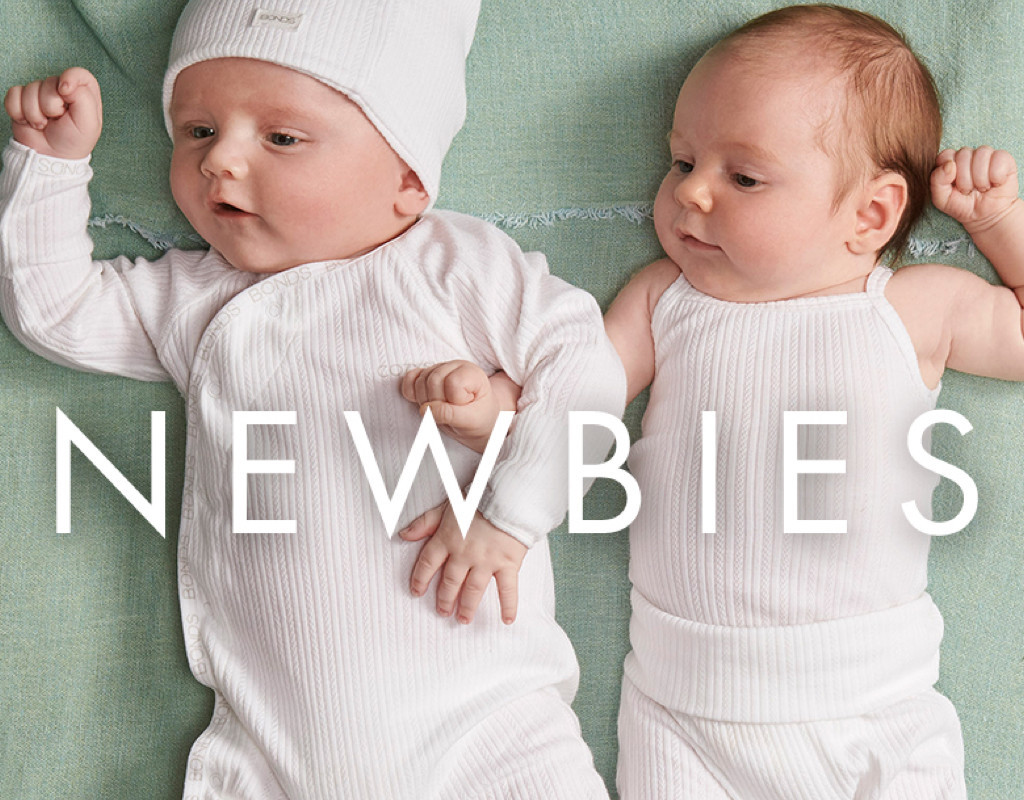
Bonds Newbies Launch in New Zealand

Australian mums go gaga over Bonds baby clothing and now Bonds Newbies has launched in New Zealand, with affordable, quality, snuggly-as baby clothing that you will simply adore!

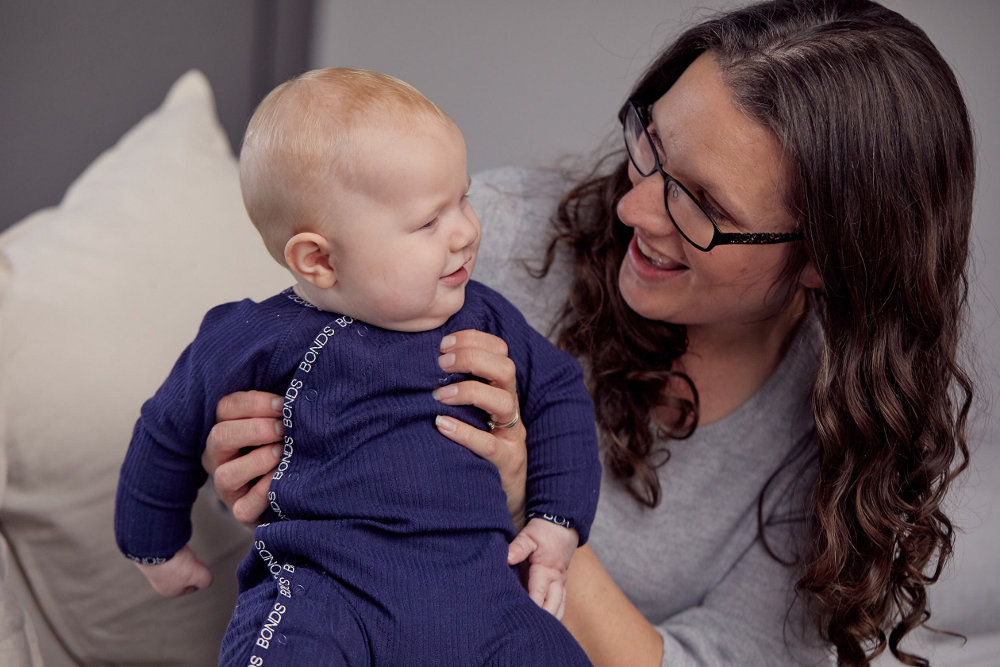
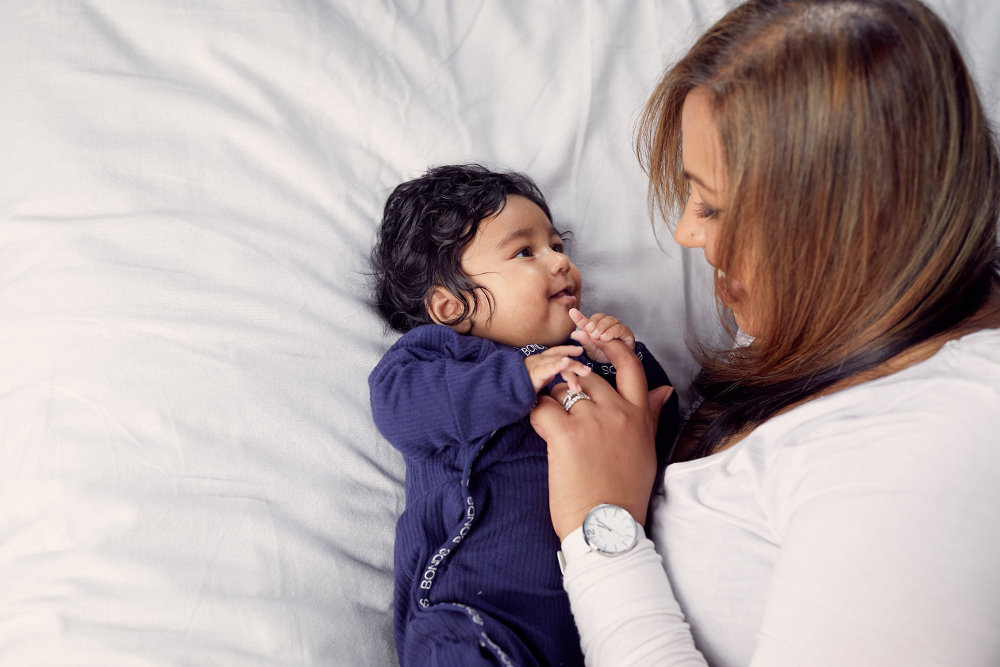
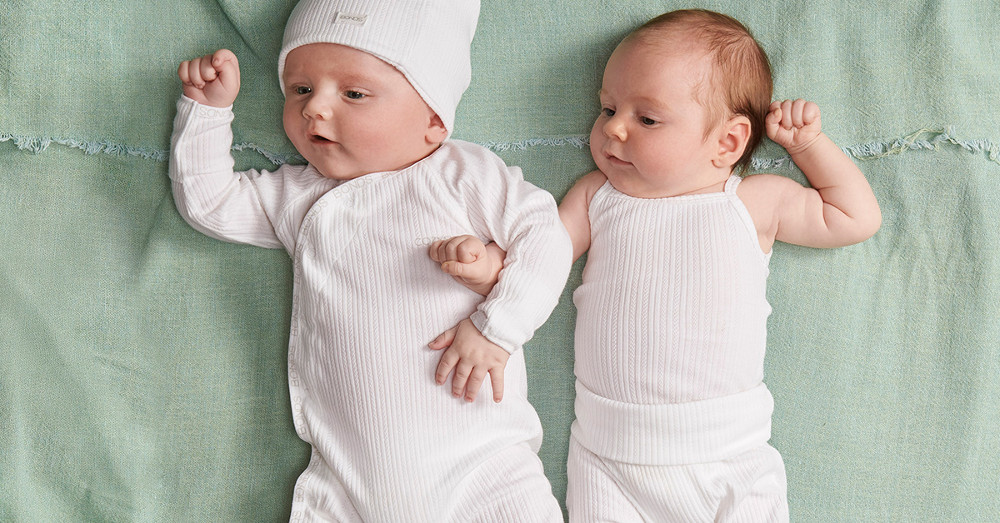
If you’re a first time or expectant mum who hasn’t yet discovered the joys of Bonds baby clothing, then you are in for a treat! Made from soft, stretchy, Australian-grown cotton, Bonds Newbies clothing is super comfy – very important for your precious little one’s delicate skin.

Bonds range of Newbies separates are available in gorgeous pastel and neutral colours or cheerful prints that will put a smile on your face every time you dress your baby – we’re talking cute and cosy here!

Why choose Bonds?

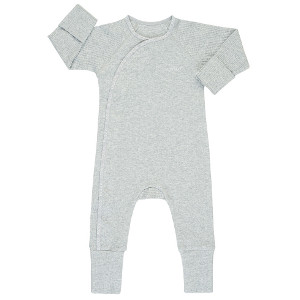
Bonds baby gear is definitely a popular choice for parents; not only are they super cute but they are also super comfy and include innovative features like two-way zips for quick and easy nappy changes, and fold-over cuff feet and mittens to keep little toes and fingers warm

Perfect for gifting

Bonds have expanded the Bonds Newbies range to include a range of ‘grab and go’ gift bundles, with curated essentials packs to simplify the shopping experience for mums and gift buyers. Gift sets come in reusable soft drawstring bags made from fabric offcuts for added sustainability. Gift buying has never been this simple! Whether it’s your hospital bag essentials as you prepare for the big day, the essential gift, or the essential features you need to keep your bub cosy – when you buy Bonds, you’re buying peace of mind.

Our favourite picks from the range

Featuring Bonds iconic Bonds baby shapes in classic colours and super soft cotton, the range represents true comfort and quality. Here’s what we love!

The Daily Set

Made from soft pointelle rib fabric with plenty of stretch and available in 6 gorgeous colours, the set includes a long sleeve tee and matching leggings. In a drawstring bag for easy gift giving.

Buy now

Newbies Accessories Pack

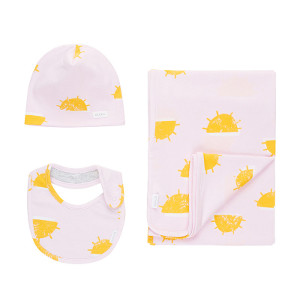
Includes a beanie, bib and wrap in one of four adorable prints. These are the things you can never have enough of as a new parent! Pair up with the Newborn Cosysuits for a complete outfit.

Buy now

Pointelle Cozysuit

Cosy, cuddly, and easy-care – these are what dreams are made of! Simple side stud design with adorable and oh-so-practical foldable cuff feet and mittens. Available in 5 colours.

Buy now

Enter to win a Bonds Newbies photoshoot!

Enter the Kidspot Facebook competition and be in to win a Bonds Newbies photoshoot with you and your little one. We have three photoshoots to give away! It will become a beautiful and cherished keepsake of your time as a new parent and a wonderful way to capture those early moments. Visit the Kidspot Facebook page for entry details. Terms and Conditions apply.

Bonds is available through Farmers stores nationwide as well as online from www.bonds.com.au

Find out more about the Bonds Newbies range at www.bonds.com.au/baby/newborn or follow Bonds on social media.

her world julieWritten by Julie Scanlon for Bonds

Julie is Editor for Kidspot NZ and our MVP. Her hobbies include laughing uncontrollably at her own jokes, annoying her family by asking questions about movie plots, and never taking anything too seriously. She speaks a little Spanish and a lot of Yorkshire. 

Favourite motto to live by: “It ain’t nothing but a thing”
Decline By Nine – Why Kids Stop Reading For Fun

Research suggests that almost a fifth of kids stop frequently reading for fun between the ages of eight and nine years old.

When I was a kid, I was a huge reader. I had my nose in a book most days and would happily polish off a decent sized kids’ novel in a night. I started working in my school library, so I could access all the newest books before my classmates. As a kid, being transported through a book to anywhere, was just about the best magic available to me. Now, I don’t read nearly as much, but I still enjoy reading aloud to my own kids.

Decline by nine

Recently I came across some research from Scholastic.com about kids and their reading habits. The research suggests that there is a steep drop in kids regularly reading for fun between eight and nine years old. This drop is from 57% down to 35%. The research also suggested that often those kids don’t rebound back to the enjoyment of reading after the initial decline. However, because many kids across the measured age groups believed that reading was important, it may be possible for a child to come back to reading for fun. As parents (and other special adults in children’s lives) we can try and support that by helping them have their needs met by awesome books.

Why aren’t kids reading for fun?

I think there are lots of reasons kids do or don’t become frequent readers like I was. It could be, like many adults, they start to feel too busy to be able to sit down and read. If in your average week, you have school, homework and sports or other activities to do, where does reading fit? It could be that school work starts to ramp up and get more serious. The more required of them, the more mentally tired they are. A tired brain finds reading harder to concentrate on. I have seen others point at technology, but I personally feel that technology has engaged my children in reading far more than books at times. Technology is a huge enabler to the written word.

I often hear that saying, “children become readers in the laps of their parents”. I’m not 100% convinced of this. I have read to both of my kids all their lives, and they love me sharing a story. But that hasn’t meant they have rushed to pick up books on their own. As a result, I often read them the books that shaped so much of my own childhood, so that they still get the same messages and experience. Certainly, modelling reading behaviour for your kids can impact how they see reading.

The key to encouraging reading

Currently both of my kids are reading happily on their own. My eldest is my most infrequent reader, but she has been swept away with a series of books about dragons. My youngest is a moderate bookworm. Both kids love a funny story though, so I often find them giggling over a picture book together. The research from Scholastic pointed out that often funny books were a huge draw for young readers. This makes absolute sense. Funny books provide an escape. It feels great to laugh and to share that with family or friends. Most of my favourite kids’ books have been funny.

Other things to look for in a book are that the story is of interest to the child. Maybe they have a current obsession (such as dragons or unicorns). Maybe they are going through something personal – there is almost always a book that they could relate to. There might be something in the news playing on their minds – you could find books that explore those issues in an age appropriate way.

Reading for fun is so important. Not only is reading a great way to relax and unwind, or to obtain some escapism, reading can also open you up to new ideas, new hobbies or interests. A book can show you about the world around you, teach you things about people and cultures that you may not have been aware of. Books can help you grow.

Kidspot’s tips to get kids reading

  • Frequent visits to the library will expose kids to more genres, more authors, and more opportunities to read but don’t force them to choose a book.
  • Let your child lead the choices of books to read (assuming they are appropriate of course). They are more likely to read something that interests them.
  • Comic books count as reading too!
  • Reading on an e-reader or Kindle also counts for those who prefer to swipe rather than turn the page.
  • Praise your child when they pick up a book and show interest by asking questions about the storyline and characters.
  • Read the same book as your child for the ultimate parent-child book club!
  • Reading for fun doesn’t have to be at bedtime – it can be in the morning before school, whilst sitting on the bus, or while winding down after homework.
  • Ensure your child always has access to a selection of books at home.

What stories or books are your kids interested in reading for fun?

See more:

kymmageWritten by Kym Moore

When she isn’t herding kids or cats, Kym loves to drink craft beer, or share a whine and a wine with friends. She is also partial to a well-made cocktail. Her happy places include sitting on couch watching British Comedy and daydreaming. Lots of daydreaming.

Favourite artist: Bowie

What Time Should Your Child Go To Bed?

Bedtimes. They are, and forever will be, a bone of contention for parents and kids. But what is an appropriate time to send the kids off to bed?

Back in 2015 Wilson Elementary School in Wisconsin posted a “helpful” chart on how much sleep a child should get, charting the time kids of a certain age should be going to bed relevant to the time they wake up. The post went viral and has been doing the rounds of social media ever since with plenty of debate, both for and against the idea of set bedtimes and the suggested time for kids to hit the hay.

Suggested bedtimes

For example, a five year old who bounces out of bed for school at 6.30am, should be in bed by 7.15pm, according to the chart. Some parents will agree that their child definitely needs this amount of sleep. Others will wonder how on earth they would fit everything in that needs to be done before bedtime rolls around. Take into account working hours, after-school activities, dinner, homework, bath and whoops, it’s already past the suggested bedtime and you haven’t even had a full conversation with your child today!

Here’s the chart:

Whether or not you agree with the chart, it definitely sparked debate around how much sleep kids actually need. For some, the bedtimes back up their own philosophy regarding their child’s bedtime and for others, the suggestions seemed unachievable.

Are you getting your eight hours?

As parents will appreciate, there really is no hard and fast rule when it comes to the amount of sleep kids need. Just like adults, every kid’s needs for sleep will differ. Some adults can function perfectly well with just four or five hours sleep each night – though they would be in the minority and it is not recommended for wellbeing. The common thread is that every adult needs a good eight hours sleep each night. Not that many parents will be achieving that – especially if there are little ones in the home who care not for charts and schedules!

Sleep is vital for growing kids

For kids however, with developing brains and bodies, a good amount of sleep is vital. If the kids are falling asleep in class, grumpy and irritable in the late afternoon or evening, finding it difficult to focus on homework or generally sluggish, it may be time to reassess bedtimes. Even just changing routines can have an affect on the amount of sleep your child gets. For instance, rather than getting ‘wired’ playing on the iPad before bed and then laying awake for a long period of time – reading in bed or listening to quiet music may send them off to the land of nod a lot quicker.

How much sleep do kids need?

As a guide, the Sleepfoundation.org recommend that babies and children require this much sleep each day/night:

  • Newborns – 14-17 hours
  • Babies under 12 months – 12-15 hours
  • Toddlers (1 to 2 years old) – 11-14 hours
  • Preschoolers (3 to 5 years old) – 10-13 hours
  • Primary school kids – 9-11 hours
  • College kids – 8-10 hours

In 2013 a study published in Pediatrics looked at the sleep habits of over 10,000 children in the UK. It concluded that, based on anecdotal evidence from mothers and teachers, “having regular bedtimes during early childhood is an important influence on children’s behavior.”

What do you think of the chart? Do you agree with the suggested times? Are they achievable for your family?

See more:

her world julieWritten by Julie Scanlon

Julie is Editor for Kidspot NZ and our MVP. Her hobbies include laughing uncontrollably at her own jokes, annoying her family by asking questions about movie plots, and never taking anything too seriously. She speaks a little Spanish and a lot of Yorkshire. 

Favourite motto to live by: “It ain’t nothing but a thing”

The benefits of movement for babies

We all know the golden rules for keeping healthy. Not that we tend to stick to them too rigorously! Probably the most important is exercise – getting up and moving to keep our bodies working. Whilst adults do it for fitness or to keep their figure (or to improve on what our indulgences have landed us with), babies require movement for a different reason.

Scientific studies have shown that your child’s future development is highly dependent upon the way they use their senses in the early months of life. Babies who experience sensory stimulation develop better concentration and memory and are more inquisitive. They also reach developmental milestones earlier.

The link between the activities that a baby performs during the early months and the skills needed for later in life is amazing. For example, when your baby crawls they’re not just trying to get into as much mischief as possible. They’re also learning about the coordination of their body and limbs, improving balance, and sending messages to their brain about touch, texture and position. They’re developing visual skills by varying their focus from a toy far away to the floor in front of them, which is the same focal distance as a book when they learn to read! They improve their rhythm and timing and develop their muscles which in turn aids in the later development of fine motor skills, such as writing.

The benefits of movement

Even newborns can benefit from movement. Gentle activities cause fluid in the inner ear to pass over nerve endings which send messages to the brain about body position and help your baby to attain balance. This is known as vestibular stimulation.

To aid in your baby’s movement remember to dress baby appropriately. Opt for clothes that do not inhibit movement or frustrate their attempts to wriggle, reach, kick, roll and crawl. Freedom of movement is important and non-restrictive clothing is great for letting them explore as much as they wish.

Remember not to rush your baby’s development though. Each stage of baby’s life is important in it’s own way. For instance, a baby will sit by themself when their back muscles are sufficiently strong enough. So it is not how early your child walks that is important but how much they learn about themsleves and the world around them before they walk that will influence their development. As long as you provide the appropriate opportunities for development, nature will take its course.

Here’s a few tips that you will find useful for stimulating your baby’s senses and development right from the beginning.

Top 10 tips to move with your newborn

  1. Get out and about and enjoy a stroll with your newborn in the pram. The gentle motion both comforts and assists with balance.
  2. Cuddle up with your newborn in an old fashioned rocking chair and let the rocking movement comfort them.
  3. Try out a finger rhyme (using their fingers), so they can enjoy their newly discovered hands – and don’t forget those toes!
  4. Whilst changing baby’s nappy, enable your newborn to become more aware of their body by moving and stroking their arms and legs whilst making silly noises.
  5. Play a slower version of “Pat-a-Cake” while you gently move baby’s hands in time with the rhyme.
  6. Learn a few techniques of baby massage and enjoy some quality and quiet time with baby.
  7. Gently encourage your baby to point a finger and then move the finger to touch their nose, cheek, and belly, as well as your nose.
  8. Make some noise with a rattle and wait until they’ve turned their head to see the source. Then move the rattle around coming from different directions.
  9. At one month old you can start placing your baby on their tummy for short periods to help stregthen their neck muscles.
  10. When baby can hold their head up it’s time for take off! Lie down and lift your baby up into the air – crash slowly down for a sloppy kiss.

Top 10 tips to move with your baby

  1. It’s time to get wet! Baby swimming lessons are a fantastic activity and a fun way to stimulate baby’s development.
  2. Play with your baby using a large beach ball or gym ball, sitting and lying them on it on their back and front and gently rocking back and forth.
  3. Help your baby to practice reaching out for objects by holding a toy in front of them and encouraging them to reach for it.
  4. Get jiggy with it! Dance and swing your baby gently in your arms or sing and bounce your baby on your knees with their favourite nursery rhyme.
  5. Hold your baby upright on a flat surface and watch those legs start to move in preparation for walking.
  6. With baby on their tummy, roll a soft ball toward them so they have to stretch out their arms to grasp the ball. Encourage them to roll it back to you.
  7. Encourage their commando movement across the floor by moving them into another room with new textures and objects to explore.
  8. Sit facing each other with the bottom of your feet touching and roll a ball back and forth, stretching to grab it.
  9. Work those arms and legs and motivate them to crawl by clapping your hands and motioning them to come towards you. Use a favourite toy to grab their attention.
  10. In the bath, let baby splash and kick in the water. Introduce simple bath toys like funnels, cups and sponges to encourage exploration.

Top 10 tips to move with your toddler

  1. Draw the curtains, switch off the lights and use torches to create shapes and shadows on the wall by moving and gently adjusting their body in different ways.
  2. Extend a fun game of musical statues to include different types of movement, ie move like an elephant, jump like a frog or march to the band.
  3. Fill a baby bath or small paddling pool with warm water and play sink and float games with different objects.
  4. Set up an obstacle course using chairs and tables to clamber over and crawl under, cushion “stepping stones”, follow the string line river and more.
  5. Make a tent with sheets and blankets over chairs and hold them in place with pegs. Let them set up their favourite cars or dolls inside for a play.
  6. Close the bedroom doors and use the hallway as a bowling alley with empty drink bottle skittles.
  7. Put ten ‘bottles’ on a wall (skittles on a box) and sing ‘Ten Green Bottles’ as your toddler makes the ‘bottles’ fall one by one.
  8. Get outdoors and go on a hunt for interesting treasure – leaves, feathers, pretty rocks, sticks or flowers. Create a collage or pet rock with the finds.
  9. Use some sidewalk chalk on the concrete and create a garden path to follow, a road for small cars or a moon for an astronaut to stomp around on.
  10. Get back to basics. Lead by example and show your toddler how to skip, hop, climb and jump.

What is/was your favourite way to play with your baby to get them moving?

See more:

her world julieWritten by Julie Scanlon

Julie is Editor for Kidspot NZ and our MVP. Her hobbies include laughing uncontrollably at her own jokes, annoying her family by asking questions about movie plots, and never taking anything too seriously. She speaks a little Spanish and a lot of Yorkshire. 

Favourite motto to live by: “It ain’t nothing but a thing”

Is My Toddler Getting Enough Exercise?

Toddlers need a minimum of three hours exercise a day, while school-aged children should have at least an hour. That’s what guidelines from the Ministry of Health recommend.

“Provide fun activities that support physical, social, emotional and spiritual growth (at least three hours every day for toddlers and preschoolers, spread throughout the day).” Sit Less, Move More, Sleep Well – Active Play Guidelines for Under-fives, Ministry of Health.

And by ‘exercise’, the obesity prevention experts don’t mean a gentle stroll but a workout that’s moderate to vigorous in intensity and gets littlies’ heart rates up.

Getting toddlers moving

While three hours may sound a lot, Levi Waltz, CEO of Obesity Prevention Australia, a non-profit organisation committed to educating people about living healthily, says that toddlers are naturally very active.

“For toddlers there is no real difference between moderate and vigorous. The main differentiation is free or set play. The majority of their exercise is free and slowly, as they get closer to five or six years old, some more structured activity can be added.”

Like many health professionals involved in preventing obesity, Waltz warns against too much screen time for both kids and adults.

“It is very easy – and sometimes necessary – to park your child next to the TV so you can get a break, but if they are starting to develop a high screen time habit at the age of three, it will only increase (with age),” he says.

He reminds parents that little kids are great mimics so if they see mum and dad spending a lot of time in front of the TV or a computer, they will mirror that behaviour.

Why toddlers need exercise

Regular physical activity helps kids:

  • With healthy growth and development
  • Build strong bones and muscles
  • Improve balance and develop skills
  • Maintain and develop flexibility
  • Achieve and maintain a healthy weight
  • Improve cardiovascular fitness
  • Reduce stress and feel more relaxed
  • Improve posture
  • Boost confidence and self-esteem

Research has shown that children who don’t get enough physical activity are at a higher risk of becoming overweight or obese.

How you can help your toddler exercise

  • Be a good role model and have a positive attitude to being active.
  • Encourage them to play in the backyard, dance to music, ride a bike or get involved in vigorous activities like running, swimming or playing sports like soccer, netball or basketball.
  • Make time to be active as a family – walk to the local park, go bike riding or take the dog for a stroll.
  • Encourage ‘active play’ by buying gifts that get kids up and moving, such as balls, bats, skipping ropes and other equipment.
  • Park some distance away from your destination – school, sport or the shops – and walk the rest of the way.
  • Make sure kids can be active after school, either through active play or organised sport.
  • If they haven’t been active previously, start slowly and build up the amount of physical activity.
  • Limit the amount of time that kids and teens spend on ‘small screen’ entertainment to no more than 2 hours a day.

This article was written by Fiona Baker for Kidspot Australia and adapted for Kidspot NZ. Sources include Obesity Prevention Australia and Healthy Kids.

Is your child getting the minimum amount of exercise they need to stay healthy?

See more:

10 Brilliant Kids Books That Became Movie Masterpieces

From the tattered pages of our favourite books, we’ve watched some of world’s most popular characters leap to life on the big screen. Many of these films have broken box office records, wowed the critics and gone on to win awards all over the world.

Here are 10 of the best, in no particular order.

NB Ratings are attributed by the author and are subject to change. Find more information on ratings and classifications. Parental discretion is always advised.

1. The Hobbit: An Unexpected Journey

This highly anticipated fantasy adventure film, released in 2012, is based on Tolkien’s 1937 novel The Hobbit and acts as a prequel to The Lord of the Rings movie trilogy, also based on the writings of Tolkien. Bilbo Baggins joins a troupe of 13 dwarves, as they attempt to reclaim the stolen Dwarf Kingdom of Erebor from the clutches of the dragon, Smaug. As they make their way across a dangerous landscape, and fight battles against both nature and beast, Baggins comes face to face with Gollum, a sly creature who will change his life forever.

Adult compatibility: Fans of acclaimed director, Peter Jackson, will get exactly what they hope for and more! This is one movie thatdoes live up to the hype. Already watched it and want more? Peter Jackson’s The Lord of the Rings films should be your next cinematic destination.

Ages: Definitely not a film for young kids. Tweens 11+ are best suited to this battle-riddled flick.

Rating: PG-13

2. Mary Poppins

Loosely based on the P.L Travers book of the same name, this 1964 musical fantasy film, is as popular with families now, as it was back in the day when it snared 13 Academy Award nominations! When a magical nanny descends on the Banks’ family home via her umbrella parachute, the children (Jane and Michael) are immediately enthralled. Through the use of magic, humour and song, Mary Poppins transforms a once dysfunctional family and teaches them all how to live life to the fullest.

Adult compatibility: Julie Andrews’ knockout performance as Mary Poppins is a joy to watch. And the string of foot-tapping tunes will have you and the kids humming all day long. It’s supercalifragilisticexpialidocious!

Ages: Perfectly suited to kids of all ages and stages.

Rating: G

3. Willy Wonka and the Chocolate Factory

Roald Dahl’s 1964 novel Charlie and the Chocolate Factory comes to life in this family musical released in 1971. When Charlie Bucket scores a Golden Ticket and wins the right to tour Willy Wonka’s magical candy factory, he embarks on a journey that could change his poverty-stricken life forever. The only question is whether Charlie is able to pass the all-important test that Willy Wonka sets for him. With an array of colourful characters this book-to-movie masterpiece is one that will never be forgotten.

Adult compatibility: Gene Hackman’s portrayal of Willy Wonka makes this imaginative and slightly kooky film all the more compelling. If you’ve never seen it, you absolutely must!

Ages: Slugworth, the creepy spy, can give littlies a bit of a scare. Best suited to kids aged six and up.

Rating: G

4. Harry Potter and the Philosopher’s Stone

This first instalment in the Harry Potter film franchise is based on the best-selling series of books by J.K. Rowling. In his first year at Hogwarts School of Witchcraft and Wizardry, Harry tries to come to terms with his tragic past and learns to deal with his new found notoriety. In Hermoine Granger and Ron Weasley, Harry finds two loyal friends and together they embark on an often perilous but magical adventure of a lifetime. This film will grab you; hook, line and sinker.

Adult compatibility: The cast list reads like a who’s who of big screen royalty, and none of their performances disappoint. Richard Harris (Professor Dumbledore), Robbie Coltrane (Hagrid) and Maggie Smith (Professor McGonagall) all deliver on cue.

Ages: Some scenes in this movie are very scary, which will prove too much for kids under the age of seven.

Rating: PG

5. The Chronicles of Narnia: The Lion, the Witch and the Wardrobe

Based on the novel of the same name by C.S. Lewis, this 2005 movie adaptation received rave reviews and won an Academy Award for best makeup. When four British kids are relegated to the safety of the countryside during World War II, they stumble across a magical wardrobe that transports them to the fantasy world of Narnia. There, the children join the plight of the great lion, Aslan, to free Narnia from the grip of the evil White Witch. But will all four children make it to the end of this epic journey in one piece?

Adult compatibility: This acclaimed movie is visually spectacular with a beautiful narrative – two elements that make this a must-see film for adults.

Ages: War scenes, scary creatures, animals dying and an evil witch makes this film unsuitable for kids under the age of seven (at least!)

Rating: PG

6. The Wizard of Oz

This 1939 musical fantasy film, based on the book The Wonderful Wizard of Oz by L. Frank Baum, holds pride of place in the history books of American popular culture. Dorothy and her doggie friend Toto are swept up in a tornado and suddenly find themselves far away from home, in the land of Oz. Dorothy sets out down the yellow brick road to find the Wizard of Oz, the only one that can help get her home. Along the way, she makes some wonderful friends (The Scarecrow, The Tin Man and The Cowardly Lion) and meets a few undesirables like The Wicked Witch of the West before she magically returns home and is reunited with her family.

Adult compatibility: Judy Garland’s flawless performance as Dorothy is captivating. This ground-breaking film from the 30s will delight even the harshest parent critics.

Ages: The Wicked Witch of the West and her band of flying monkeys are likely to scare some littlies. That aside, it makes perfect viewing for kids aged five and up.

Rating: PG

7. Oliver!

This ever-popular musical drama has been entertaining families since 1968, and is based on the novel Oliver Twist by Charles Dickens. Oliver is a young orphan who knows no other life. He escapes from his orphanage and befriends a group of young pickpockets, answering to notorious thief, Fagin. When Oliver is wrongly accused of a street crime, he is taken in by a wealthy and kind gentlemen. But disaster soon strikes when Oliver is kidnapped and taken back to Fagin’s lair. It’s a showcase of good versus evil, with an innocent and vulnerable young boy trapped in the middle.

Adult compatibility: The show-stopping tunes in this film will transport every parent back to their youth. It’s a great trip down memory lane.

Ages: Some kids might be disturbed by scenes of squalid conditions on the streets of London. Fagin, Sikes and some of the other shady characters are equally as disturbing. Best suited to kids aged seven and up.

Rating: G

8. Where the Wild Things Are

Based on the 1963 best-selling children’s book by Maurice Sendak, this 2009 fantasy drama film was a long time in the making. A mix of live-action, animation and puppeteering, it tells the story of a troublesome young boy named Max who invents a mythical land occupied by strange, over-sized beasts. After Max is crowned as their king, the fun really begins! But things take a turn for the worse and Max is forced to take a good, hard look in the mirror before returning to his worried mother, back in the real world.

Adult compatibility: A beautiful testament to childhood and a story that every adult should revisit.

Ages: Even though the original story book is suited to preschoolers, there is a darkness about this film, making it unsuitable for kids under the age of seven.

Rating: PG

9. The Lorax

Based on one of Dr. Seuss’ most popular classics from the ’70s, this animated fantasy tells the tale of an idealistic young boy who strives to win the heart of a beautiful girl. To do this, he must first learn the story of The Lorax, a cranky but captivating orange forest creature who serves as a protector of the land. With voices by Danny DeVito (The Lorax), Zac Effron (Ted, the young boy) and Taylor Swift (Ted’s love interest) this movie, from the creators of Despicable Me and Hop, is non-stop family fun.

Adult compatibility: This highly entertaining film has some pertinent messages about looking after our environment. It’s sharp, colourful and makes for great family viewing.

Ages: A great watch for kids of all ages from toddlers through to tweens.

Rating: G

10. Alice in Wonderland

Inspired by Lewis Carroll’s 1865 fantasy novel Alice’s Advenutures in Wonderland and the 1871 sequel, Through the Looking-Glass, this unique movie adaption comes from acclaimed director Tim Burton. When 19-year-old Alice falls through a rabbit hole at her own engagement party, she finds herself back in the surreal fantasy world she frequented as a child. All of the usual characters are there, except this time they are all a little zanier than they were before. Alice begins to understand that her purpose for returning is to conquer the evil Red Queen so that the rightful ruler can return to the throne.

Adult compatibility: Johnny Depp’s Mad Hatter is a sight to behold. And for that reason alone, everyone should see this distinctive film.

Ages: Given the amount of violence and the plethora of scary characters in this film it is not recommended for kids under the age of nine.

Rating: PG

This article was written by Jo Harris for Kidspot.com.au and has been adpated for Kidspot.co.nz

Which book and movie adaptation would you add to the list?

See more:

Top Ten 90s Movies That Should Be Watched Again

The ’90s was a time of high fashion; bandanas, scrunchies and body piercings. But it was also a decade that saw HEAPS of fab family movies hit the big screen. Some of them, like Little Bigfoot and Baby’s Day Out deserve to be forgotten, but plenty of others have stood the test of time and definitely deserve another viewing.

Here are 10 of our favourites:

NB Ratings are attributed by the author and are subject to change. Find more information on ratings and classifications. Parental discretion is always advised.

1. The Lion King

Powerful, heart-warming and a little bit scary. All these elements combine to make this musical animation from 1994 one of the most-loved family flicks of all time. Young lion cub, Simba, grows up before our very eyes as he deals with the death of his father, King Mufasa, at the hands of his power-hungry uncle, Scar. When Simba eventually decides to fight for his rightful position in the pride, he must overthrow Scar and save the land from a terrible fate. Hakuna matata!

Adult compatibility: The cast of characters in this film promises unlimited entertainment, from Simba and Mufasa to Zazu (voiced by Rowan Atkinson) and Shenzi (voiced by Whoopi Goldberg), you will laugh, cry and be utterly consumed.

Ages: Scar and his band of crazed hyenas can put little ones on edge. Best suited to kids aged five and up.

Rating: G

2. Home Alone

Child-star Macaulay Culkin bursts onto the screen in this highly watchable slapstick comedy from 1990. When eight-year-old Kevin is accidentally left at home, while the rest of his family go to Paris for their Christmas holiday, all hell breaks loose. Kevin’s mum struggles to get on a return flight home and in the meantime young Kev has to protect his family home from a pair of silly would-be burglars. This riotous comedy is definitely worth a second viewing – and possibly even a third!

Adult compatibility: The idiotic antics of burglars Harry and Marv (played by Joe Pesci and Daniel Stern) are guaranteed to give you a chuckle.

Ages: Youngsters aged six and up will love this film and will be particularly fascinated by Kevin’s ability to think up a myriad of hilarious booby traps to halt Harry and Marv.

Rating: PG

3. Jumanji

Robin Williams shines in this fantasy adventure film about a magical board game, where wild jungle animals come to life as each player takes their turn. When siblings Judy and Peter roll the dice they unintentionally release Alan Parish, who as a 12-year-old boy, himself became trapped inside the game. Now the adult Alan, along with his new found friends, Judy and Peter and old friend Sarah, must finish what he started in order to reverse all of the destruction the game caused.

Adult compatibility: The original storyline and special effects make this film compelling viewing.

Ages: The computer-generated creatures in this movie are VERY intense. Best suited to brave kids seven and up.

Rating: PG

4. Homeward Bound: The incredible journey

Don’t panic! This talking animal tale has a lot more depth than you might think. When two dogs, Chance (Michael J. Fox) and Shadow (Don Ameche) and a cat named Sassy (Sally Field) find themselves ‘abandoned’ on a ranch far from home, they set out on a perilous journey across America in the hope of reuniting with their loved ones. Full of heart, this movie just seems to put kids in a wondrous trance.

Adult compatibility: Incredible cinematography and a powerful message about the strength of family, this movie gets TWO thumbs up for mums and dads.

Ages: Recommended for kids aged five and up. Note: There are some scenes that could cause younger viewers to worry about the animals’ safety.

Rating: G

5. Mrs Doubtfire

Once again, Robin Williams takes centre stage in this hilarious family comedy from 1993. Daniel Hillard disguises himself as a nanny and applies for a job to look after his estranged kids after his bitter divorce from Miranda (Sally Field). Daniel gets the job and fools everybody – but his disguise only lasts so long. When his real identity is revealed Daniel’s entire plan backfires. This film will tickle your funny bone and tug on your heartstrings all at the same time.

Adult compatibility: Great performances by the entire cast makes this a must-see movie for everyone.

Ages: Kids sensitive to the issues of divorce and separation might feel overwhelmed by this film. Best suited to kids upwards of 10 years.

Rating: PG-13

6. A Goofy Movie

It’s not hard to fall in love with a movie that stars Disney’s resident klutz Goofy as the central character. In this animated musical comedy, Goofy drags his unappreciative son Max on a fishing trip in an effort to reach out to his troubled kid. Max is resentful because all he wants to do is spend time with his new-found love, Roxanne. But good old Goofy, despite his best intentions, always manages to goof things up!

Adult compatibility: We’re not sure who will love this film more; you or the kids! Lots of gags, accompanied by some great music.

Ages: This full-length animated funny will be a huge hit with kids aged five and up.

Rating: G

7. Matilda

Based on Roald Dahl’s story of the same name, this is a delightful film about a bright little girl with telekinetic powers. Born to cruel parents and subjected to an equally cruel school principal who loathes children, Matilda, with the help of her lovely teacher Miss Honey, uses her special talents to change her world for the better.

Adult compatibility: This classic tale is made even better, thanks to a stellar performance by Danny DeVito (as Matilda’s scumbag dad). Entertaining viewing for all grown-ups.

Ages: The school principal is likely to scare the pants off little ones so best suited to kids aged seven and up.

Rating: PG

8. The Sandlot (aka The Sandlot Kids)

This highly watchable coming-of-age film has a valuable message about the power of friendship. When Scotty Smalls moves to a new neighbourhood, he joins the local baseball team and learns the ins and outs of the game from Benny ‘The Jet’ Rodriquez. The group has a fantastic summer together, until something happens that only courage and team spirit can help them overcome.

Adult compatibility: Baseball fans of ALL ages will truly enjoy this well-told story.

Ages: This movie is particularly suited to sports-mad kids aged seven and above.

Rating: PG

9. Free Willy

A gripping movie about the special bond between a delinquent boy and a killer whale, this film is the perfect family flick. When troubled street kid Jesse begins spending time with Willy – an orca whale held in captivity at a marine park – Jesse’s life seems to get back on track. But when he learns that the owners of the park have some ghastly plans in store for his beloved orca, Jesse does everything in his power to free Willy before it is too late.

Adult compatibility: A bit schmaltzy in places but definitely worth sitting through.

Ages: Great for animals lovers aged five and up.

Rating: PG

10. Babe

This box office hit was nominated for seven Academy Awards, and has been popular family viewing since its release in 1995. When a down-and-out runt piglet named Babe comes to live on Farmer Hoggett’s farm he makes a rather drastic decision to become a sheepdog. Under the watchful eye of new found doggie friend, Fly, Babe manages to achieve something quite spectacular and in the process surprises everyone.

Adult compatibility: The special effects in the film are outstanding. A heartwarming story even adults will enjoy.

Ages: Recommended for viewers aged five and up, but be mindful that there are some wild dogs in this film that are quite aggressive.

Rating: G

This article was written by Kidspot Australia and is republished here with permission.

What’s your favourite 90s movie? Have you shared any of these classics with your own kids?

See more:

8 Things to Say When Your Child Says They Are Dumb

When we are asked to complete a task, we typically show one of three motivations: performance approach, performance avoid, or mastery. The orientation, or approach, we bring to the task has a significant impact on how we feel about attempting it.

For example:

A performance approach orientation means we’ll have a go at something because we are reasonably confident we can do it well. You probably find that your son is quite happy to take on reading challenges that aren’t particularly, well… challenging.

A performance avoid orientation means that we shy away from anything we think might lead to failure or mistakes. This particular motivation seems to be what your son is showing in relation to reading unfamiliar words, or if he is asked to change his behaviour. Somewhere in his mind, he feels like he is failing. He verbalises ‘I’m dumb” as a way of justifying his performance, and demonstrating that he shouldn’t keep reading, or to play the ‘victim’ in relation to his actions. ‘I’m dumb’ means I can’t help it. It’s not my fault. There are aspects of me that simply cannot change.

A mastery orientation is seen when we look for tasks that we are going to be challenged by. They’re too tough for us to breeze through, and we’ll probably make loads of mistakes. Yet this is exciting for us because, even though it can be embarrassing when we get it wrong, we love the idea of learning and growth.

Research suggests that people with a performance motivational mindset generally adopt both the approach and avoidance strategies, depending on the circumstances. But they rarely, if ever, adopt a mastery orientation. And research also tells us that the performance and mastery orientations to challenge are about equally distributed.

How it affects behaviour

There’s an old saying attributed to Henry Ford: “Whether you think you can, or you think you can’t, you’re right.” The idea is that we can do whatever we put our mind to. The great challenge is that many children don’t recognise this, and many parents don’t teach this to their children.

Studies clearly demonstrate that people with greater ability but a performance mindset will actually perform more poorly over time than will people with less ability but a mastery mindset.

Teaching kids mastery matters

When your child tells you he/she is dumb or stupid because he can’t spell a word, or because his behaviour needs correcting, the messages you send him can promote one mindset or another. By telling him,

“No you’re not dumb. Look at how smart you are. You read all of those words!”

you actually promote a performance mindset. This happens for a couple of reasons.

  1. Arguing with your child about their intellect will not change their mind. They’ll move into defensive mode and, whether they say so or not, will actually solidify their position with evidence that they are really dumb.
  2. Research shows that when we tell someone how smart they are (or how beautiful, or artistic, or talented), they feel a need to protect that reputation. Protecting their reputation (or label) means that they will take on fewer risks and do more of what they feel safe doing, knowing they are competent to a particular level. But they stop stretching themselves.

There is something else you can do that may help much more. I recommend that you tell him:

“You feel embarrassed when you can’t work out the words sometimes, don’t you.”

“Reading can be really tough sometimes can’t it?”

By recognising the emotions he is feeling, your son will feel understood. Spend some time on those emotions. Then you might say something like:

“Did you know that everyone has some challenges and difficulties with words sometimes. It’s pretty normal. It even happens to me when I read some of my books.”

This helps your child recognise that not only is what he is feeling and experiencing able to be named and described, but it is normal, and it can be controlled.

If your child is like most people, once they feel understood and realise that they’re not the only one who has these kinds of struggles, they will calm down. Once calm, they will be teachable. (While upset, defensive, or frustrated, they are unlikely to be teachable in any way.) At this point you can share other feelings…

“It makes me sad when you say you’re dumb.”

Additionally, you might find it helpful to ask questions:

“Why do you think you’re stupid?”

“If you want to get better at something, what do you need to do?”

“I love trying new things, and making mistakes. Can you think of why?”

These question will guide your child to a recognition that he is progressing and learning. And they will orient him away from believing there are labels that define him. They will promote a mastery, rather than a performance, mindset.

Beyond these ideas, I suggest that when your child does something easily, you point it out and then tell them it’s time to try something harder where they’ll make mistakes because that more fun. Point out that challenges make us better at things. And lastly, be a model of attempting new things, failing, and putting new learning into practise.

This article was written by Dr Justin Coulson for Kidspot.

Does your child struggle with motivation to take on challenging tasks?

See more:

Pumped Mini

product trial3.80 out of 5 – Kidspot mums were pleased with Pumped Mini or thought that the product was OK.

star

Pumped Mini will keep your little one refreshed and smiling ear to ear. It’s refreshingly delicious, while being naturally yum. In a 250ml serve, Pumped Mini is the perfect size to grab when you’re out and about.

For your peace of mind, Pumped Mini has:

  • No sugar
  • No preservatives
  • No sweeteners

Launched in October 2018, Pumped Mini is the newest addition to the Pump family. There are currently two flavours in the range, Pineapple and Apple.

Pumped Mini contains New Zealand spring water (sourced from the Blue Spring in Putaruru and Wanoni Spring in Christchurch), natural flavours (either Pineapple or Apple) and citric acid. That’s it! Per serving, Pumped Mini is only 2 calories – which is reassuring for parents who are looking to give their children a ‘treat’, whilst knowing that their littles one are getting the hydration that they need.

For more information, visit www.pump.co.nz

See what our families have to say about the Pumped Mini range in the comments below!

If you were selected as a reviewer, please scroll down and add your feedback as a comment at the bottom of the page.

Please note

Photos from our reviewers

Watch videos from our reviewers

Do You Have Your Own Side Of The Bed?

There are some things in this life that are just the way things are – unwritten rules, if you will, that we follow without a second thought. Like when you share a bed with your partner, and you always sleep on “your” side of the bed.

But when a man from Ireland tweeted that he thought it was normal for couples to just choose a side of the bed on a first in, first served basis, we were flabbergasted. How … why … WHAT?!

Doesn’t everyone have a “side” of the bed?

The admission on Twitter:

I may only be speaking for myself and my partner here, but we have always had our own side of the bed, and it doesn’t even matter if we aren’t in our own bedroom – whether we are staying with family, in a motel, even camping, we still sleep on the same respective side of the bed. Because any other way would be … well … weird!

At home, my stuff is beside my side of the bed, like my alarm clock that my brain is tuned into (so I can also tune out my husband’s alarm and sleep right through when he has an early start). And my drink bottle, and my bits and bobs, and my book (haha, seriously, I mean my phone charger. I mean … c’mon!). They are all there, not randomly strewn around the room.

Next Steve will be telling us that the night-time household routine is just attributed to anyone on an ad hoc basis. This pretty much sums up that side of things …

Do you and your partner have a “side” of the bed?

See more:

her world julieWritten by Julie Scanlon

Julie is Editor for Kidspot NZ and our MVP. Her hobbies include laughing uncontrollably at her own jokes, annoying her family by asking questions about movie plots, and never taking anything too seriously. She speaks a little Spanish and a lot of Yorkshire. 

Favourite motto to live by: “It ain’t nothing but a thing”

When Kids are Exposed to Distressing Online Content

It may be very difficult for us to understand what possessed a man to shoot and kill 50 people in the attacks on two Christchurch mosques, but due to his abhorrent use of a livestream on social media, many New Zealanders and others around the world were exposed to this atrocious act in a way that we may never, ever forget.

If children or young people have been exposed to the footage, they can be upset or confused about what they may have seen. Netsafe offer some helpful information for parents on helping young people who have been exposed to upsetting content.

Will my child be in trouble if they saw the footage?

Your child may have accidentally come across footage of the attack online, or it might have been shared with them by someone they know – they may even have sought the footage out through curiousity.

Footage of the attacks as well as the gunman’s manifesto have been deemed objectionable under New Zealand law. Therefore, it is an offence to have possession of the content or to distribute it. While several people have been reportedly charged with offences relating to the content, if your child has accidentally viewed the footage they are unlikely to be charged with an offence. However, they must not share it with others, nor save it on their device. It is important that they are able to come forward and talk about what they have seen and their feelings surrounding that without fear of prosecution, for their own wellbeing.

If you, or someone you know, has viewed the footage and needs to talk to someone, please contact, Need to Talk, or text 1737.

Netsafe advise that:

If you find footage of the attacks or links to the terrorist’s document online you should report it to Netsafe via our online report form but you should not keep copies or share it. Please ensure you include a URL link as part of your report so we can act to get the content removed. If you see content that you believe indicates that you or another person is in danger or a crime is being committed, call the Police on 111 immediately.

What should I do if my child has seen the footage?

As with any distressing content online, if your child wishes to talk about something they have seen online, Netsafe offer these tips:

  • Avoid blame about how they came across the content
  • Reassure them that it isn’t their fault
  • Don’t trivialise it by saying that it may be fake
  • Provide comfort and assurance
  • Acknowledge their feelings, ie  ‘It’s normal to be scared’
  • Taking away the technology may mean that they are less likely to come to you if something else happens
  • Tell them you are glad that they came to you about it
  • Seek professional help for your child if intense feelings or behaviours persist

her world julieWritten by Julie Scanlon

Julie is Editor for Kidspot NZ and our MVP. Her hobbies include laughing uncontrollably at her own jokes, annoying her family by asking questions about movie plots, and never taking anything too seriously. She speaks a little Spanish and a lot of Yorkshire. 

Favourite motto to live by: “It ain’t nothing but a thing”

What Parents Need to Know About Instagram

Facebook is no longer the hangout space for young Kiwis. Tweens, teens and young adults are more likely to consider Facebook a place where their parents congregate (cos we’re tool old to “hang out”). For a lot of youth in New Zealand, Instagram is the place where they and their friends are likely to be spending a lot of their online time – as well as WhatsApp, Messenger, and a whole myriad of other apps you’ve probably never even heard of!

If you’ve only just got your head around how to keep your Facebook page secure, chances are you’re not yet up to speed on the intracacies of Instagram and how teens are using it in ways that we might not be familiar with. While your own Instagram may have cute photos of the kids, holiday snaps, and over-filtered sunsets, teens tend to use it in other ways. They may even have more than one account which they use for different purposes (and personas!).

What parents need to know about Instagram

Digital technology is a huge part of our lives and kids and teens are growing up with the internet and social media as the norm. It gives them opportunities to connect with others, to share, to learn, to collaborate, to explore, and unfortunately, to see the dark side of the big wide world. Keeping our children safe whilst using these platforms is just as much a part of parenting now as teaching them to cross the road safely. Kids may know how to find their way around a smartphone a lot quicker than us, but they are still developing, and need guidance on navigating appropriate and safe behaviour.

You don’t need to be the next Steve Jobs to understand how apps like Instagram work, you just need some basic knowledge so you’re familiar with what may occur.

Netsafe and Instagram recently collaborated to produce A Parent’s Guide to Instagram to give parents the information and tools they need to help their child safely navigate this social media phenomenon and be responsible digital citizens. This will give you the information you need to guide your kids’ use of Instagram.

Netsafe says, “Increasingly we see that Kiwi parents are recognising the importance of online safety and the role that they play in helping young people to have a positive experience online. Netsafe’s research shows that when young people do reach out for help, parents are still a place that many turn to for support. Parents don’t need to be experts in digital technology, but being familiar with how young people use it is a good place to start.”

What is Instagram?

Instagram is a photo, video, and message sharing app with 77 million users and is still growing. Instagrammers use the app to capture and share special moments, photos, videos, Live broadcasts, and “stories”. While it’s primary use is as a photo sharing platform with inbuilt filters, users can also make comments, post emoticons, hashtags and captions and send messages.

The minimum age for an Instagram account is 13.

“We want to make sure Instagram is a supportive community for young people to do and share what they love, and we want to make sure parents feel informed and empowered to help guide them,” said Mia Garlick, Head of Policy for Instagram Australia & New Zealand. “We believe this Guide will open up new conversations in homes around the country, and will help many understand the tools we’ve designed to ensure young people have a positive, inspirational and safe experience on Instagram.”

Privacy in Instagram

Instagram accounts can be public or private. It is important children understand who can see what they are posting for their privacy, control and safety.

A private account means that the user approves who can follow them. Content cannot be seen by anyone that has not been approved. If the account is public, however, anyone can see the content and can follow them without approval. However, there is nothing to stop an approved follower from taking a screenshot of a post or comment and sharing that with other people. This is why it is important that your child understands what is and isn’t appropriate to share online.

It is possible to block other Instagram accounts that they don’t want to interact with and anything on Instagram can be reported as inappropriate by using the three dot menu at the top right corner, or tapping and holding the message and selected “Report”. Reporting is anonymous. The user can also control who comments on their posts using the “Comment Controls” in the app settings. The user can also delete any comments from their posts.

Managing their time on Instagram

As well as privacy concerns, parents often also worry about how much time their teen is spending on social media. There is no right answer for how much time is too much – but there are tools that you can use to understand more about the time spent on Instagram and how to take control of that. The key is working together to decide what the right balance is.

The Activity Dashboard shows you how much time has been spent on Instagram for the past day and week – and may come as a shock to your teen! The daily reminder can be set to limit time spent on the app.

One of the worst things for pulling us back in to social media is push notifications – those little icons that bing away and let us know something is happening! Muting them for a preset amount of time is a good way to disconnect for a while.

Netsafe’s top tips about online safety for parents

    1. Set expectations around behaviour, appropriate content, and time spent on social media
    2. Understand what they do online by talking to them about their online presence and friends
    3. If you don’t understand it, give it a try
    4. Set a good example in your own digital presence and time spent online
    5. Teach them the basics of setting strong passwords, what not to share with anyone online (home address, logins, bank account information, birthdate, school, personal images, etc), and that not everyone online is who they say they are
    6. Set up their social media together
    7. Give them the tools and information they need to stay safe online
    8. Talk about online bullying
    9. Talk about the risks of inappropriate content
    10. Let them know that, if something does happen, they can talk to you, a trusted adult, their school, or Netsafe.

For the full Parent’s Guide to Instagram and more about the tips above, you can download the guide from the Netsafe website.

If you need help or advice, about any online issue you can contact Netsafe on 0508 NETSAFE (0508 638 723), email help@netsafe.org.nz, or online at netsafe.org.nz/report

Netsafe is New Zealand’s independent, non-profit online safety organisation. Taking a technology-positive approach to the challenges digital technology presents, they work to help people in New Zealand take advantage of the opportunities available through technology by providing practical tools, support and advice for managing online challenges.

Are you up to speed on the basics of Instagram and other social media platforms that teens use?

See more:

her world julieWritten by Julie Scanlon

Julie is Editor for Kidspot NZ and our MVP. Her hobbies include laughing uncontrollably at her own jokes, annoying her family by asking questions about movie plots, and never taking anything too seriously. She speaks a little Spanish and a lot of Yorkshire. 

Favourite motto to live by: “It ain’t nothing but a thing”

6 Ways to Unleash Your Child’s Creativity

Having children is something most of us look forward to. While having a child will change your life forever, it will also allow you to nurture and love another human being like never before. One of the rewarding things about having kids is fostering their creativity.

A number of studies have been conducted that show having interactive and caring relationships with adults is paramount to a child’s development. New Zealand is home to over 1.1 million children so there are tonnes of privatised and community-run programs designed to keep children active and creative.

In some instances, your child will require a bit of guidance when it comes to choosing something they are passionate about. The following are some of the things you can do to unleash your child’s creativity.

1. Make reading a staple in your home

As most experienced parents will tell you, leading by example is a must when trying to provide a good influence for your child. Often times, a child will mimic what their parent does. When trying to help a child unlock their inner creativity, teaching them to love reading is a great idea.

Putting literary classics and modern books in their hands as much as possible is vital when trying to get them off electronics and into the world of imagination. Doing things like taking your child for weekly trips to the library can be a lot of fun.

New Zealand’s National Library Services to Schools has a Reading Together program. The main purpose of this program is to teach parents how to foster a love of reading in their child. This program provides 75-minute workshops that teach parents simple strategies regarding how to make reading time fun for their child.

2. Let your child get bit by the acting bug

Does your child love all things move and television related? Have you noticed them mimicking their favorite characters in the shows or movies they watch? If so, you may have a natural-born actor on your hands.

Acting allows both adults and children to enter a world of make believe and wonder. In most areas, there are drama classes or workshops for kids. Signing your child up for one of these can help them hone their acting skills.

There may come a time when your little guy or girl wants to go and audition for a role in a movie or television show. Helping them to prepare for these on-camera auditions is important. Reading lines with them and giving them support can do wonders for their confidence and creativity. Even if they don’t get the part, auditioning is a great learning experience.

3. Sports can bring out your child’s inner champion

Some parents fail to realise just how beneficial team sports can be for their children. Not only will participating in sports help your child stay physically healthy, it can be good for their mental well-being as well. If you notice your child is a bit withdrawn and shy, allowing them to play on a team with people their own age is a good idea.

Often times, this exposure to being on a team will help a child make friends. Usually, you will have to try a few different sports before finding the right fit for your little one. Allowing your child to participate in the creation of custom sports uniforms is a great way to ramp up the creativity involved in this activity.

Children in New Zealand are offered a wide range of sports to participate in. Sports like tennis, cycling and touch rugby are very popular for school-aged children. You can check out this Active Movement guide to find out more about how to get your child interested in sports.

4. Encourage creative writing

The key things a person needs to be a great writer is loads of creativity and encouragement from those around them. If your child starts to show an interest in writing short stories, you want to do all you can to foster this creativity. Enrolling your child in creative writing courses or workshops is a great idea.

Courses and workshops are taught by professionals for the most part. This means your child will be able to get help with how to structure their stories and make them more appealing. These professionals will also give tips on how to avoid common spelling and grammatical mistakes as well.

Giving this type of encouragement at a young age is a great way to put your child on the right path. While they may not grow up to be Harper Lee or Stephen King, they will always remember the love and care you provided them in their formative years.

5. The power of music

If you aren’t scared of a bit of noise, allowing your child to learn to play an instrument is a good idea. Instead of forcing an instrument on your child, you need to let them make this decision. Luckily, most New Zealand schools offer a variety of extracurricular activities for students, including music lessons.

There are also a variety of online resources available to kids who want to learn instruments like bass or guitar. Learning how to play an instrument will teach your child how to be patient and persistent. Both of these characteristics can serve them well later in life. The money you invest in instruments and lessons for your child will definitely pay off in the long run.

6. Creating art can be a lot of fun

Most kids love participating in activities like finger-painting and coloring. If your child shows an interest in creating art, investing in supplies like paint, canvases and charcoal pencils is rewarding.

There are some mental health professionals who prescribe art projects to children with hyperactivity issues. The reason for this is that these activities tend to require a lot of focus. If a child is heavily focused on completing a painting, they will be less likely to be distracted.

Encouragement is key

As you can see, there are a variety of ways for children to be creative. The main objective you should have is to encourage your child regardless of what activities they want to participate in. By providing this encouragement and unconditional love, you can raise a child that is well-adjusted and motivated.

What creative pursuits do your children enjoy? How have you helped them to explore their creativity?

See more:

Author Bio

This article was written by Wendy Dessler, and Outreach Manager from the USA. Wendy is a super-connector who helps businesses with building their audience online through outreach, partnerships, and networking. Wendy frequently writes about the latest advancements in the SaaS world and digital marketing.

Talking to Your Kids About The Christchurch Attack

On Friday 15th March 2019, a man attacked two mosques in the city of Christchurch and shot dead 50 people. Within minutes our country’s innocence was gone.

This article was originally published 18th March 2019.

I thought I was OK now. On Friday, I was in a state of shock and teary-eyed several times, especially when Prime Minister Jacinda Ardern announced that there were 40 fatalities (later to be increased to 50). That moment was when I knew we would never be the same nation again.

But I thought I was OK now. However, after dropping my kids off at school on Monday morning, I couldn’t exit the school grounds due to five police cars screaming down the road, lights flashing, sirens wailing. For a moment I thought twice about leaving my kids – kids who are the same age as two of the victims of the mosque shootings. And yet what I am feeling is nothing compared to what has been experienced by the victims, the injured, the survivors, their families and friends, the first responders, the Muslim community, and those who are living in Christchurch.

This is us now

My initial thoughts when I saw the unfolding events on Friday were the same as many New Zealanders – “this is not us” and “this doesn’t happen here”. But now it has happened here and I so wish it hadn’t. I wish New Zealand wasn’t trending on Twitter for this. I wish we weren’t the major headline on CNN for this. I wish the world’s landmarks weren’t lit up with the New Zealand flag for this. I wish rugby players weren’t wearing black arm bands for this. I wish my kids didn’t have to observe a minute’s silence before their sports match on Saturday for this. Because it all makes it so real. But all of this is necessary. All of this is part of our show of unity, our expression of support, and our grieving and healing process.

What do we tell the kids?

Before my child’s sports match on the weekend, during the discussion about observing a minute’s silence, a mother said to me, “a minute’s silence is the right thing to do, even though the kids don’t really understand what has happened.”

I beg to differ. These were 13 and 14 year olds. Throughout the game I could hear the kids talking amongst themselves about the attack, about what happened, about what might follow, with surprising clarity and understanding. Just because YOU are not talking to your kids about stuff, it doesn’t mean that they don’t hear about these things and that they aren’t having their own discussions and forming their own worst-case scenarios. And it is so much better to hear the truth and the appropriate reassurance from you than from the gossip that goes around the school quad. But try to focus on the helpers, ie, the police who captured the attacker, the heroic actions of their fellow human beings, the medical staff who perform miracles to save lives. Urge them to see the everyday heroes.

Supporting children after a traumatic event

Following the events in Christhcurch, the Ministry of Health has developed two resources in both English and Arabic to assist those in mental distress. More languages are being added and you can check here for updates.

Coping after a traumatic event (PDF)
التأقلم بعد التعرض إلى حادث مؤلم (PDF)
Supporting your kids after a traumatic event (PDF)
نصائح بشأن تقديم الدعم لأطفالك بعد التعرض لصدمة (PDF)

These resources include the following tips for supporting children:

  1. Reassure your children that the event is over and they are safe.
  2. Encourage them to talk about how they feel about what happened.
  3. Tell them they can ask questions, and answer these in plain language appropriate to their age – be honest but avoid details of the trauma.
  4. Avoid extended exposure to the event – try not to talk about it constantly, turn the news off, and shut down social media for a while.
  5. Tell them that feeling upset or afraid is normal, and that telling you how they are feeling will help, that with time they will feel better.
  6. Don’t tell your child “don’t worry” or “don’t be upset” – it is natural to want to protect them from fear and difficult emotions, but they need to have their feelings acknowledged and validated as a normal response.
  7. Be understanding – they may have problems sleeping, tantrums, wet the bed – be patient and reassuring if this happens – again, with support and care it will pass.
  8. Give your children extra love and attention.
  9. Remember that children look to their parents to both feel safe and to know how to respond – reassure them, share that you are upset too but that you know you will all be fine together.
  10. Try to keep to normal routines – mealtimes, bedtimes etc. – allow them to get out and play, to go to the park etc.
  11. Try not to be over-protective, again this is a natural thing for a parent to do, but as part of keeping normal routines, it is helpful for your child to be distracted by going to the park, playing with friends outdoors etc. This helps them feel that their world is safe again, and that normal life can go on.
  12. HOWEVER if a child’s distress is escalating, or they are displaying any worrying behaviours – extreme withdrawal, terror that you cannot comfort them from etc – seek help early. Your GP is a good start, or you can call or text 1737 – free, anytime, 24 hours a day, 7 days a week – to talk it through with a trained counsellor.

Source: NZ Ministry of Health. You can find more information on the Ministry of Health website or in the resources above.

You can call or text 1737 – free, anytime, 24 hours a day, 7 days a week – to talk with a trained counsellor.

her world julieWritten by Julie Scanlon

Julie is Editor for Kidspot NZ and our MVP. Her hobbies include laughing uncontrollably at her own jokes, annoying her family by asking questions about movie plots, and never taking anything too seriously. She speaks a little Spanish and a lot of Yorkshire. 

Favourite motto to live by: “It ain’t nothing but a thing”

15 Active Games to Get Kids Away From Their Screens

Fill their lungs with air and let the breeze blow through their hair – that’s what childhood is all about. Here are 15 ludicrously fun games to get the kids away from those screens.

1. Cat and mouse

The aim of this active game is to help the mouse escape the clutches of the playful cat. There will be squeals of excitement!

2. Bend the light

Flashlight-tag

The kids will love this light-bending experiment, discovering one of the elements that go into the science behind Harry’s cloak.

3. What’s the time Mr Wolf?

Who will be caught by the hungry wolf at dinner time? This is all about survival of the quickest!

4. Tag

Get tagged and you’re out! This hilarious chasing game will give the kids a belly laugh like nothing else.

  • One person is designated as “it” or the tagger – their objective is to tag everyone else by chasing them and tapping them with their hand. Everyone else tries to evade the tagger. When everyone is caught, another person caught becomes “it”. Some variations mean that once someone is tagged they can help the tagger to catch others.

5. Thief

Can you steal the lollies from the blindfolded keeper? In this game your powers of stealth and trickery will really be put to the test.

6. Hose limbo

Now for an active game that is also a complete giggle fest! Challenge the whole family and see who comes out the winner!.

7. Superhero chasey

Superhero-chasey
Even caped crusaders love to run amok outdoors, playing chasing games. And this energetic game is proof!

8. Twist and out!

Get the kids to twist and turn through this classic game.

9. Duck, duck, goose

Whether you’re a duck or a goose, you are guaranteed to cheer, clap and scream your way through this thrilling game of chase.

10. Show jump showdown

Gather the kids and let their imaginations take flight as they take their ponies over a jumping course in the backyard!

11. Stuck in the mud

Loved by kids the world over, this classic active outdoor game just never seems to get old.

12. Blind man’s bluff

You might not be able to see in this game of tag, but if you’re quiet you just might hear your opponents or perhaps even smell their fear!

13. Capture the flag

Find your opponents hidden flag and your team will be victorious. But get caught in the process and victory might get snatched away.

14. Magnetic fishing game

Make your own fishing game using our fish printables. Let the kids decorate their own before they enjoying playing.

15. Fox and geese

You can run but you cannot hide. This creative game requires you to think strategically to avoid being tagged.

What activity always gets your kids up and away from their screens?

See more:

Make Your Own Animal Face Masks

Making face masks is a simple and fun craft activity you can enjoy with kids of all ages. And once you have a completed face mask, your kids can get busy dressing up and playing imaginary games. Our animal face mask templates makes it easy and include a colour-in option.

This mask-making activity not only makes for a great thing to do on a rainy day, but can bring out the storyteller in your little animal.

The relationship between drama and the development of literacy skills among young children is well documented, and nothing encourages dramatic re-enactment more than masks and dressing up. Play-acting as animals can develop literacy skills such as:

  • Story understanding
  • Reading comprehension.

What you will need

  • Animal face mask template (see links below)
  • Coloured pencils
  • Scissors
  • Craft knife
  • Glue or sticky tape
  • String or elastic

Animal mask templates

tiger

ape

mask

mask

Creating the masks

Open the animal face mask template and print out. (If the link doesn’t open, copy the link and paste it into your browser).

If you’re using the black and white template, colour in both the animal face and the separate nose section.

Cut out both shapes.

Cut along the dotted lines in the animal face to allow the nose to slot into place.

Taking the nose, fold down along the dotted lines using the edge of a ruler to get a straight edge.

Glue or tape the ‘paste’ tabs under the side nose fold.

Attach the nose by slotting each tab into the matching tab slit in the mask. When each tab is in place, glue each to the underside of the mask. (See the additional instructions on the template for the elephant’s ears).

Place sticky tape over the tab on each side of the mask for added strength, then make a hole through the tape and the tab using a hole punch.

Tie a length of string or elastic to each side of the mask so it holds firmly to your child’s face.

This article was written for Kidspot New Zealand.

What is your child’s favourite dressup?

See more:

Best Things to Do on a Gold Coast Family Holiday

If sandy beaches, exciting theme parks, superb shopping, and fantastic activities, all wrapped up in copious amounts of sunshine is what you dream of in the ideal holiday, then the Gold Coast is the perfect family-friendly destination.

The Gold Coast is just three hours flying time from Auckland, or an extra 15 to 20 minutes from Christchurch, Queenstown or Wellington. In down under terms that’s a short hop, skip and jump across the Tasman. Add to that the fact that the ‘GC’ enjoys warm and sunny weather for a big chunk of the year and you’ve got the recipe for a superb family holiday. To help you plan your own getaway, we asked our readers to share their favourite family things to do on the Gold Coast.

1. Theme parks

There really is no other activity you could start with on the Gold Coast for family fun than the amazing theme parks  and these were obviously frequently recommended. The world class theme parks include:

Warner Bros. Movie World

The Warner Bros. Movie World studio theme park is a great hit with the kids, both the older thrillseekers and the younger ones who will love to see their favourite characters, including Loony Tunes, DC Super Heroes (and Super-Villains!), Scooby-Doo and others. There’s a mixture of themed family rides, and adrenalin-rushing thrill rides including half a dozen rollercoasters, a Wild West flume ride, and Batman tower ride, plus a street parade, stunt show and 4D experience.

Dreamworld

The biggest of the Gold Coast theme parks, Dreamworld has over 40 rides and attractions. Along with dozens of theme park rides for all ages (and bravery levels!), there’s a huge array of outstanding attractions and experiences. See the crocodiles feeding, get your picture taken with a koala, party at the Trolls Village, meet the DreamWorks characters from Madagascar, Shrek, Kung Fu Panda and more! Then there’s Wiggles World, Tiger Island, plus the ancestral experience, Corroboree. Oh, and we haven’t even mentioned WhiteWater World which comes highly recommended with lots of fun water slides and rides.

Wet’n’Wild Gold Coast

Wet’n’Wild is the perfect place to head when the Queensland heat is just too much! Relax on the lazy river, get splashed in the giant wave pool, or take on the thrill slides and rides. The water park includes a junior area for the little kids with waterslides, a shallow pool and interactive water play.

2. Currumbin Wildlife Sanctuary

For nature lovers, the Currumbin Wildlife Sanctuary is not to be missed. Highly recommended by several of our readers, this sanctuary is home to a colourful array of Australian animals including kangaroos, koalas, Tasmanian devils, wombats, and lorikeets plus several exotic species including ring-tailed lemur and red pandas. See the vital conservation work being done at the wildlife hospital, watch in amazement at the bird show, and learn more about the enormous salties!

3. Beach time

Surfers Paradise, Main Beach, Broadbeach, Palm Beach, Currumbin Beach … and the list goes on! There are so many great beaches on the Gold Coast that there’s too many to mention here. But according to Trip Advisor, the top family-friendly thing to do on the Gold Coast is Burleigh Heads Beach – a great family beach with plenty of amenities.

Check out this local’s guide to 5 must-see Gold Coast beaches.

4. Skypoint Observation Deck

For the best view in town, SkyPoint Observation Deck is 230 metres up at the top of the Q1 Building on Surfers Paradise Boulevard. Breathtaking views are best enjoyed at sunset.

5. Shop till you drop

Ready to shop? Whether you’re seeking some retail therapy, gift shopping for loved ones back home, or you just need an air-conditioned break from the theme parks (!), the shopping meccas of Pacific Fair, Harbour Town Outlet Shopping Centre, and Robina Town Centre were the popular spots with our readers to spend, spend, spend.

6. Feeding the family

The Gold Coast has an amazing choice of restaurants, cafes, and eateries. For an affordable, family-friendly option with a stellar view, the Surfers Paradise Surf Lifesaving Club is open for breakfast, lunch and dinner.

Bonus Tip!

Grab an Aussie sim card from retailers with plenty of data – perfect for sharing your Insta-worthy snaps with friends and family as well as helping you to get out and about.

Information correct at the time of publication. Always check with venues, etc for opening times, prices, etc, before making plans. 

What is your favourite place to visit on the Gold Coast?

See more:

her world julieWritten by Julie Lankow

Julie is Editor for Kidspot NZ and our MVP. Her hobbies include laughing uncontrollably at her own jokes, incidentally revealing her age during quizzes, and never taking anything too seriously. 

Favourite motto to live by: “It ain’t nothing but a thing”

Mum Boards Plane Forgetting Her Baby

I can guarantee that on any trip I will forget at least one thing. Then I have that “oh flip!” moment of realisation once I’ve already left and resign myself to having to do without or buy a replacement at my destination. But I’m talking about a pair of jandals or an umbrella. These oversights pale in comparison to the mum who recently left her baby at the airport and didn’t realise until the plane had taken off!

Oops!

It requires A LOT to turn a plane around to collect something that you forgot. But, a plane leaving Jeddah’s King Abdulaziz International Airport recently did indeed return after a Saudi mother accidentally left her newborn baby at the terminal when she boarded a Saudi Arabian Airlines flight.

After takeoff, the mother realised her mistake. And I know what you’re all thinking at this point …

Turn this plane around!

The mother informed cabin crew of her mistake and refused to continue with the flight. The conversation between the pilot and Air Traffic Control operators has gone viral on social media (snippet below). After figuring out the protocol for such an incident (is there even one?), they told the pilot, “Ok, head back to the gate. This is totally a new one for us!”

The mother was reportedly reunited with her baby. And I really feel sorry for her. Because that stuff will haunt you forever! I once went to pick up my child from kindy and had brought my toddler along too. I was also picking up someone else’s child and got to the end of the kindy driveway before realising that yes, I had two kids with me, but oops, I had left my toddler behind! He was playing with the kindy toys and hadn’t even realised. I NEVER forgot it though!

March 2019

What’s the worst thing you’ve forgotten on a trip? Or, if you’re brave enough to share, have you ever accidentally left your kid somewhere?!

See more:

her world julieWritten by Julie Scanlon

Julie is Editor for Kidspot NZ and our MVP. Her hobbies include laughing uncontrollably at her own jokes, annoying her family by asking questions about movie plots, and never taking anything too seriously. She speaks a little Spanish and a lot of Yorkshire. 

Favourite motto to live by: “It ain’t nothing but a thing”

Great Warm Weather Activities for Kids of All Abilities

Here are some fun things kids of all abilities can do during warm weather (and they may even learn something new at the same time!).

School holidays are usually associated with fun for children; it’s a time when they can relax a bit, maybe take a vacation with the family, and, at summertime, enjoy the sun and nice weather. It can also be a time for boredom for many kids, however, as they often face a long break without the stability of a schedule or routine. That’s when a list of fun activities comes in handy for parents, so it’s a good idea to think about all the things your little ones can do that will keep them entertained and safe at the same time. If your child has special needs, it’s especially important to consider the best activities and to make sure there are no potential safety hazards.

Fortunately, there are many activities your child can engage in during the warm weather of the school holidays that will both keep them entertained and safe. In fact, some of them are also educational, meaning they will be learning something new while having a blast. Talk to your child about their goals for the school holidays and find out if there’s anything they would like to accomplish; this will allow you to find the best activities for them and may even help boost their self-confidence at the same time.

Use building blocks to create

The great thing about building blocks and LEGO is that they offer an opportunity for creativity but can be enjoyed just about anywhere, meaning your child can take them outside and let their imagination run wild. This is an especially wonderful activity for children with learning disabilities because it helps build problem-solving skills and is a visual representation that helps a child learn spatial skills (meaning they will understand measuring and distance).

Create a pool area

Swimming and water play is beneficial for just about every age group, as it provides a fun way to exercise and can help a child with a physical disability feel that there are no limitations for them. Even if you don’t have a pool at home, you can create a backyard swimming area using a child-size inflatable pool or a water table for play. Do a major safety check before your child gets in the water: never leave your child unattended near water, follow pool fencing safety regulations, and empty out any paddling pools or water play toys when you have finished for the day. Having safety rules, and making sure your family is familiar with them, will help everyone have fun.

Start a garden

Gardening can be hugely beneficial for kids of all ages and abilities. Not only does it allow them to get out into the fresh air and sunlight for a while, but it can also teach them about the importance of healthy eating. Talk to your child about what they might like to grow; if you don’t have much time to commit to a garden, choose something small and easy, such as herbs. Or, you can make it fun by planting herbs, capsicums, onions, and tomatoes and calling it a “pizza garden.” When they’re ready to harvest, have a make-your-own-pizza-night.

Musical beach ball

Just about every child loves music, and one great way to incorporate it into your summertime activities with the kids is to get a beach ball and use it in a game akin to musical chairs; when the song stops, the child holding the ball is the winner of that round and gets one point. Keep playing until someone has five points, then treat the winner to a popsicle or shaved ice.

Summertime should be a fun, engaging, and relaxing period for kids, so help your child find the best activities for their specific needs and write down any goals they might have. Together, you can work to reach those goals, then assess progress at the end of the summer. This is a great way to teach them about responsibility!

Disabled parents

This article was written by Ashley Taylor from disabledparents.org (with editing by Kidspot NZ).

If you have a child with different abilities, what outdoor activities do they enjoy?

See more:

Creative School Holiday Activities

Entertaining the kids during the school holidays can get the creative juices flowing – and it doesn’t have to cost the earth! Try some of our ideas for creative school holiday activities.

Trash to treasure

During the term collect up odds and ends like coloured card, ribbons, egg cartons, bottles, etc into a ‘treasure’ box. Add some craft essentials like paint, crayons, glue and stickers, then kids can make all sorts of wonderful creations from the contents. Extend the fun by creating games, ie create your own ten pin bowling game from plastic bottles, or make a super-sized marble run using empty foil and cling film tubes.

Put on a home movie night

Choose a favourite movie or a new DVD for a special film screening for family and friends. Kids can create their own movie posters and tickets for entry. Bake some yummy movie snacks (don’t forget the popcorn!) and sell for play money at a concession stand made from a large box or small table. You can even have a theme and dress up for added fun. Or share around a few funny props like hats, glasses and wigs, for fun pre-movie selfies of your guests. Then lower the lights and show guests to their seats by torchlight.

What's on these school holidays

Family fun jar

Buy a large glass jar or repurpose one from home (just wash and remove the labels). Using a piece of paper, create a ‘Family Fun Jar’ label and glue this to the jar. Choose a range of fun activities; a picnic, hopscotch, trip to the zoo, pizza making, play a card game, etc. Write each one on a small piece of paper so you have one for every day of the holidays, fold them and pop into your decorated jar. Each day, take turns at choosing an activity to do together and get the kids involved in the preparation, ie making sandwiches for the picnic, planning the route around the zoo, or learning a new card game.

Get scientific!

There’s nothing wrong with sneaking in some learning during the holidays! Science experiments that your child can do at home are great for developing their curiosity and the learning possibilities are huge. Kidspot’s Activity Corner has a huge amount of science experiments that use basic things that you will likely already have at home or can pick up cheaply. Get them giggling with a taste test, thrill them with a balloon rocket, or try some simple kitchen experiments.

Many hands make light work

It may sound a bit unfair to get the kids involved in housework during their holidays but there’s lots of ways to make chores fun and the quicker it’s done, the faster everyone can move on to having more fun! Try a cleaning up challenge – time the kids to see how quickly they can put all the LEGO away or put on a favourite song and encourage the kids to tidy away all the toys before it finishes. Make a game out of matching socks from the laundry or get the kids to wash the car with water pistols. Encourage the kids to do a clear out and help run a garage sale, making posters and price tags. Anything that doesn’t sell, fill a box with items that are in good condition and donate it to a local charity.

Make a mini movie

This is an awesome project for kids and they’ll be learning while they play. Start by writing a basic script – kids need to think about what the plot will be, who the characters are and what will happen in the movie. Then, using action figures, dolls, play dough, LEGO, etc, put together your movie ‘sets’. Set the tablet or smartphone to video, get up close and begin filming! Either use a stop-start process (shoot a short scene, then stop filming, move the characters, etc then film again) or just get those hands in there to move the characters around as you film. Don’t forget the silly or dramatic voices and make it fun!

Try something new

Don’t get stuck in a rut with the same old activities these school holidays. Mix things up! Get the kids learning a new skill (anything from painting ceramics, to rollerskating, to sewing), explore a new playground, take a road trip to a nearby town and have the kids navigate using a map, or give them the challenge of learning a few new recipes.

More creative ideas

What creative activities do your kids love to do during school holidays?

See more:

her world julieWritten by Julie Scanlon

Julie is Editor for Kidspot NZ and our MVP. Her hobbies include laughing uncontrollably at her own jokes, annoying her family by asking questions about movie plots, and never taking anything too seriously. She speaks a little Spanish and a lot of Yorkshire. 

Favourite motto to live by: “It ain’t nothing but a thing”

Tiniest Baby Boy Gets to Go Home

A baby born in Japan weighing just 268g (9.45oz) has been cleared to go home five months after his birth. He is believed to be the world’s smallest surviving baby boy.

The baby was born at Tokyo’s Keio University Hospital by emergency c-section at 24 weeks gestation after doctor’s became concerned about his lack of growth and determined that his life was in danger. He was small enought to fit into a pair of cupped hands.

Now, two months after his due date, and following months in intensive care, he has grown to 3.2kg.

Tiny babies

According to the Tiniest Babies Registry, the baby is the smallest boy born to be discharged from a hospital. Of the 24 babies who have been born weighing under 300 grams and survived, only four of them were boys. This is believed to be linked to the slower development of boy’s lungs.

The tiniest baby on record was born in Germany in 2015 weighing 252 grams. Emilia was born at 26 weeks gestation and was just 21.8cm tall. She weighed a little bit more than a large banana and her feet were the size of a fingernail. The usual weight for a baby at this point in pregnancy is around 21 ounces. A problem with the mother’s placenta meant that Emilia was not getting enough nutrition.

Main image: Stock photo

How much did your baby/babies weigh at birth?

See more:

her world julieWritten by Julie Scanlon

Julie is Editor for Kidspot NZ and our MVP. Her hobbies include laughing uncontrollably at her own jokes, annoying her family by asking questions about movie plots, and never taking anything too seriously. She speaks a little Spanish and a lot of Yorkshire. 

Favourite motto to live by: “It ain’t nothing but a thing”

Bucket List for Kiwi Kids

What do you think every child should have the opportunity to experience, see or do before their childhood is over – a bucket list for Kiwi kids?

What would be on your kids’ bucket list?

A bucket list for kids may include:

  • Activities from your own childhood, or things you wish you had done
  • Places that you think would be amazing for kids to visit
  • Experiences that can only really be appreciated before you become an adult

Whatever goes on the bucket list doesn’t have to be complicated or expensive. Simple things like building a blanket fort under the dining room table, fishing for tadpoles, or baking a cake may have been regular occurrences in your childhood but sometimes we overlook these simple ideas when passing on activity ideas to the kids. Growing up in New Zealand, there are some experiences that are unique to a Kiwi childhood – like eating whitebait fritters, digging a hole in the sand at Hot Water Beach or getting your picture taken with the Ohakune carrot.

What mums and dads say

When we asked for parents’ suggestions on what to include in a Kiwi kids bucket list – here’s some of their favourites.

  1. Visit a marae
  2. Eat hangi food
  3. Go fishing
  4. See a kiwi
  5. Go camping
  6. Toast marshmallows on a fire
  7. Attend an Anzac Day dawn parade
  8. Grow vegetables in your garden
  9. Watch the clouds go by and imagine what they look like
  10. Climb a tree
  11. Make a mud pie
  12. Play in autumn leaves
  13. Learn to swim
  14. Learn Te reo Māori
  15. Go to Rainbow’s End
  16. Go on a sleepover
  17. Play a sport
  18. Ride a horse
  19. Play on a home made-water slide
  20. Play in the snow
  21. Collect shells at the beach
  22. Roll down a grassy hill
  23. Pick your own fruit
  24. Look at the stars at night
  25. Own a pet
  26. Learn how to ride a bike
  27. Go on a plane
  28. Go to the Easter Show
  29. Learn how to roller skate
  30. Build a temporary dam on a stream
  31. Collect eggs from a chicken
  32. Swim in a river
  33. Find the Southern Cross in the night sky
  34. Go to an A&P Show
  35. Visit a farm
  36. Feed calves or lambs
  37. Make a sandcastle
  38. Build a tree hut
  39. Play on a flying fox
  40. Grow your own flowers or herbs
  41. Blow bubbles
  42. Eat candyfloss
  43. Play dressups
  44. Go snorkelling
  45. Read as many books as you can
  46. Draw on the concrete with chalk
  47. Visit Kelly Tarlton’s Sea Life Adventure
  48. Open a bank account and save some money
  49. Ride in a fire truck
  50. Bake a cake
  51. Cross the Cook Strait on the ferry
  52. Make wishes on dandelions

her world julieWritten by Julie Scanlon

Julie is Editor for Kidspot NZ and our MVP. Her hobbies include laughing uncontrollably at her own jokes, annoying her family by asking questions about movie plots, and never taking anything too seriously. She speaks a little Spanish and a lot of Yorkshire. 

Favourite motto to live by: “It ain’t nothing but a thing”

Registering Your Baby’s Birth

When you’ve been through months of pregnancy and the pains of labour to finally bring your new baby into this world, the last thing you want to think about is paperwork! However, it is a legal requirement that every baby born in New Zealand must be registered. This normally happens within two months of the birth.

Registering the birth of your baby

Unlike days gone by when registering baby’s birth meant a trip to the registration office, most babies born in New Zealand can now be registered online. The service is free. Both of the baby’s parents will complete the registration together.

If one of the parents is unknown, the registration can still be done online. However, if the other parent is deceased, missing, of unsound mind, unable to complete the form due to a medical condition, overseas with no contact details or is a danger to the child or other parent, a Notification of Birth for Registration form must be completed and sent to Birth Registrations Online, Births, Deaths and Marriages, PO Box 10526, Wellington 6143.

If you don’t want to name your baby’s other parent on the birth registration or you want to name them but don’t have their permission, check the Registering a new baby web page for information on how to proceed. There is also additional information for those who have used a sperm or egg donor, if the baby is being adopted or if the baby was stillborn or has died.

Giving your child their legal name

When you register the birth of your baby you are also giving them their legal name. The baby’s name must include a family name or surname along with one or more first names (unless your religious or cultural beliefs only allow for your baby to have one name).

The Registrar-General of Births, Deaths and Marriages may not accept the registration if the chosen name:

  • May cause offence to a reasonable person
  • Is unreasonably long (more than 100 characters, including spaces)
  • Includes or resembles an official title or rank without justification, eg King, Princess, Royal or Justice
  • Is not considered to be a name – for example, it must not consist of or include numbers or symbols, like # or @

Names known to have been rejected previously include Messiah, /, Royahl, Rogue, Justyce, Sarjant, Christ, V8, SexFruit and 4Real.

Remember that your child’s name will be exactly as it is entered on the registration form so be wary of any unintentional spelling mistakes!

If you need help in choosing a name, the Kidspot Baby Name Finder features over 30,000 names along with their meaning and origins.

Applying for a birth certificate

When you register your baby’s birth, you also have the opportunity to apply for a birth certificate and/or IRD number, though this can also be done at a later time.

A birth certificate costs $33.00 for a standard birth certificate or $55.00 for a special pack which includes a decorative birth certificate as well as the standard one.

Applying for your child’s IRD number

You can also apply for an IRD number for your baby when registering the birth. You will need this to claim Working for Families payments or to open a bank account in their name.

  • Find out how to get an IRD number for your chid.

Best Start payments

When you register your child’s birth you can also apply for Best Start payments. Best Start payments are part of the Working for Families tax credits and usually start when paid parental leave finishes (if applicable).

  • Applies to all qualifying families with a child born on or after 1 July 2018
  • Paid to the principal caregiver (who must be 16 or older)
  • For NZ residents, Best Start payments are up to $60 per week until baby turns one
  • After baby’s first birthday, payments are income-tested (payments will reduce or stop if income is above a set level)
  • Payments can continue up to the child’s third birthday

For new residents or for more information, contact Inland Revenue.

More information

The SmartStart website also has information to help you access the right services for you and your baby.

The information contained herein is to the best of our knowledge correct at the time of publication. For the latest information, visit the NZ Government page, Registering a Baby and Getting a Birth Certificate.

her world julieWritten by Julie Scanlon

Julie is Editor for Kidspot NZ and our MVP. Her hobbies include laughing uncontrollably at her own jokes, annoying her family by asking questions about movie plots, and never taking anything too seriously. She speaks a little Spanish and a lot of Yorkshire. 

Favourite motto to live by: “It ain’t nothing but a thing”

LEGO DUPLO Fire Truck

product trial4.82 out of 5 – Kidspot mums would recommend LEGO DUPLO Fire Truck to their friends and family.

star rating 5

Speed to the rescue in the easy-to-build LEGO® DUPLO® Fire Truck with lights and sounds!

Help your little firefighter rush to the rescue in the LEGO® DUPLO® Fire Truck with a flashing blue light and siren sound! This fire engine toy is easy to build with an opening drawer and a ladder. Toddlers will love to help the firefighter rescue the cat from the tree.

  • Includes 2 LEGO® DUPLO® figures: a firefighter and a child, plus a cat figure.
  • Fire engine features a flashing light and siren sound, tilting ladder and an opening drawer, plus a buildable tree.
  • Press the button to activate the lights and sounds, and speed to the rescue in this red fire truck toy for toddlers!
  • Use the modern characters to have fun while role-playing rescue situations and celebrating real-life heroes.
  • LEGO® DUPLO® products are specially designed to be fun and easy for little hands, helping your child master basic construction skills.
  • There are several LEGO® DUPLO® Town products to collect and play out your child’s everyday life in a recognizable DUPLO world.
  • This set includes 21 pieces.

For more information, visit LEGO.com/DUPLO

Watch the video reviews below!video

We have given 30 members with a toddler the chance to be a video reviewer for the LEGO® DUPLO® Fire Truck.

  • Each selected reviewer will receive:  1 x LEGO® DUPLO® Fire Truck (10901).
  • Please note that a video review is mandatory.
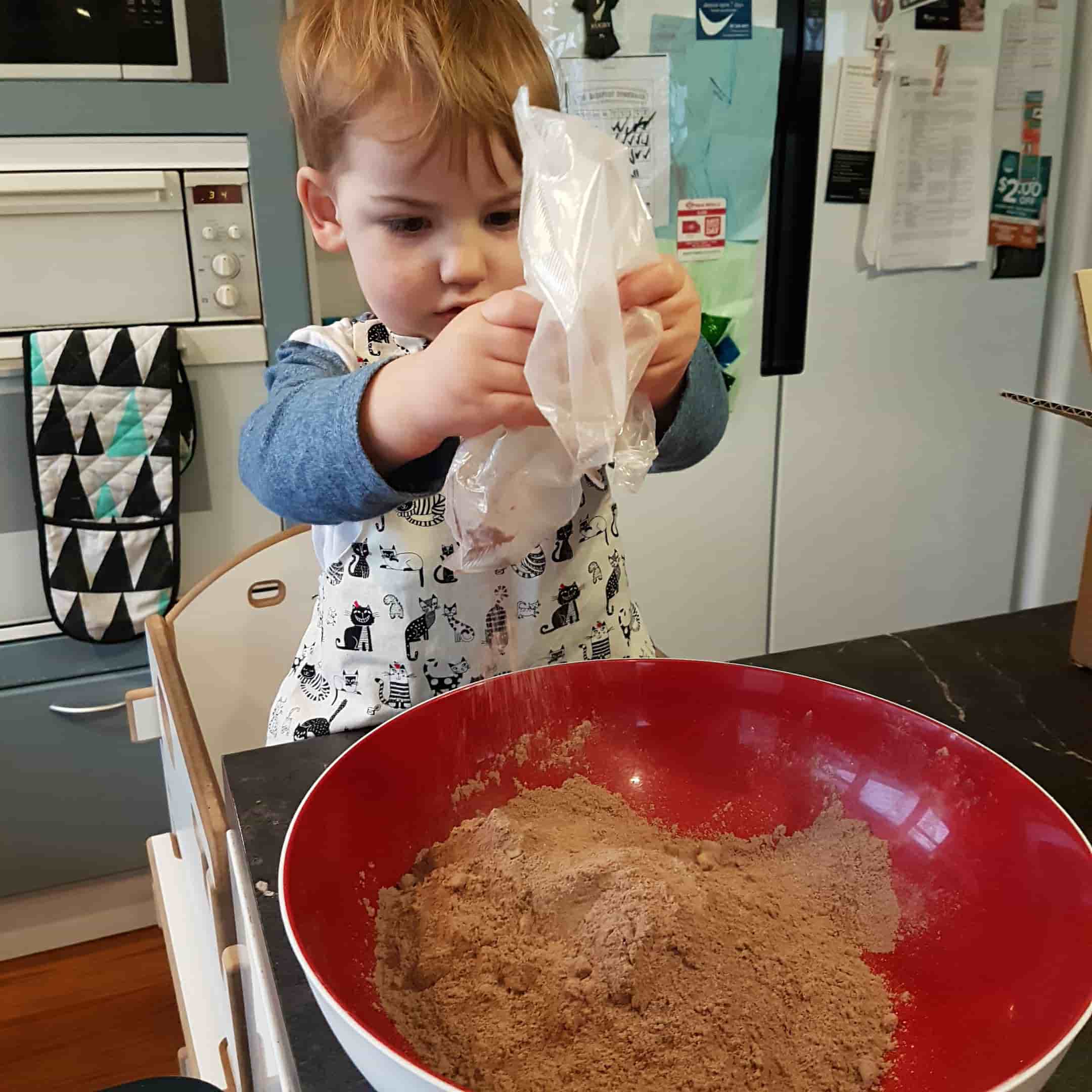
Please note

Watch the video reviews

Join the Catch Up

Join our community of parents and let the Kidspot Catchup be your guide to creating unforgetable family moments.